ULTIMATE AFRICA SAFARIS
Phone toll free 1 800 461 0682

Ultimate Africa travel and wildlife news archive

August 2001

Strategies Launched to Rescue Tanzanian Tribe, August 5 2001

The government of Tanzania has embarked on a program to rescue the Hadzabe tribe from extinction. With the current population standing at around 1,500 living in northern and northeast Tanzania, the Hadzabe are the only tribe in Tanzania which has not changed their traditional lifestyle. They gather fruits and live nomadically.

The tribe is on the verge of extinction as their number has been reduced over time due to natural calamities and lack of social services. The situation has prompted the Tanzanian government to provide free social services and encourage them to build houses, to keep cattle and engage in farming.

South African Airways to Resume Flights to DRC, August 5 2001

South African Airways (SAA) is to resume its flights to Kinshasa, Democratic Republic of Congo (DRC) almost two years after suspending the service because of security risks. October 1, 2001 has been set as a tentative date to resume flights to Kinshasa, the capital of the DRC. Kinshasa was one of the most profitable routes with high yields. SAA has been granted rights to operate three flights a week, but will start with two. SAA intends to resume the flights because they believe that the situation in Kinshasa has stabilized. SAA last flew to Kinshasa in September 1999.

Snares Maim Uganda's Chimpanzees, August 5 2001

Researchers at the Makerere University research site in Uganda's Budongo Forest Reserve said game traps are causing physical disability to most of the 50 chimpanzees at Sonso Camp.

Researcher Fred Bamwetera said that the snares, which are made of wires and ropes, cause lameness in chimpanzees and in many cases result in death due to starvation, injury and excessive bleeding. Bamwetera explained that the local communities in the villages surrounding the research site are using the snares to trap antelope for the meat.

The Jane Goodall Institute had teamed up with the Makerere University Faculty of Forestry and Nature Conservation to resolve the issue.

Elephant Hills Hotel Fire Update, August 5 2001

While the fire damage at Victoria Fall's Elephant Hills Hotel is considerable it is not as extensive as was originally thought. The golf course wing, 141 rooms, of the hotel was not affected. The river-facing wing, 135 rooms, was damaged to a greater or lesser degree. The central block where the casino etc. are housed was more severely affected. Arrangements have been made for the transfer of guests to The Kingdom and The Victoria Falls Hotel.

Although only part of the hotel has been affected by the fire accident, it has been determined that the most practical thing to do is to close the hotel. It is anticipated that repair work will start almost immediately. Restoration is expected to last 7-9 months.

Chitabe Camp July Report, August 19 2001

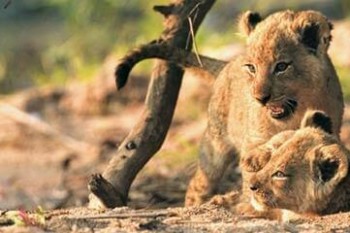
July was another great month at Chitabe Camp near the Moremi Reserve in Botswana - although cold at night! The nighttime temperature reached zero on two mornings. Wildlife viewing has been excellent, with continuous sightings of wild dogs with three young pups and brief sightings of brand new lion cubs. Male lions are mating with amazing passion! Buffalo have been right near camp. Leopard sightings have been great, but cheetahs were illusive this month. Breeding herds of elephants have been making their way right through camp and sleeping under the decks, making early morning wake ups a little longer than usual. put up with in the bush!

One recent guest, Janice Lipski, fulfilled her life-long dream being to see a leopard. After travelling around the world to different places to track different cats, the Chitabe guides felt privileged (and pressured!!) to have the opportunity to fulfill her dream. At 11:40 PM on their last night, they were successful with the sighting of two young leopards and this was celebrated with Amarula (a local drink similar to Baileys) on the airstrip at 12:30 AM, with tears flowing!

The hide has been a big hit again, with private dinners and afternoon sundowners, with amazing bird life in a tranquil setting.

Zimbabwe Update, August 19 2001

There has been a resurgence of problems on the white owned farms in Zimbabwe. In Chinoyi a white farmer was harassed by a group of war veterans. The neighboring farmers went to help. There was an altercation and injuries were sustained by both parties. 23 white farmers have been held under arrest charged with causing unrest etc. The war vets then moved into town. Chinoyi is a farming town, and since the farmers are being held here, the town has now become the target for similar problems.

It is absolutely fine to fly around the country. This situation is once again isolated to the commercial farming areas, which are not close to any of the national parks or related safari towns. This issue is about land and votes. It is not about targeting tourists. Travelers will be totally unaware of any of these problems as they will be flying in and out of safari towns and national parks.

For Zimbabweans living in and around the tourist parks, cities and small towns life continues as normal. To put all of this into some perspective, school holidays began this week. It is a popular month to travel, so many Zimbabweans have taken several weeks holiday to drive down to either Nyanga, Kariba and many other national parks and wilderness spots around the country. They would not risk the safety of their family if they thought is was not safe to travel to these areas.

At Ultimate Africa Safaris our clients safety and well-being is the highest priority and if the situation in Zimbabwe warrants we will advise clients of any potential problem/s.

Mount Kilimanjaro may Receive World Heritage Status, August 19 2001

Two United Nations agencies, the United Nations Development Program (UNDP) and the UN Foundation (UNF) will launch a community-based initiative aimed at obtaining World Heritage Site status for Tanzania's Mount Kilimanjaro.

Under the program, the UN agencies are introducing the participatory methodology to conserve Africa's highest mountain. The main aim of the initiative, known as Community Management of Protected Areas Conservation Project (COMPACT), is to promote the involvement of local communities living close to the mountain in conserving it.

COMPACT is expected to be launched in September this year and is part of global initiative with similar measures to conserve natural sites in Kenya, the Dominica Republic, Belize, Mexico and the Philippines.

Elephant Tramples Tourist to Death in Kenya, August 19 2001

An elephant trampled a 52-year-old French tourist to death on August 9 as he tried to film it in Kenya.

According to the Kenya Tourist Federation, Jacques Boxberger, who was visiting Tsavo East National Park, followed a lone bull elephant away from where a group of fellow tourists were eating lunch. As Boxberger, accompanied by his wife and teenage daughter, approached the elephant, it turned and chased them a short distance before catching up with him.

KTF reportedly said park officials had put up signs warning tourists against getting too close to wild animals.

Kruger Elephant Tramples Mozambican Mother and Child, August 19 2001

A mother and her daughter, believed to be Mozambican immigrants, were recently killed by an elephant in the Kruger Park while trying to enter South Africa. According to park spokesperson William Mabasa, they were part of a group of 14 people who crossed the border from Mozambique.

Transfrontier Park Plans Proceeding Well, August 19 2001

The first phase of one of southern Africa's greatest wildlife areas, the Gaza Kruger Gonarezhou Transfrontier Conservation Area (TFCA), will be open to visitors next year.

This TFCA will create one of the most impressive conservation regions in the world, with an area totaling a massive 95,700 square kilometers. Traditional migration routes for elephant and buffalo will be re-established, eliminating the need for controversial culling and translocation programs. The Gaza Kruger Gonarezhou TFCA consists of 72% in Mozambique, 21% in South Africa, and the remaining 7% in Zimbabwe.

The South African side will incorporate Africa's first national park, the Kruger National Park, which was proclaimed on May 31, 1926, and a number of privately owned areas on the western boundary of the park.

Zimbabwe's portion of the TFCA will include a small area of communal land and the Gonarezhou National Park, which was proclaimed as a reserve in 1968 and obtained national park status in 1972.

In Mozambique the TFCA will incorporate the Coutada 16 Wildlife Utilization Area immediately adjacent to the Kruger National Park (shortly to be gazetted as the Gaza National Park and put out to public tender for its development and management), the Zinave National Park, which was originally proclaimed as a safari hunting area in 1962 and as a national park in 1972, Banhine National Park which was established in 1972, and a large area of state owned communal land with a relatively low population density.

The South African Minister of Environmental Affairs and Tourism, Mohammed Valli Moosa, said that the transfrontier park plans were proceeding well. The fences between South Africa and Mozambique, over a distance of 120 kilometers would be removed by the end of the year and 30 elephants relocated in the Gaza Province of Mozambique on October 4, 2001.

African Elephant Returns Home after 18 Years, August 19 2001

The South African conservation authority, KwaZulu-Natal Wildlife, has given the go-ahead for the return of Sahib, an African elephant bull who has been performing in a German circus for 18 years.

When he returns home to Africa, he will be known as Mayibuye ("It must return") - the name he has been given by the Zulu amakhosi who took pity on the orphaned elephant.

The chiefs and their communities, who are setting up the Royal Zulu Reserve near Empangeni in KwaZulu-Natal, offered to rescue Mayibuye after they read about his desperate plight in the Mail & Guardian newspaper in March. They insisted he should be given the chance to live the rest of his life in dignity in the place of his birth.

Mayibuye was sold to the German circus when he was orphaned at the age of two during a cull in a Zimbabwean reserve. He was one of hundreds of African elephants exported overseas during the height of culling operations in South Africa and Zimbabwe from the early 1970s to mid-1980s.

Nokwethemba Biyela, a driving force behind the Royal Zulu project, reportedly said Mayibuye's return will be a catalyst for the future of conservation around the Royal Zulu. He is quoted as saying that there are more than 100 schools in the area and most of those children have never seen an elephant. Through Mayibuye they will now have the chance to learn about the relationship between animals and human beings, he said

Mayibuye will live in a fenced-off sanctuary of 100 hectares and KZN Wildlife will help monitor his progress. The Born Free Foundation, a United Kingdom-based animal welfare organization, has offered to carry the costs of Mayibuye's return.

Rozanne Savory, co-founder of the South African Ethical Conservation Network, who has been brokering the elephant's return, believes the event heralds a new milestone in local conservation efforts. She is quoted as saying that "it is a breakthrough for a more humanitarian approach to wildlife and that it also shows the authorities are taking note of the wishes of ordinary communities committed to conservation".

Fossil Sheds Light on Man's Origins, August 19 2001 Scientists have discovered a set of fossilized bones which once belonged to what they believe were the earliest ape-like ancestors of modern humans who lived more than 5.5-million years ago.

The discovery sheds fresh light on a murky period of human prehistory when humans and chimpanzees diverged from a common ancestor.

An international team of researchers discovered the fragments of bones in the Middle Awash territory of the Horn of Africa, confirming this region of Ethiopia as one of the most important cradles of humankind.

Dying Species "Endangering" Earth, August 26 2001

A distinguished conservationist has rekindled the dispute about how many species are becoming extinct. He is Dr Richard Leakey, formerly head of Kenya's civil service and earlier of its wildlife service. Dr Leakey, speaking in South Africa, said the world was losing between 50,000 and 100,000 species every year. He said this rate of extinction, twice the estimate he gave four years ago, was imperiling the planet.

Speaking in Cape Town, Dr Leakey said it was only the five earlier mass extinction's in the Earth's history, the last of which saw the death of the dinosaurs 65 million years ago, that had shown the same rate of loss. "At that rate we are probably approaching a point similar to mass extinction", he said. Dr Leakey argued that the environment must be seen as a basic human right, and preserving land and conserving its wildlife was an "absolute necessity".

In 1997, at a meeting of the United Nations' Convention on International Trade in Endangered Species (Cites), Dr Leakey gave a much lower estimate of the extinction rate. He said then: "Most of you know as well as I do that biologists and conservationists are operating from a position of ignorance. "We don't actually know how many species there really are on the planet, let alone on the African or any other continent. "The rate of extinction's is also unknown. Scientists suggest that there are somewhere between 10 and 100 million species on the planet."

Dr Leakey told Cites that it was the acceleration of species loss through human activities that was significant. Unless the present trend was reversed, he said, the world could lose about 55% of its species over the next 50 to 100 years. "Such rapid catastrophic losses to biodiversity have happened before, and these catastrophes have always had far-reaching consequences for the surviving species."

Last May a report by the Swiss-based IUCN-World Conservation Union and Future Harvest, a Washington DC agricultural research group, said global wildlife faced the greatest extinction risk since the disappearance of the dinosaurs.

A 1998 survey of 400 scientists commissioned by New York's American Museum of Natural History found that nearly seven out of 10 of the biologists polled said they believed a "mass extinction" was under way. Nearly all attributed the losses to human activity, especially the destruction of plant and animal habitats.

Some scientists say the actual extinction rate is almost certainly far lower than Dr Leakey is suggesting, and well below any cause for concern. The evidence that species are disappearing is often circumstantial, but many experts believe it is gradually painting a clearer picture. Craig Hilton-Taylor of IUCN told BBC News Online: "It's quite possible that we're approaching a sixth extinction, but it's hard to say for sure. "In October 2000 IUCN published its Red List of threatened species, which also lists those known to have died out. "The number listed as extinct doesn't tally with the predictions of people like Richard Leakey. "But what may explain that is that there's a time-lag in the process. Some species are very hard to find. "It may take several years of fieldwork before we can say whether they really are extinct. You have to wait to be sure. "But the number of threatened species is growing all the time, and that shows there's a problem. Some of them could disappear quite rapidly. They're right on the brink."

SAA Introduces New Service to Zimbabwe, August 26 2001

South African Airways (SAA) has introduced a late afternoon service between Johannesburg to Harare, Zimbabwe on Thursdays and Fridays. The new service effectively gives SAA at least two flights to the Zimbabwe capital, seven days per week. The Harare to Johannesburg flight leaves at 7:00 AM every morning and lands at Johannesburg International at 8:45 AM. The return flight to Zimbabwe leaves Johannesburg at 5:00 PM.

Linyanti Tented Camp July Report, August 26 2001

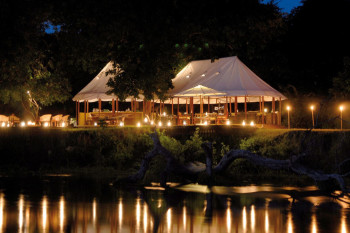
Despite valiant efforts by the local elephants to tear the vegetation to bits, and breaking a few pots and décor along the way the camp is looking great! This destructive behavior is tolerated of course, due to the many hours the guests spend watching them swim and play in the Linyanti lagoon right in front of their tents. Many a guest has commented on wakeful moments listening to the sounds of branches breaking and heavy chewing just outside their rooms next to their heads!

Linyanti had fairly regular wild dog sightings in July including another exciting episode of wild dogs chasing a male impala into the water however the impala outwitted the dogs. There is still a relaxed female leopard that spends a lot of her time very close to camp, sometimes paying a short visit to the bar, public toilet and management housing. She was sighted on a few occasions on the several of the night time game drives that the camp offers after dinner.

Buffalo seemed to have moved into the area and very large herds were sighted between King's Pool and Linyanti. They tend not to be very relaxed, stampeding in clouds of dust away from the Landrovers when they can.

Two male lions...an old male, who at the beginning of this year was looking a bit down and out, has found a younger stronger companion in this coalition of two. They seem to march pretty much in a straight line from the Chobe cutline to the area where the King's Pool males preside, and back again, roaring their dominance continuously. Lionesses were only seen on two occasions close to Linyanti this month. A dead elephant provided interesting, yet nauseating viewing for a few weeks, with lots of hyenas and vultures burying themselves in the rotting carcass. Other great sightings were seen in the channel on whole day excursions...a cheetah killing an impala which was then stolen by hyena; wild dogs and 14 lions on a giraffe kill.

Birding, as always, was fantastic...bathawks, lanner falcons, wattle crane chicks, purple gallinules etc. kept things interesting. Linyanti was graced in the camp with the quiet presence of a lone Ground Hornbill who seems to have lost his family, and adopted to the cheery atmosphere of Linyanti Tented Camp.

One group of clients were in such raptures over the food they practically begged Linyanti staff to write a recipe book for them.

Return to Weekly Update Archive