ULTIMATE
AFRICA SAFARIS
Ultimate Africa travel and wildlife news archive August 1997 Mopane worms part of the new fare on Air Zimbabwe, August 3 1997 Air Zimbabwe plans to introduce traditional African dishes on its regional and international flights today, to enhance their identity as the Zimbabwean national airline. Dishes will include rupiza (ground beans made into porridge), rapoko (a small grain), millet (mhunga) porridge with madora (mopane caterpillars), fried kapenta from Lake Kariba and mufushwa (dried bean leaves). More of the dishes will be introduced gradually at a pace determined by passenger response. Less adventurous eaters will be offered a choice of standard in-flight food. Zimbabwean chefs will also train British caterers in order to maintain a supply of African dishes for the Gatwick-Harare run.
Kalahari Express Airline to be launched, August 3 1997 Namibia's first privately-owned scheduled airline will be launched in August. Kalahari Express Airline will provide two flights between Windhoek (Eros Airport) and Johannesburg (Johannesburg International) daily and one daily on the Windhoek/Cape Town (Cape Town International) route. The new airline will be cater to business travelers and provide full business-class service. Two Fokker 28 Mark 3000 jets have been converted from providing seats for 65 people to providing 48 people with business-class seats. Southern Sun expands into Kenya, August 3 1997 As part of a strategic alliance agreement, Southern Sun has taken over management of Conservation Corporation Africa's Mayfair Court hotel in Nairobi, Kenya. The Mayfair Court hotel has recently been upgraded for US $1 million by Conscorp to a full-service Holiday Inn. The character of the historic hotel, originally built in 1940, has been retained. Facilities and services available at the Mayfair Court Holiday Inn include a business center, fully- equipped health club, hair salon, curio shop, two swimming pools and banquet facilities. New Air Zimbabwe CEO Solves Problems, August 10 1997 President Mugabe now travels on scheduled flights and the Air Zimbabwe Fokker aircraft have found a home. All this has happened in less than two months of Brendon Donohoe assuming office as Air Zimbabwe chief executive. Previously President Mugabe could hop onto any aircraft of his choice without even bothering about how this would disrupt the airline s scheduled flights. The national airline was also saddled with useless Fokker Aircraft which led to the sacking of former chief executive Huttush Muringi. Until recently, the nation had been told there was no way Air Zimbabwe could pull out of the 10-year lease agreement for aircraft. But come messiah Donohoe and all the problems are solved. Donohoe is now aiming for 99 percent reliability for Air Zimbabwe in terms of departures, schedules and arrivals. And it seems he will achieve this.
Pro Wildlife Groups Sponsor Poaching, August 10 1997 Zimbabwe's Zambezi Society chairman, Dick Pitman, has warned Zimbabwe, Botswana and Namibia to watch out for sponsored wildlife poaching to discredit their wildlife management efforts. It is believed that several large international wildlife protection groups have and continue to sponsor poaching in southern Africa to make it appear that wildlife in southern African countries is under great threat. The plan has backfired as CITES have allowed a limited trade in elephant ivory to resume.
Tourism Grows in Zambia, August 10 1997 Zambia National Tourist Board statistics on visitor arrivals indicates that there are more people coming to Zambia than was the case last year. Over the past six months the Lusaka International Airport recorded a total of 5,557 visitors compared to the 5,000 who passed throughout 1996. At the Kariba/Siavonga border crossing there 2,753 visitors as against the 2,395 who passed through in 1996. Even the Chirundu border crossing was not left behind as it recorded more visitors - 9,206 this year compared to 8,931 in 1996. "The above figures indicate an upward trend which we hope will continue particularly in the months of the tourism season from June to November", said Mr Mazoka of the Zambia Tourist Board.
El Nino Predicted to Adversely Affect Southern Africa Climate, August 17 1997 The "El Nino-South Oscillation" (ENSO) is predicted to induce a drought throughout southern Africa this year. The last droughts to affect southern Africa (1982/3,1991/2 and 1994/5), were clearly related to "El Nino" warm episodes.
Restoring Uganda as the "Pearl of Africa", August 17 1997 Before Idi Amin came to power in 1971, resulting in years of civil war and chaos, Uganda was known as the "pearl of Africa", attracting 85 000 tourists a year. Now Uganda's Tourist Board seems set to restore that image...In a bid to boost the tourism industry, which once was the biggest generator of foreign exchange for Uganda, the Board will focus yet again on the top end of the international travel market. Facilities are already being developed to cater for whitewater rafting, fresh-water fishing, mountain climbing and bird watching. Foreign investors have already helped reviving infrastructure, providing high-class hotels, tented camps and aircraft to fly in visitors. Roads have been resurfaced and security has returned to most of the parks.
Cape Town Airport Sees Growth in Passengers, August 17 1997 The number of passengers being handled by Cape Town International Airport grew by 23 per cent last year, according to the Airports Company. This is considered to be one of the fastest growth rates in the world.
First Upgrade Completed at Johannesburg International Airport, August 17 1997 Johannesburg International Airport (JIA) has emerged from the first phase of its US $51m expansion and upgrade program, due to be completed in late 1998. New check-in desks, incorporating a new concept in baggage transportation, are now in operation at international terminals. In addition, a new automated baggage sorting system will be enable 27 flights to be loaded simultaneously.
Kenya Bloodbath, August 17 1997 Twenty-four people, including six policemen, were killed last Wednesday night during a an orgy of violence in Mombasa. During the attack, six policemen were hacked to death, three at the police station, two at the tourist police booth near the ferry and another who was escorting a Kenya Co-operative Creameries collection van. Unconfirmed reports say that two of the policemen had their heads chopped off. Those responsible also burnt down a night club adjacent to the ferry crossing, the Jak City. They tried to set ablaze The Office, another night club nearby, but were stopped by security details armed with bows and arrows. Passengers leaving the ferry on their way home were set upon and slashed and stabbed indiscriminately. Barricades made from overturned hand-carts, iron sheets and rabble from the damaged kiosks were put up on the Mombasa-Lunga Lunga road. Motorists were stoned, pulled out of their vehicles and hacked with machetes and axes. Police were baffled by the motive of the attack, especially the ferocious raid mounted against the police station. ``We cannot understand why they did this . . . it is puzzling!'' the Provincial Security Intelligence Officer, Mr Mohammed Shukri, said. On Saturday August 16, 1997 reports have stated that three more people were killed in an area of Kenya's north coast when a tourist hotel was razed down forcing tourists to flee into the night. The tourists sought refuge in the neighborhood. Dreams of The World's Biggest African Wildlife Reserve, August 24, 1997 The South Africa Chamber for Agricultural Development in Africa (Sacada) sponsored Mosagrius project would like to set up the world's largest protected area for wildlife: 4,5-million ha across northern Mozambique - from Lake Malawi to the Indian Ocean. The crown jewel in the projected empire would be the Niassa game reserve in Mecula district. Tucked into Niassa's north-east corner, along the Rovuma river and the border with Tanzania, it has 21 000 km2. Left to itself during the war, it is stocked with the big five, including more than 10 000 elephants and a few elusive rhino last sighted in 1993.
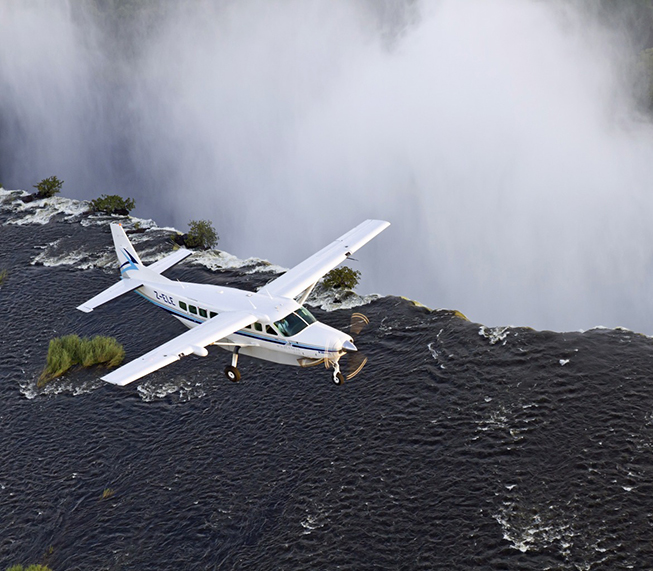
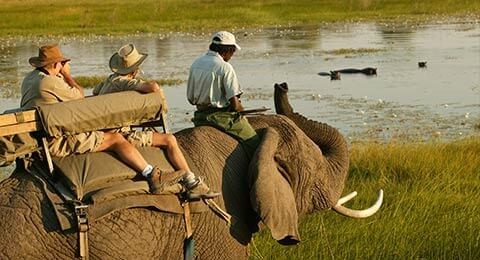
1998 Africa Safari Challenge, August 24 1997 Once again Ultimate Africa offers what many people consider Africa's most adventurous safari. From September 17 - October 1, 1998 eight enthusiastic, high spirited adventurers will experience what can truly be called the ultimate safari. For 15 days each group will test their courage and stamina. Days will be filled with wildlife and adrenaline and nights will be spent at superb lodgings and camps. Activities on the 1998 Africa Safari Challenge include: tracking rhino and lion on foot deep in the Matusadona Mountains of northern Zimbabwe, canoeing the wild and remote lower Zambezi at Mana Pools, elephant back riding, rafting the world's ultimate one day white water run below Victoria Falls, bungee jumping the world's second highest commercial bungee jump and a microlight flight over the world's largest waterfall! Click here for further trip details
Mala Mala Wins World First, August 24 1997 South Africa's Mala Mala Game Reserve has been awarded the accolade of being voted BEST HOTEL IN THE WORLD by the prestigious American based, internationally circulated, travel magazine "Travel & Leisure" (circulation 3.7 million copies). Situated adjacent to the world famous Kruger National Park, Mala Mala Game Reserve was awarded "Best Hotel in the World" as a result of a poll of reader's views in the March 1997 issue of the magazine. For the second year in a row, Mala Mala has been voted by the readers of Travel & Leisure as Best Hotel in Africa and the Middle East, but this year has rocketed to the number one position of any hotel in the world. The property's rapid rise is a sign that South Africa is becoming a magnet for luxury travel veterans and also means that more and more people have sampled South Africa's Best. Cape Town, ignored in the 1996 edition, is now ranked among the top ten best cities in the world. Mala Mala also won "Best Small Hotel in the World" (1996 - 8th in the world!) In a release, Travel & Leisure magazine states Mala Mala's award "is not really a fair fight since calling Mala Mala a hotel is like calling the space shuttle a plane". The magazine further notes "hotels don't have hundreds of species of animals running wild on 45 000 acres of prime riverine thornveld, hotel rooms don't come with a virtual guarantee that in a two- or three - night stay guests will find themselves within 20 yards of lions, leopards, rhino, buffalo and elephants." Other accolades accorded Mala Mala include: June 1997 Best Game Reserve and Safari in
the World : World Travel Awards
New Air South Africa to Fly Soon, August 24 1997 Air South Africa, a new independently owned airline, said last week that it expects to start scheduled services between Johannesburg and London quite soon. The new airline has been granted a license to fly between Johannesburg and London-Gatwick. The airline would start with three flights a week on a Boeing 747 and hoped to increase these to six within three or four months. Air South Africa had also formed an alliance with Air Malta, which had been in existence for 20 years and had a fleet of 11 aircraft with an average age of three and a half years. One flight a week will stop at Malta en route. South African / Zambian President's Mourn Princess Diana's Death, August 31 1997 South African President Nelson Mandela expressed "profound shock" at the death of Britain's Princess Diana. "On my own behalf and on behalf of the government and people of South Africa, I would like to express profound shock and deepest sympathy at the untimely passing of Diana, Princess of Wales," Mandela said in a message to Queen Elizabeth. Mandela later told a news conference at his official home in Pretoria he and fellow South Africans were "devastated" by the news. "I had the honor of hosting her a few months ago and was tremendously impressed by her. She was undoubtedly one of the best ambassadors of Great Britain," he said. "I found her very grateful, highly intelligent and committed to worthy causes and was tremendously impressed by her warmness." In his message to Queen Elizabeth, Mandela said: "Your majesty, your majesty's family, his royal highness Prince Charles and their sons, Prince William and Prince Harry, are in our thoughts and prayers at this sad time." Zambia's President Chiluba also expressed shock at the Princess's untimely death. Mr Chiluba said in a message of condolences to Her Majesty Queen Elizabeth yesterday that Princess Diana will be remembered for her love for children world wide and her most recent involvement in the campaign for the total ban on the production, sale and use of anti-personnel land mines. "Your Majesty it is with great shock and sorrow that I have learnt of the death of Princess Diana. May I on behalf of the government, the people of Zambia and on my own behalf convey to your Majesty and to their Royal Highness Princes Charles William and Harry our heart felt condolences," he said.
Kenya's Eldoret Airport to Open Next Month, August 31 1997 Regular flights are scheduled to begin this September into Kenya's new Eldoret International Airport. Many airlines, among them Air France, were scheduled to start regular flights.
Botswana: Waiting for the Waters, August 31 1997 For the first time in living memory, the Okavango floods failed to reach the southern delta last year. This year, the floods appear to have failed again. Last year, for the first time this century, the annual floods which originate in Angola failed to make it to Maun, a booming village on the southern tip of the Okavango Delta. The tourism industry, now targeted to replace Botswana's ailing mineral sector, depends on the water to bring in the growing number of international visitors. At the end of July the water arrived in the Boro outside Maun and local safari lodges which depend on canoe trips for tourists rejoiced. The question now is whether things will continue to improve or whether, as with last year, the water will stop before it reaches Maun itself.
Zimbabwe's Ngorima People Fight Government Plans for Relocation, August 31 1997 The Ngorima community, which lives in the Chimanimani Mountains in eastern Zimbabwe, is fighting government plans for relocation for the second time this century. The community is on a collision course with the Department of National Parks and Wildlife Management, which insists that these people move out of the HaroniRusitu area, in order to preserve the environment. In 1908, the Ngorima people were moved from the Chimanimani uplands to make way for European settlers. The settlers later relocated Chief Ngorima and his people in the Rusitu Valley. This process of land alienation clearly had nothing to do with conservation. However, conservation is motivating a second dispossession, this time within the Rusitu Valley. The valley is the only place in Zimbabwe where the rare Newtonia buchananii and the Khaya nyasica hardwoods are found. The largest problem in terms of demarcating park land is that the park land boundaries were marked during the colonial era. The administrators of that time demarcated this area using water courses. However, the boundaries are now being reexamined in an independent Zimbabwe, where the law does not accept water courses as boundaries, but uses straight lines. The use of straight lines has effectively put the communities in park land, precipitating their eviction. A Communal Areas Management Program for Indigenous Resources (CAMPFIRE), which gives ownership and management of resources to indigenous communities, has been proposed for the area, whereby the promotion of tourist visits to these forests would benefit the communities. Conservationists see the development of a CAMPFIRE ecotourism project as the only practical solution to solve the conflict between Chief Ngorima's community and the department.
We Are Not a Threat to Wildlife, Say Bushmen under Threat of Relocation, August 31 1997 Hundreds of Basarwa (Bushmen) have been trucked out of the central Kalahari game reserve because the Botswana government believes they pose a threat to the local wildlife. But the remaining 1 300, the majority of whom are still huntergatherers, say if there's anyone who knows about conservation then it's them. "The government is only protecting its interests for economic reasons at our expense," says spokesman Aaron Johannes. "We are not ignorant when it comes to conservation. We don't only kill and eat animals, we know how to nurture them." The reserve was created in 1961 (when Botswana was still a British protectorate) to protect wildlife and preserve enough land for traditional use by huntergatherer communities. But for the past ten years the government has been trying to relocate the villagers, ostensibly to provide "economic emancipation". It has also offered little proof for its claim that the Basarwa threaten the environment in Africa's third largest game reserve. Return to Weekly Update Archive |