ULTIMATE AFRICA SAFARIS
Phone toll free 1 800 461 0682

Ultimate Africa travel and wildlife news archive

December 2001

Ballet for Sun City, December 2 2001

Sun City in South Africa will be the setting for a special festive performance of the classic ballet Coppélia on Christmas Eve 2001 by the Cape Town City Ballet, in association with Artscape. The performance was produced for by internationally acclaimed French choreographer, dancer and teacher, Jean-Paul Comelin.

Zimbabwe Tourism Drops 11%, December 2 2001

Recent studies indicate that international tourism arrivals to Zimbabwe dropped by 11% in 2000/2001.

Elephant Hills to Reopen by December 2002, December 2 2001

The Elephant Hills Resort at Victoria Falls will reopen in December 2002 after a recent fire. Zimbabwe Sun Hotels is utilizing the opportunity to enhance the overall product by upgrading interiors throughout the facility.

Victoria Falls Safari Lodge Upgrades Continue, December 2 2001

To enable guests to enjoy even closer contact with wildlife, the Victoria Falls Safari Lodge in Zimbabwe has constructed a viewing hide just five meters away from its natural waterhole. The focal point of the whole resort, the waterhole enjoys regular visits from a wide variety of wildlife including elephants, herds of up to 200 buffalo, many kinds of antelope, lions, hyenas, warthogs, banded mongoose and baboons. The waterhole also attracts numerous species of birds. The hide has already proved popular and guests have been treated to incredible sightings of game kills as well as unusual animal behavior and activity.

The hide is part of the Victoria Fall Safari Lodge's product enhancement plan - which this year alone has seen the inclusion of a new safari spa and nature center as well as substantial upgrades to its conference rooms and ongoing upgrades and refurbishment of guest rooms and public areas.

Air Botswana Expands Service, December 2 2001

On April 2 2002, Air Botswana will introduce a service into the Limpopo Valley Airfield. The service will operate every Tuesday, Thursday and Sunday. The Limpopo Valley is located within Botswana's Northern Tuli Game Reserve at the confluence of the Shashe and Limpopo Rivers. There will be connecting flights between Johannesburg and the Valley via Kasane, Botswana.

Jao Camp October Report, December 2 2001

Jao Camp is located in Botswana's Okavango Delta region. The month of October 2001 at Jao saw delta water levels declining with more and more animals migrating into the concession. Guests have enjoyed regular leopard sightings on Pupu island - in full view of lodge's upstairs dining and bar area. Elephants have also been frequent visitors to the lodge.

Night drives have been very popular as the NG25 lions have been having a dispute, with the regulars winning the battle.

There is still sufficient water in the area to allow mekoro and boating.

Xigera Camp October Report, December 2 2001

Xigera Camp is located in Botswana's Okavango Delta. During October the delta's waters dropped extensively and guests can now enjoy wildlife viewing drives right from camp. This will probably last through May 2002 (depending on the height of next years Okavango flood) and then the vehicles will be moved back to the bigger islands and guests will boat to the vehicles. For now the boats will be moved to the boat stations to the north of the camp as the water is too low in front of the camp.

Quite a few elephant herds have spent time in the camp. One herd in camp was 62 strong with lots of young calves. There was an interesting situation with a group accompanied by Lex Hes where three mekoros were trying to spot a sitatunga that was hiding on a small island when the sitatunga suddenly leapt to its feet and jumped directly over a mokoro.

An adult male lion crossed the bridge a few times and one staff member actually saw the lion chasing an adult male baboon over the bridge into camp. Fortunately the baboon jumped off into the bush and never ran through the lounge. Hyena's still cross the bridge every night without fail.

There was also a spotted necked otter that was pestering the bream population under the bridge.

Flocks of flamingo's were sighted flying over Xigera early in the month The tsessebe started calving in mid October.

New Upmarket Zambia Property Opens, December 2 2001

Following extensive upgrades, Chete Island Lodge - located on one of the Westlake Islands in the western region of Lake Kariba, Zambia - has reopened as a deluxe, five-star lodge, having previously been a two-star property.

The 27 square kilometer island - the largest on Lake Kariba - forms part of the Chete National Park and features the only lodge in the national park. The lodges features eight double safari tents and activities include game drives, canoeing and scenic flights.

Ultimate Africa consultants note that wildlife viewing is limited.

Uganda Wildlife Authority Invites Partners, December 2 2001

The Uganda Wildlife Authority (UWA) has offered four concessions to the private sector to develop and improve hospitality facilities and services in protected areas. UWA Director of Tourism Development and Marketing, Saul Kaye is quoted as saying that the private sector has a more competitive advantage to run the concessions, because they have profit motives in their minds. "We want to concentrate on our conservation mandate and leave the concessions to be run by them," he said.

The concessions will involve upgrading and managing of Paraa Rest Camp, setting up a luxury tent camp at Lake Mburo National Park, an exclusive campsite at Kyambura Wildlife reserve and Apoka in Kidepo Valley National Park.

Concessions are available to both locals and internationals.

Ndutu Camp November Update, December 9 2001

Ndutu borders the Serengeti in northern Tanzania. November saw 40mm's of rain in the area, which has given the bush a green flush, especially the burnt areas where the September bush fire passed through. Rain clouds are still building and hopefully heavy showers will attract the large wildebeest herds.

Nevertheless there are quite a lot of wildebeest and zebra at Two Trees (it's actually 3 trees but looks like two at a distance). The enormous trees are grand landmarks, as they stand alone in the middle of the plain. Large numbers of Thomson gazelles have also been attracted here by the green flush. There are numerous fawns, which naturally attracts predators like cheetahs. Researchers have found that when the gazelles give birth in large numbers, cheetah switch their attention to this easy source of prey and as much as 36% of their diet consists of gazelle fawns at this time. Guests often see cheetah sitting upright staring out across the plains at distant groups of gazelles, waiting patiently to catch a glimpse of a fawn. Once sighted the cheetah then heads off into a seemingly empty quarter of the plain at a low crouching walk, only to speed up at the very last moment when a hidden fawn springs out of the grass. The cheetah success rate is very high at 81%, but they always have to be aware of hyenas, which steal approximately 1 out of every 10 kills. Apparently this behavior by other predators is called kleptoparasitism.

People in the UK may have seen the highly acclaimed series, Wild Africa, shown this month and filmed by Owen Newman and Amanda Barrett for the BBC Natural History Unit. Owen and Amanda were based at Ndutu for over a year while filming this epic program.

Some people may also have seen the short 10-minute film called Under Serengeti Stars, which was also shown this month and showed how Owen and Amanda filmed the stunning night sequences of aardvarks featured in the film. There's a nice shot of the Ndutu Lodge workshop as their mechanic, Leonard, straightens out Amanda's steering rod for about the third time after she had accidentally driven into yet another aardvark hole. Over ninety percent of the film was filmed at Ndutu.

November's addition of the BBC Wildlife magazine also features an article written by Amanda about the Ndutu elephants, accompanied with photographs by Owen. They were so impressed by Ndutu that they've returned to make another film and again will be based at Ndutu. Their new film will be about the lives of the small cats, the caracal, serval and wildcat. Suckers for punishment, most of this program will be filmed at night with infrared so as not to disturb the animals.

The night sky at the moment is fantastic with Cassiopeia, the giant M, lying low in the North. Guests coming from the north may be surprised as it's a giant W in the Northern hemisphere. Rising in the East behind Taurus the bull is Saturn and, at about nine thirty, the planet, Jupiter, follows them both. November is the month of shooting stars and guests are being treated to some wonderful displays as the Leonids meteorite showers pass overhead this month.

Returning guests will see some changes this year as Ndutu staff have built four new rooms to replace some of the older style rooms. They also have a new look dining room and have started to build toilets adjacent to the bar. So far from town, community spirit is the key to life here so all this work is carried out by Ndutu staff and in the low season months everybody helps out with maintenance and improvements. Wilbrod the cook, is an excellent carpenter, Erasto the waiter is a first class painter. Mirando, a room steward, and Safari Sarime a cook, re-thatch the roofs with palm thatch and the Ndutu tailor, also called Safari makes all the staff uniforms, curtains, cushion covers and seat covers for the cars. He's a great asset to Ndutu as he can run up a shirt or a pair of trousers in no time. He's also a plumber and helps out in the kitchen in high season. Being out in the bush, maintenance is a never-ending activity as the wind carries the thatch away, the sun kills the paintwork and fades the fabrics, termites eat the wooden posts and earth tremors (gentle, hardly discernible shakes which last about ten seconds, about once a year) crack the cement. Not to mention the hyenas, which will chew anything left out at night. I remember once when somebody forgot to close a bathroom door in the staff quarters, only for a hyena to go in and pull the wash basin off the wall, taps, plumbing and all, before dragging it off into the bush and biting a chunk out of it. The Ndutu staff have dozens of tales of elephants and giraffes causing mayhem. And then there's the porcupine, which has learnt to open the taps on the water tanks to obtain a drink, but never mastered the art of closing it to avoid the inevitable flood in the morning. I guess this is what makes life so much fun in the bush, although it doesn't always seem so at the time. When living in the one of the most beautiful places on earth, I guess you have to be a little tolerant of the residents.

Black Rhinos Poached in Kenya's Tsavo Reserve, December 9 2001

Poachers have killed four black rhinos in the first attack on the endangered animals in Kenya's national parks in eight years.

The Kenya Wildlife Service reportedly said rangers found the rhinos' carcasses stripped of their horns in the Tsavo National Park at the end of November.

Mombo Camp Update, December 9 2001

Mombo Camp is located in Botswana's Okavango Delta. Here is a recent wildlife viewing report:

Our wildlife viewing drive started with a herd of +/- 200 buffalo. We then found the Moporoto lion pride playing after the rain. We sat with them for a while and then moved off to a small rain filled pan to do a spot of birding. 5 minutes later we where surrounded by a breeding herd of about 30 elephant. Everyone sat motionless while the herd moved around us occasionally checking us out, but very relaxed. We then received a call that the paradise plains leopard female with her cub was not too far away from us. The elephants having left us we decided to go and see the leopard. While we were driving along the Jiga Jiga channel towards the leopard sighting, we found the 2 female rhino's. They were very relaxed and we sat and watched them for a while before moving off towards the leopard.

So we were out for a total of 4 hours & 30 minutes and we had awesome sightings of the Big Five. Not something that we were aiming for (nor pushing as we don't want to be just a "Big 5" camp but it certainly blew guests away.

How was your Monday??

Botswana and EU Sign Conservation Agreement, December 9 2001

IUCN Botswana reports that Botswana and the European Union have signed a US $15 million wildlife conservation and management agreement. The Wildlife Conservation and Management Program will support and improve the conservation and sustainable use of Botswana's protected reserves and adjacent community managed wildlife areas through its activities in Ngamiland, Ghanzi, and parts of Central and Kweneng districts.

The project will also ensure that necessary support for community development initiatives is enhanced so that the community can benefit from wildlife conservation activities. The grant will be spent over a period of four years.

The EU furthermore confirmed that it would maintain its level of support to Botswana during the 2002-2007 period - the main theme of support will be "human resource development".

IUCN Botswana is part of the international membership organization, IUCN - The World Conservation Union, which brings together states, governments and a diverse range of NGOs in a global partnership concerned with environmental issues. The IUCN Botswana Program started in 1984 in connection with its involvement in preparing the National Conservation Strategy for Botswana.

Other key activities in Botswana include the Okavango Management Plan, National Ecotourism Strategy Plan, Sustainable-Use policy dialogue, feasibility studies and management plan, and facilitation in policy formulation processes.

For information visit the IUCN Botswana website at http://www.iucnbot.bw

New Research Center for Botswana's Okavango Region, December 9 2001

IUCN Botswana reports that the HOORC (Harry Oppenheimer Okavango Research Center) was officially opened in Maun at the beginning of November 2001. The objectives of the Center are to serve the Okavango region, including the Boteti, Linyanti and Chobe region, by initiating, coordinating and promoting research, environmental monitoring, teaching and outreach activities. The center is currently cooperating with a number of government departments and NGOs in the country.

World Summit Date Change, December 9 2001

The International Institute for Sustainable Development (IISD) has reported that the Second Committee of the United Nations General Assembly is finalizing a decision that would change the dates for the World Summit on Sustainable Development to be held in Johannesburg, South Africa, next year.

The draft resolution, which has emerged from informal consultations of the Second Committee in New York, will be forwarded on to the Second Committee for consideration and possible transmittal to the General Assembly for approval in the next week. If approved as currently drafted, the new dates for the WSSD would be 26 August to 4 September 2002.

For further information visit the official UN website at http://www.johannesburgsummit.org/

Sponsor an acre of Africa at Kruger, December 9 2001

Former president Nelson Mandela has thrown his weight behind a multimillion-rand conservation fund-raising scheme which involves building a giant replica of the Kruger National Park.

The project is called "My Acre of Africa" and is aimed at raising up to US $1.7 million for targeted conservation projects in South African national parks and other protected areas by getting people to sponsor "conservation bricks". The bricks, inscribed with the names of the donors, would be used to build a scale model of the Kruger Park and would incorporate a wilderness conservation and education center.

The cost of the bricks will vary between US $45 and US $450 each and donors will receive a commemorative certificate signed by Mandela. Gareth Pyne-James, who initiated the project, believes the park replica could cover an area of 40 hectares just inside, or on the boundary of Kruger. A full environmental impact assessment would be held involving conservation and other interest groups.

The project has been endorsed by SA National Parks, the Peace Parks Foundation and the US-based Wild Foundation. For more information visit the official website at http://www.myacreofafrica.com

Project to Map Rhino Genes in Mpumalanga, December 9 2001

South Africa's Mpumalanga Parks Board has launched a collaborative project to establish a genetic database of the province's white rhino population.

The project, funded by the United States' Fish and Wildlife Society at a cost of US $8,500, will be jointly run by the Parks Board and Agricultural Research Council's Animal Improvement Institute at Irene in Pretoria, South Africa.

Project co-ordinator at the Parks Board, Annelize Steyn, said close to 100 rhinos' tissue and blood samples from provincially-owned reserves in Mpumalanga had already been delivered to the Animal Genetic Unit laboratory in Pretoria. "We have no doubt that this pioneering DNA fingerprinting exercise will prove a valuable tool in the future management of our rhino population," she said.

According to Steyn, the database would also help forensic investigators in poaching cases. The exercise will also make it possible to map the DNA profiles of individual rhinos and determine the exact parentage of each calf to prevent any future inbreeding.

Previous grants from the US has enabled the parks board to buy cybertracker units and beef-up staff training. Individual identikit files for each rhino, including photographs, markings, life history and preferred habitat, were also opened. A Geographic Information System database was also set up for the easy storage, retrieval and display of information, the news service reports.

SAAF pulls out of Antarctic Research Program, December 9 2001

The South African Airforce has pulled out of South Africa's research program in the Antarctic after 22 years. The SA National Antarctic Program, run by the Department of Environmental Affairs and Tourism (DEAT), has had to contract a private company, CHC Helicopters, to do the job as the program cannot function without helicopter support.

An SAAF spokesman reportedly said the only non-military functions the airforce would still take part in were transporting VIPs, fire-fighting and humanitarian aid.

BBC Award for Namibian Conservationist, December 9 2001

A Namibian conservationist won a British Broadcasting Corporation (BBC) Animal Award in London recently. Blythe Loutit, one of the founding members of Save the Rhino Trust (SRT), won in the category for Most Outstanding Work in the Conservation of Species. According to a BBC press release, the main aim of the awards is to "pay tribute to ordinary people who do extraordinary work for the conservation and welfare of animals".

When the SRT was founded in 1983, the black rhino was on the verge of extinction with only about 60 left in Namibia. The aim of the trust was to stop the slaughter of rhino, elephant and other wildlife. Since then poaching has declined drastically and the black rhino population has more than doubled in Namibia.

Ongava Lodge November Report, December 9 2001

Ongava Lodge is located near Namibia's Etosha Reserve. November was not as hot as October. At the start of the month, the rain clouds built up, but then blew away. During the last few days of the month, the clouds arrived back, and the area got its first down pour. Although the trees have taken no time at all to turn green, wildlife viewing is still excellent. Activities are still centered around wildlife viewing drives, with Ongava reserve still being more popular than Etosha for guests that are staying more than two nights. Walks are very popular at the moment, particularly for tracking the white rhinos on the reserve. The lodge waterhole has been the most productive region of the reserve, inducing many guests to skip drives all together, or to stay up till midnight or later, in anticipation of the lions coming to drink.

Something that Ongava staff never thought they would be seeing regularly has become the piece de resistance of an afternoon drive: get back to the lodge in time for the cheetahs to come down and drink! Guests have been seeing a pregnant female, a female with four sub-adults, and one solitary male throughout the month. Never seen on game drive, they appear out of the bush just as the sunsets, and occasionally at odd times during the night. A wonderful sight to see.

It really was a superb month for wildlife…black rhinos every night bar two occasions, lions most nights, white rhinos, the cheetahs and more. One night at the beginning of the month was particularly incredible: five black rhinos stayed around the waterhole for several hours, fighting and harassing each other, whilst two male lions attacked an 8 month old female lion cub that came down to drink at the wrong moment. Guests looked on in amazement, as the cub tried to move off, but was too badly injured and just stood in shock for more than an hour. Sadly, we found her body close the waterhole the next day.

On a happier note Ongava hosted yet another wedding! This one rather impromptu with the couple arriving at 10.30 AM, announcing that the bride's father would be coming to marry them at 6:00 PM that day! So it was a mad rush to get the chapel decorated, the 'choir' organised, and the champagne on ice. And this on a day with a full camp. It all turned out wonderful in the end, and although Ongava got the first rains just as the wedding started, the clouds cleared and they had a magical sunset with rainbows for the happy couple.

At the beginning of the month, Ongava staff participated in a 72 hour wildlife count on the reserve. At each of the eight waterholes, two 'watchers' were stationed, and recorded every animal that came to drink during that period. The most productive was the lodge waterhole, with almost 2,500 animals drinking during that period. This included lions, white rhinos, black rhinos, cheetahs, honey badgers, wild cats and much more. Guests were advised on arrival of the program, and all became keenly interested in following the happenings. Usually the guest's first stop before breakfast was to the 'watcher's station' to see what had happened during the night. It was like everyone following a soap opera… "did the injured oryx get away? Did the lioness come back for her cub? Which rhino went off with which?" . All in all, a very useful exercise, and a lot of positive input from the guests.

So, quite an eventful month. Everyone is very sad about the loss of another lion cub - it was the last remaining cub of the collared female, however the other resident female has two cubs (one male and one female) of her own that she is doing a superb job in raising. They are now about 8 months old, and we really hope they both make it.

The lodge is starting to quiet down a bit, but business has been very good, in spite of concerns regarding September 11th. As the rains will fall in force soon, everyone is appreciating the animals that are visiting at the moment, as they will disperse over the property within a few weeks.

Two Kenyans Arrested for Poaching, December 16 2001

The Kenya Wildlife Service (KWS) said it had arrested one person in possession of three fresh rhino horns two weeks after poachers had killed four endangered black rhinos in south-eastern Kenya. A second person was arrested on suspicion of storing the horns at his home, the KWS said.

Four black rhino carcasses were found stripped of their horns in Tsavo National Park in late November.

Porcupine Quill Fashion Trend, December 16 2001

The Center for the Rehabilitation of Wildlife (CROW) in South Africa has expressed concern about the rate at which porcupine quills find their way into curio and interior decorating shops.

Porcupine Quills seem to be the latest fashion trend, creating an "African theme" in many homes. It is used as an hair accessory, are made into lampshades, etc.

"People who sell porcupine quills will tell you that they are obtained in an 'animal friendly' way, as the porcupines shoot their quills and the quills can be collected from forest floors. However porcupines do not shoot their quills. They have to be killed first and then 'plucked'", says CROW spokesperson Vanessa Massyn. "Thousands of porcupines die each year due to this trade. Farmers are making a lot of money by trapping and killing these poor creatures for their quills," she says.

CROW is appealing to the public not to support this trade.

Plan to Settle Kenyans in Forest Opposed, December 23 2001

An east African conservation group is planning a campaign to convince the Kenyan government to reverse a decision to hive off some forested areas as it would threaten Kenya's biodiversity.

The Kenyan government intends to settle landless people on about 170,000 hectares of forested land. East African Wildlife Society director Ali Kaka warned that large water catchment areas would be lost, jeopardizing hydro-electric power generation on which Kenya depends for its energy requirements. He said that the country already has one of the smallest forest reserves in the world.

Top Wildlife Viewing Moments at Chiawa Camp, December 23 2001

During 2001 Chiawa Camp located on the Zambian side of the lower Zambezi River had some stunning wildlife viewing. Here are the highlights:

- Watching a leopard in the moonlight stalk and kill an impala with one bite to the neck, and then immediately have Stumpy, a resident male lion appear out of nowhere and steal the kill from the disappointed leopard.

- Watching Tag and her pride kill warthogs on two separate occasions, once by laying an ambush at a water hole and pouncing on the helpless creature, and once by digging a warthog from its burrow. Both were rather noisy events.

- While enjoying a dinner on a sandbar in the middle of the Zambezi under a full moon a magnificent male leopard silently came down to the edge of the river and drank its fill just a few meters from the guests.

- While watching eleven wild dogs devouring three impala the pack had just killed, guests saw a hyena try to join in the feast. However the hyena was chased off and reversed into a large thorn bush by two of the wild dogs - amusing to watch and fascinating to see how the dogs did so well in getting the hyena to back down.

- Two mating black mambas in the middle of one of the wildlife viewing trails. This caused Boaz, one of the guides to sensibly wait nearly thirty minutes for the amorous pair, who were not at all bothered by his presence, to finish and slither up into a fig tree.

- A fight between a black mamba and a slender mongoose, where no blood was drawn and after some time both retreated each probably feeling vindicated.

- An old, dying lioness eating the remains of a buffalo kill whilst being surrounded by at least forty hyenas. Interestingly a young, large male lion did a fine job of protecting the old girl and let her enjoy what turned out to be literally her last meal.

- The same lioness mentioned above, a month previously when she was at one stage too feeble to move, had an impala leg carried to her by another lioness in the pride. Who says there isn't charity in nature?

- A herd of at least 300 elephants came down to drink at Waterbuck Island in front of one of the safari vehicles while at the same time a few kilometers away other guests who were canoeing were watching another herd of some 100 elephants frolicking in the Zambezi River.

- On different occasions, whilst Tag was still nursing her cubs, Stumpy would chase the rest of the pride off any kills and let Tag have the carcass to herself for a few moments, at least until Stumpy would deem that she had had enough, at which point he simply would cuff her off the kill and start feeding himself.

- However perhaps the most impressive series of sightings came from a dead hippo that had washed up from the Zambezi under Chiawa's wildlife viewing hide. Tag and her pride, some 8 lions including 2 cubs, started feeding on the carcass but were being harassed by a flotilla (does anyone know the collective noun for crocodiles; we're open to suggestions?) of huge crocodiles who also wanted a piece of the action. The lions, including Little Boy the one-year-old cub, stood on the hippo and swatted the crocodiles away. During this commotion some 70+ elephants dropped into the riverbed for a drink, seemingly oblivious to all the action. Simultaneously a herd of 200+ buffalo also appeared for a drink, but as the lions were right on the edge of the Zambezi, the herd opted to lie down and watch until the crocodiles finally dragged the hippo into the Zambezi and the lions wandered off.

Nkwali Update, December 23 2001

Nkwali Camp is one of Robin Pope's camps in Zambia. Here is the latest news from Nkwali:

It's been an exciting week at Nkwali! One night last week the elephants decided to help themselves to the contents of the fruit and veggie storage room! This is the fourth time in as many weeks that they ripped off the thatch roof. This time the damage was more extensive with the bricks on the top of the walls knocked off by the heavy weight of eles leaning over in an attempt to grab the fruit. The eles went on the rampage that night, tearing off branches and knocking down small trees along the way. The morning wildlife viewing drive was blocked just outside camp by a tree felled by the elephants. A few staff had to move it out of the way! On top of all this, during the same action-packed night, a hyena ate the drum our waiters use to announce meals in camp and a baboon was found dead under a tree from which it had fallen! Heavy stuff - and we all slept through it!

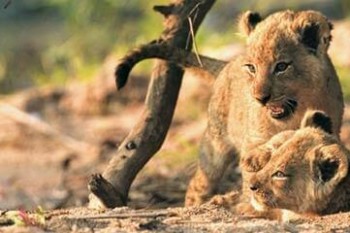
It was certainly 'baby week' on the wildlife viewing front! It started off with Daudi spotting a baby civet, quite a rare find. Shanie then found a very cute baby terrapin in the swimming pool...she rescued it to live another day and it looked very much alive and well when she brought it over to the office to show us! An afternoon gamedrive with Jacob inside the Park included a superb sighting of four month-old lion cubs. They were wide-eyed and utterly adorable. Mummy was somewhere in the bushes, presumably on a hunt, and it looked as though she had told her little ones to "sit still and DON'T talk to any strangers"! They lay in the grass, just off the side of the road, staring at all of us with a combination of intense kitty-style curiosity and bewilderment. They didn't know whether to get up to take a closer look or retreat or sit still as mummy told them to! Each of them had slightly different coloring and patterns on their coats. When we started to move away they stood up and wobbled in single file into the safety of a nearby bush, their little back legs were still getting used to the idea of walking properly. We didn't see mummy anywhere so thought it was just best to continue with our drive and leave the family group alone.

The same drive with Jacob also encountered a baby giraffe with mother and other family members. It was about the same height as an average human, pale in color, and being well protected by it's mother. Back at Nkwali a group of eles have continued to visit the lagoon near the dining room. One female was looking so heavily pregnant one week ago it was painful to watch - imagine carrying all that extra weight! A few days later she was back again minus the weight but underneath her was one of the weeniest baby eles we have ever seen - barely high enough to reach her mother's belly for suckling! A very beautiful sight - only days old and very unsteady on its feet. And as I write Shanie has just sent through a radio message that she has spotted another baby giraffe, only a few days old, with the umbilical cord still attached...just on the staff road into camp!

Robin wasted no time on his short visit to take a drive up to Tena Tena this weekend. He was pleased to find that everything was fine and that the site looks absolutely stunning at this time of year. He was taking a drive around the camp and near the turnoff to the south loop near Tena Tena noticed a disturbance in a tree covered with vines. Reversing back a fully grown and rather heavy looking female leopard darted out of the foliage. She moved out towards the road and then sat and watched the vehicle for a while. It was difficult to tell if she was heavily pregnant or had just finished off a kill. Robin couldn't see any evidence of the kill near the tree. Perhaps more babies are on the way!

Zimbabwe's Bulawayo Airport Renamed, December 30 2001

Zimbabwe's Bulawayo Airport has been renamed after one of the country's former political heavyweights - Joshua Nkomo (deceased). The airport will now be known as the Joshua Nkomo Airport.

Thankfully, for travelers around the world, the idea to also name the Harare International Airport after Nkomo was not accepted.

British Soldiers enjoy Holidays in Kenya, December 30 2001

Kenya's coastal hotels did roaring business over the Christmas holidays as hundreds of British soldiers arrived on board four naval vessels. Industry sources said the soldiers and their spouses would spend Christmas and the New Year holidays in Kenya.

The vessels are part of the allied warships, which have been involved in the war against terror in Afghanistan.

It is also believed that the vessels may be part of the build-up as the allied forces prepare to attack sites in Somalia which are thought to be harboring Osama bin Laden's Al-Qaeda operatives. Foreign Affairs Minister Marsden Madoka said the warships had nothing to do with the war against terrorism. Mr. Madoka said the warships were at the port for Christmas and New Year festivities. "There is nothing unusual about the coming of British warships," he said. The minister added that the tour was planned even before the September 11 terrorist attacks in the US. "People should stop panicking over the arrival of the Royal Navy marines because they are only here to enjoy themselves and not to pursue terrorists," Mr. Madoka said.

Chaos as Riots Cut off Kenyan Airport, December 30 2001

Kenya's Moi International Airport in Mombasa was cut off by riots this week, which left one person dead. The tourist hub was for several hours inaccessible after hawkers barricaded the road linking it to the mainland.

The hawkers barricaded roads with burning tires, stopping traffic from the airport and on the Mombasa-Nairobi highway. Holidaymakers were forced back to their hotels, unable to take their flights because of the blocked roads.

A queue of vans carrying tourists and other passengers formed on both sides of the flash-point. Arrangements were later made to safely conduct tourists from the airport to their hotels. The rioters allowed them though.

Wildebeest Migration Update, December 30 2001

Unusual rains fell in the Serengeti at the end of August 2001 triggering the migratory herds that were in Kenya's Masai Mara to head back southwards. Soon afterwards the rain stopped. The "Vuli", or the short rainy season, of October / November offered erratic and scattered rains. The migration has therefore remained in Central Serengeti.

Return to Weekly Update Archive