ULTIMATE AFRICA SAFARIS
Phone toll free 1 800 461 0682

Ultimate Africa travel and wildlife news archive

December 2004

Chobe National Park Update, December 12 2004

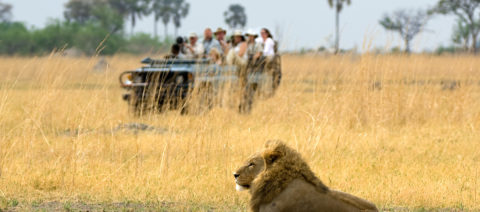
Botswana's famed Chobe National Park has had heaps of rain over the last few days. Surprisingly guests are still seeing great game. Guests at Muchenje Lodge last Saturday saw lion (very close), elephant, zebra, buffalo, hippo and much more - just another normal day really.

Cape Grace Voted World's Best City Hotel, December 12 2004

At a glittering event at London's Ritz Hotel on Monday, December 6, Cape Town's Cape Grace Hotel was announced "Best City Hotel in the World" at the 11th annual Tatler Travel Awards.

Tatler, the UK's cutting edge society magazine, is a vibrant mix of fashion, beauty and sensational features giving insight into the world's leading destinations and personalities.

Having flown to London to receive the award, Cape Grace General Manager, Tony Romer-Lee said "It is a huge honor for us to accept this accolade awarded by well respected travel specialists from an established and credible magazine with style."

On presenting the accolade Tatler Travel Editor Victoria Mather commented: "A city hotel where you can see seals and dolphins!" She made mention of Cape Grace being the model of a city hotel - "modern without being excessive", also noting the high service levels and the various amenities from The Spa to Bascule Whisky Bar.

South African Airways Schedule Change Affects Atlanta - Cape Town Flights, December 12 2004

Effective February 1, 2005 SAA will no longer fly Atlanta direct to Cape Town, instead flying Atlanta to Johannesburg. Guests would then collect their bags and clear customs before transferring to a connecting SAA flight to Cape Town. Guests departing Cape Town to Atlanta would need to fly to Johannesburg to catch the USA bound flight.

Ndutu Safari Lodge Update, December 26 2004

Ndutu Safari Lodge is a wonderfully charming lodge located on the boundary of Tanzania's famed Serengeti National Park. Here is the lodge's latest update:

Dramatic skies dominate Ndutu this month. With rain around the corner, dark thunder clouds pass overhead and distant thunder promises much. There are still lots of brilliantly colored fireball lilies to be seen in the woodland, a sure sign of imminent rain.

With water being a scarce resource at this time of year it's not surprising that a group of bull elephants have learnt to break into our water wells. The shallow wells where we collect our washing water have heavy steel plate lids, which are then padlocked closed. They're strong enough to drive a truck over, yet this posses little problems to an elephant. They just pull the lids off! After several attempts at repair, we've given up and left one of the wells open, even so we still return the cover several times a day. It's amazing to watch them drinking from these as they have to bend over forward and by lifting a back leg off the ground, can reach the water within. One particular elephant with long even tusks could only just get at the water because as he lent forward his tusks touched the ground, thus restricting his reach. The family groups of elephants are drinking from the Big Marsh where there is still plenty of water.

Driving past the wells recently I saw two bulls sparring quite aggressively. They pushed, shoved and jostled for better positions, amongst great clouds of dust kicked up by their feet. This sparring lasted for at least 20 minutes before they moved off together towards the wells. The larger of the two bulls took the first drink, just because of his sheer size compared to the younger bull. After all the exertion of sparring the younger bull was desperate for a drink. He would try to push in, only to be gently nudged back by the older bull as there was only space for one. He'd then try again from the other side, only to be pushed out by the older bull's trunk and held at trunks length for a moment. He would then double back on himself and this time the other bull pushed him back and holding him back with an outstretched foot. For the larger bull the peace lasted for only one trunkful of water, before his companion tried to push in again and this time, obviously a little annoyed, he rumbled, what sounded like a warning to the young upstart. Taking the hint, he took a couple of steps back and then patiently waited his turn. After such a boisterous and aggressive sparring match it amazed me how gentle they were with each other. When he finally got his chance to drink, he made a complete pig's ear of it. I suspect it might have been his first time to drink here. He didn't seem to know how to reach the water below. He spent some time trying to dig around the top of the well, before going down on his knees, but this must have been much too uncomfortable because he soon gave that up. The light was starting to fade and we left him with the problem, hoping he worked it out, because it was a long walk to the Marsh. I saw him drinking quite comfortably a few days later with no problems so he obviously worked it eventually and he even dug himself a hole around the top of the well so he doesn't have to bend down nearly so far, very smart!

Great camp-fire experiences this month; from shooting stars, dik diks, hares, honey badgers, leopards and even an elephant. On one very dark night after hearing rustling in grass, I shone my torch, only to startle an elephant that had snuck up to only a few meters away from the camp-fire. Sadly this frightened him and he walked off into the darkness. But the best thing around the campfire had to have been the serval cat that calmly walked pass and drank from the birdbath. After quenching her thirst she sat not more than a few meters from us and started to wash herself before apparently dozing for a short while. It was such a treat to have one of these beautiful, small spotted cats so close and so relaxed in our presence. It's probably the same serval, an oldish female that the elephants chased past the front of the Lodge last year.

Lions walked past the dinning room during breakfast recently, which was a great treat. They've been seen feeding on giraffes on four different occasions this month. This must be quite an important source of prey for them at the end of the dry season. The cubs from both prides, Masek and Marsh are doing well and have been seen the past week. It's been an amazing year for buffalo, which are not normally common around Ndutu. The herd of 150 seen regularly at the Big Marsh must be good news for the lions in these lean times, although I'm sure they're not easy prey.

Stone cottages have finally replaced the last of the old rooms, which were demolished earlier this year. The rooms on the far ends of the Lodge are now honeymoon rooms with huge beds made with recycled wood from old dhows. Dhows, which use to ply the Indian Ocean carrying spices from Zanzibar and goods from the main land along the East African coast and further away. I've no idea how long a dhow lasts but surely some years? But once retired off, part of one of them became a honeymoon bed for Ndutu, complete with the old handmade bolts still in the wood. I think they look absolutely grand and guests love them. When the first one arrived it took six people to lift it into a room. Although guests love them because of their antique look, our resident carpenter who has been with us for 12 years shook his head and wondered if we actually paid for them? Probably thinking, if he made furniture from old wood that lay abandoned on the coast with holes and rusty bits of metal in it, he wouldn't get any business and probably be run out of town! Although I think he's secretly likes them.

The very dry conditions of late saw two bush fires close to Ndutu. Some were controlled fires set by rangers that became uncontrolled and spread from the Serengeti to the Ndutu area and others were set by Maasai trying to encourage new shoots of grass for their cattle. Luckily it wasn't a hot burn because most of the vegetation had been eaten down during the past Months. We were amazed to see so many European white storks around the fires. There were hundreds, maybe even thousands of these winter visitors from Europe enjoying this unexpected feast. Some seem to actually go into the fire while trying to snatch some of the myriad of insects escaping the flames. The wind that had blown steadily throughout the day died down during the night and by morning most of the fire was out.

On a grey cloudy evening recently we came across two bull elephants wrestling with their trunks. The smaller of the two seemed reluctant to spar with the other. The bigger one decided to reduce the size difference by getting down onto his knees and crawling up to the other to spar. Desperate to play, he looked ridiculous as wriggled along on his stomach, looking like a playful puppy, which is quite something with an animal that weighs several tons. Once the game was over they walked away side by side, probably off to break into our wells. But who could mind! It certainly brightened up a grey evening!

Muchenje Lodge Update, December 26 2004

Muchenje Lodge is located on the western boundary of Botswana's famed Chobe National Park - home to the highest density of elephant in Africa. Here is Sandi's latest update from the lodge:

The anthrax issue which reared its head a few months ago (anthrax occurs naturally in Africa, as in other places, and posed no threat to humans), has subsided and officials have once again opened the western portion of Chobe National Park

Orient Express Safaris Botswana Update, December 26 2004

Orient Express Safaris, one of Botswana's leading luxury tour operators, run three stunning safari properties - namely Eagle Island Camp, Kwhai River Lodge and Savute Elephant Camp. Here is their latest news:

For November temperatures remained in the high thirties and low forties throughout the month, yet the days are now bearable as the skies are almost constantly covered in cloud. The rains are starting to set in, with most areas receiving regular light showers.

The water at Eagle Island has receded dramatically during November, to the extent that the floodplains in front of the tents are now dry. With water levels having dropped all water activities have now been suspended until the next influx of flood water.

Rumors have it that good rains have already begun to fall in the Angolan highlands (the area where the annual Delta flood originates). Should this be the case, it is possible that the next flood season will be very good, as there remains a good amount of water in the top sections of the delta.

Elsewhere around the area surface water is now returning to the numerous dried out water-holes and pans as the rains return. Ultimately this will lead to the water dependent wildlife species dispersing from the perennial water sources, such as the Khwai River.

All remnants of the winter vegetation have now disappeared as the summer foliage has returned. The regeneration of the grass sword has turned barren areas in to small grassland oasis's where myriads of game species are congregating to graze.

Many of the trees in the area are now in flower, bringing an aromatic scent to the camps and the surrounds.

Sightings at Khwai River Lodge have been brilliant as the game is all reliant on the Khwai River for drinking water. The diversity of game in the area at present has meant that guests have had constant "new" sightings while out on activities. Sightings of large herds of buffalo, prides of lion, spotted hyena and wild dog have been the highlight at Khwai, and however leopards and hyena have also been great.

The impala have lambed after the beginning of the rains, resulting in large numbers of nursery herds moving in and around the area. With the arrival of all the youngsters comes an increase in predatory animals, as the impala lambs are relatively easy pickings. Wild dog, leopard, hyena and lion seem to be taking it in turns to ensure that the impala population is regulated.

As mentioned, one of the highlights around Khwai has been the spotted hyena - this not so much because of the behavior or numbers, but rather because the guides have located a den site and as such have been able to expose guests to the young of the specie. At the den, 3 pups, around 2 months old have been providing constant entertainment for the guests as they learn about life through a process of trial and error exploration of their surrounds - from discovering that wasps sting through to working out that falling of termite mounds can be painful, these youngsters still have a lot to learn.

At Savute Elephant Camp, the lions continue to take down elephants with increasing frequency, with the most recent being on the 20th of November. During the beginning of the month, the pride was taking down elephant almost every three days, many of which were in the immediate vicinity of Savute Elephant Camp. With the heavy lion activity, it seems that the elephants have developed a short fuse when it comes to cats and on several occasions guests have had the opportunity to make up their own minds in terms of who is "King of the Jungle".

Guests were also fortunate enough to watch an encounter between two different lions prides. A pride numbering 14 individuals, who had been out of the area for the past six months arrived back in the middle of the month and immediately came into contact with the large pride (numbering around 28 individuals) that is hunting the elephants. Needless to say that the larger pride claimed immediate dominance and after some fairly heavy injuries were sustained the new arrivals soon made tracks heading away from the scene of the encounter.

Eagle Island Camp has had very good sightings over November as the water levels have dropped and areas have opened up for game again. Along with this the re-introduction of game drives now that the area is dry enough to move around has meant that the guides are now able to access a greater area, resulting in more diverse sightings.

Elephants, tsessebe, zebra, blue wildebeest, giraffe and lion have become daily sightings while out on drives and walks. Large herds of buffalo have also been seen regularly in the area and, the characteristic lion prides that often follow these large buffalo herds have also been seen fairly often. With the helicopter based at Eagle Island Camp, the size of these buffalo herds can really be appreciated from the air.

With regards to birds golden orioles and a variety of kingfishers (especially the woodlands) have been bringing their melodic songs into the camps on a daily basis, adding a certain charm to the different properties.

At Khwai River Lodge, the wattled cranes have been successful in ensuring the survival of their chick over the past month. Khwai has also seen an increase in the owl activity as the rains have brought about abundance of insect life and with that an increase in rodents who prey upon the insects - the rodents then being the primary diet of the owls. The staff at Khwai has also identified an African cuckoo that has now made its residence at the lodge.

At Savute Elephant Camp it seems that the rains and thunderstorms have delayed the last arrivals of the migratory birds, yet other species seem to be flourishing in the Savute marsh area, which is now slowly turning green as the rains stimulate the grass to grow. Millions of red-billed quelea are still providing a wonderful site in the marsh area, especially when they are startled by something and all take flight together, forming huge banks of "flying clouds". Also on the marsh, are the ostriches and their young chicks.

Around the water-holes at Savute Elephant Camp, large numbers of laughing doves and Cape turtle doves are seen congregating for their chance to get at the water. Often following these doves is also a number of raptors who take every opportunity at a quick meal when the doves are totally alert.

The most prolific bird activity has probably been at Eagle Island Camp. Here, the annual barbel (catfish) run has brought in a large number and diversity of birds that are preying on the fish as they move through the shallows. A variety of storks, egrets and raptors have moved into the area and follow the run as it moves through.

With regards to reptiles both crocodile and leguaan (water monitor) activity has been on the increase in the Khwai and Eagle Island areas - this could however be simply that they are now more noticeable as the water levels have dropped in these areas and as such has made sighting them a great deal easier.

Orient Express Safaris Holiday Experience, December 26 2004

Many Ultimate Africa clients ask what it is like to experience the holidays while on safari in Africa. As an example check out what Orient Express does for client's in Botswana:

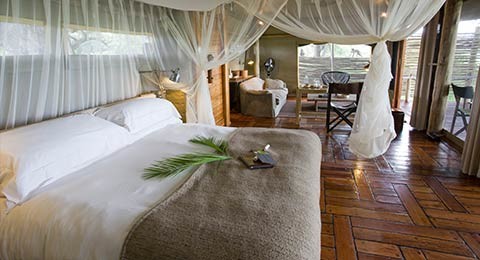
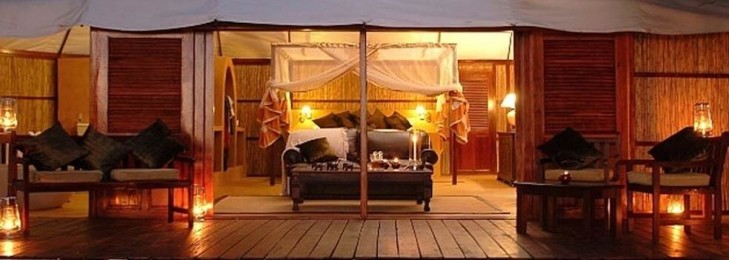
Located in pristine and diverse ecosystems of Northern Botswana, the three luxury camps of Orient-Express Safaris are offering visitors over the end-of-year festivities a remarkable never-to-be-forgotten unique bush experience. Imagine being served pre-dinner Champagne and fresh strawberries in the African bush for Christmas Eve as you witness an awe inspiring African sunset. A traditional Christmas Eve dinner is then served at camp and on your return to your room a Christmas gift awaits you on your pillow.

Be prepared for serious consumption of fabulous fare on Christmas Day. The culinary feast begins with an early light breakfast of smoked salmon, fresh croissants and freshly ground coffee at camp. Then, it's off on an early morning game drive with a stop to indulge in freshly baked Christmas Mince Pies, aromatic coffee and chilled orange juice. On return to camp, an African Bush Christmas luncheon awaits you. Tempting fare includes roasted guinea fowl and for the traditionalists, turkey is of course on the menu. Dessert is a refreshing 'Frozen Christmas Amarula ice cream with a berry compote'. For those brave souls who can withstand an Afternoon Tea, the camps will prepare unique bush smoothies, which are a clever take on the traditional eggnog.

A most memorable of New Year's Eve festivities awaits you at all three camps. An early morning bush breakfast includes Champagne and strawberries soaked in brandy. The evening begins with sundowners located at a spectacular viewpoint, followed by a stylish cocktail party around the camp's pool at 10 PM. Dessert, coffee and Champagne will be served at count down to 2005.

Nairobi's Carnivore Restaurant No Longer Serving Game Meat, December 26 2004

Nairobi's famed Carnivore Restaurant will no longer be serving game meet due to a Kenyan government ban on serving game meat. They will still serve crocodile, ostrich and camel in addition to chicken, beef, lamb etc....

Return to Weekly Update Archive