ULTIMATE AFRICA SAFARIS
Phone toll free 1 800 461 0682

Ultimate Africa travel and wildlife news archive

January 2003

Robin Pope's Weekly Zambia Update, January 5 2003

Robin and Jo Pope runs several very successful safari camps in Zambia. Here is their weekly update:

It is a beautiful sunny day and the river is rising! A week ago, whilst Jeffery was writing to you, Robin and I decided to take the day off and get into the park. I had realized that I had been back for over two weeks and had not yet gone in. We see so much from camp and of course hear about the walks and drives each day, that I often do not feel the need. But when we do go out I always say "we must do this more often". We packed a picnic, picked up a couple of friends and off we went. The focus was to find a shady tree with a great view under which to spend the afternoon. Luponga Spur was the place, and after passing 7 huge kudu bulls we spread out the rug, opened the wine and had a great afternoon playing card games. We had a 360 degree view of the sky and it was a spectacular show.

The light constantly changing, white clouds racing against the dark dark horizons as the storms built up and the walls of rain against the escarpment. Amazingly we stayed dry all day.

On Christmas Eve, Robin decided we needed to get into the festive mood and so set up a pool umbrella in the middle of the sand island opposite camp.

After the morning drive, we all boated over to where Robin was waiting with Pimms! It was hot, very hot - but we sat in a tight circle in the shade and had a few, as they say! Mad Dogs and Englishmen did come to mind.

That afternoon the rain arrived again and so Christmas carols on the bridge were looking very threatened. However, a nearby lodge offered their conference center, overlooking a lagoon. There were over 100 people, 2 local choirs who had been practicing Silent Night, candles and good voices. It was a magic event - with the fireflies being the Christmas lights over the lagoon.

Christmas lunch - what a fabulous spread Shanie had prepared. We were just coming to the end when the heavens opened. And it rained! Shanie entertained us all with a spectacular slip on the path - ending up covered in mud. By the evening we were all feeling soggy and so everyone retreated to our house to eat turkey sandwiches and watch the BBC documentary Blue Planet!

The gamedrives somehow have managed to avoid most of the rain. And the guests have been amazed at how much they have seen. There have been 3 packs of wild dog around. Spending most of a morning with one of the packs, it was noted that they seemed to be very intrigued by the bright red shirt of Robert on the back of the vehicle. The dogs repeatedly came up to the vehicle to check him out! However, the dogs ended up feeding on a puku!!!

There have been five leopard sightings this week. Last night Daudi and Keyala in 2 vehicles were watching a leopard for quite a while. Paul was nearby and also keeping very silent and still. So they assumed he was watching from a distance so as not to disturb the viewing. In fact Paul had 2 male lions very close to his vehicle and he thought Daudi and Keyala were watching the lions from a distance. After some time, all 3 vehicles left the scene and it was only when they got back to camp that they realized what had happened! You can imagine how silly they felt!

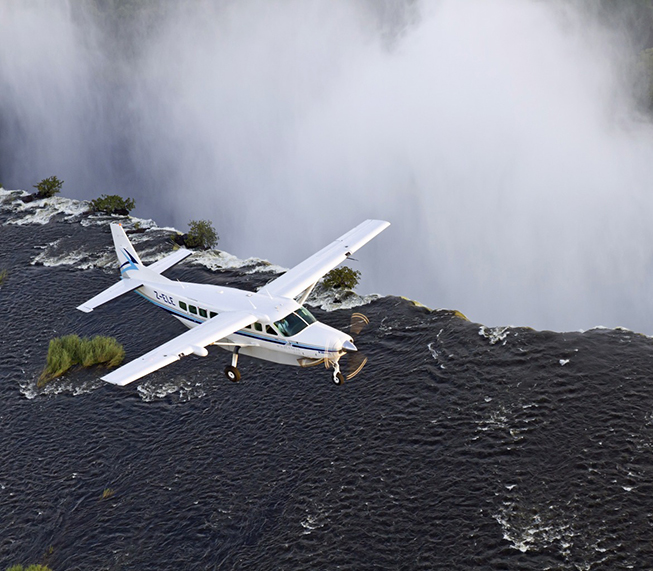
The Valley has thousands of butterflies flitting through the air. Many different species, with lots of wonderful colors. It is a magical part of the rains. The land has really turned emerald green after the recent rain and so I wanted to take a look from the air. My flying career has not gone too well this year. I have not managed to convert onto my plane (Cessna 210) as I have not had access to an instructor. And to be honest I find it fast after the smaller planes that I learnt in. But with Ryan, our pilot, I can fly from the right seat. I took John and Jill, guests who are staying with us for 10 days, up for a birds eye view of the valley. John is a PPL (private pilots license) as well so he was very keen to get up there. We flew up the river past Nsefu, over to Mupamadzi, checked out the Mutinondo waterfalls cascading down the Muchinga escarpment, returning via the Frank's lakes, flying low down the Luwi to Tena Tena and finally buzzing Nkwali at 50 feet! What fun. The valley, as we suspected, was a carpet of green (but we did need to confirm it!!). We saw a number of big buffalo herds and Tena Tena had well over 80 elephant in the area.

Zimbabwe Hotels Maintain High Ratings, January 12 2003

Zimbabwe's only two members of the Leading Hotels of the World (LHW) (Meikles Hotel in Harare and The Victoria Falls Hotel) have received high ratings in the annual inspection carried out among all member hotels.

The two hotels were singled out for their consistency in giving guests a memorable experience. Meikles Hotel and The Victoria Falls Hotel have been members of the prestigious LHW for several years and to maintain their membership have to undergo annual inspections of all guest facilities and amenities.

Meikles Hotel was awarded 86 percent in its 2002 inspection, while The Victoria Falls Hotel received 81 percent, well above the average for Leading Hotels of the World establishment across the globe.

The inspections are conducted by anonymous inspectors whose identities are not known by management and staff of the hotels under review. To remain within LHW, member hotels must achieve a minimum of 70 percent in their overall ratings each year. "These awards are further confirmation of the standing these two hotels have within the world of travel and tourism and provide encouragement and incentive for management and staff to continue to maintain and even improve standards where possible," said Roy Meiring, chief executive of Meikles Africa Hotels.

Meikles Hotel is one of three southern African hotels within the Meikles Africa Group, the others being The Victoria Falls Hotel jointly owned and operated by Meikles Africa Hotels and the Zimbabwe Sun group and Cape Grace in Cape Town, South Africa. Membership to the Leading Hotels of the World organization gives hotels a range of operational and marketing benefits and opportunities and confirms their status among the finest hospitality facilities in the world.

In reports presented to Meikles Hotel and The Victoria Falls Hotel by Trent Walsh, managing director of Leading Quality Assurance in the United Kingdom, positive feedback and high ratings were received on all areas of operation from the front office, housekeeping, food and beverage to the overall product.

"The reports show that the Meikles Hotel and The Victoria Falls Hotel have been able to maintain and even build on their already high standards in various operational areas, which has a direct impact on their reputation and standing in the travel and tourism sector worldwide," Meiring said.

Namibian Government Says Airport Closure 'Not Negotiable', January 12 2003

The Namibian government says it will not reverse its decision to shut Eros Airport to scheduled flights despite threats of legal action by some aviation operators.

Local private airline Westair, the Namibia Airports Company and two South African commercial airlines which make use of Eros Airport outside Windhoek said Government did not consult them over the closure. They described the decision as a breach of the Bilateral Air Service Agreement (BASA) between Namibia and South Africa. "They (The Namibian Directorate of Civil Aviation) should not have taken such a decision unilaterally without consulting the South African aviation authorities," said Westair Chief Executive Officer Wolfgang Grellman. He said Government did not discuss the effects of the airport closure with the aviation industry.

But Nambian Deputy Minister of Works Transport and Communication, Asser Kapere, yesterday said Government would not reverse the Cabinet decision to shut Eros Airport on February 7, 2003. "We cannot change the Cabinet decision and it will stand," he said.

Air Namibia, unable to compete with South African Airlink which uses Eros Airport, lobbied Government to stop the SA airline from using the airport as it was losing a lot of customers who preferred to fly from Eros Airport and not from Hosea Kutako International Airport 40 km outside town.

"The question arises whether the Cabinet has been given the full details on what they ought to have done. They only approached Air Namibia. They did not approach the aviation industry and this industry is wider than Air Namibia," Grellman said. He said Westair would try to talk to Government about reversing the decision "but if we cannot come to an agreement that will leave us with legal resort".

SA Airlink is also preparing "a legal challenge" over the closure of the airport. Willem Van Schalkwyk, spokesperson of SA Airlink, which operates daily flights between Johannesburg-Cape Town and Eros Airport said the airline had "a plan of action but I am not going into those details".

The NAC plans to approach Finance Minister Nangolo Mbumba, Prime Minister Theo-Ben Gurirab, Works Transport, Communication Minister Moses Amweelo and Environment and Tourism Minister Phillemon Malima.

Robin Pope's Weekly Zambia Update, January 12 2003

Robin and Jo Pope runs several very successful safari camps in Zambia. Here is their weekly update:

The brightness of the green that covers EVERYTHING, in contrast to the browns and grays of only 2 months ago, is quite extraordinary! And vast quantities of water cover the ground - paradise for those waders and water birds! We sat and watched yellowbilled stork fishing for food in the waters left by recent downpours. Little sparkling streams of water trickled over rocks and roadways. Plenty of food and water for all the game - and as a result the animals look so healthy! Bright shiny coats on all the impala and puku. The giraffe look particularly stunning at sunset, semi-camouflaged by all the greenery. We picnicked at Wamilombe with a spectacular view up the waterway towards Chindeni Hills. The air was perfectly clear. Hippo and zebra were in view. The most bizarre sighting were 2 chameleons mating!! They were various shades of bright green, blue and yellow and they were standing halfway up a large tree trunk. I think they are very beautiful creatures but local Zambians think they are evil and bring bad luck to those who see them!

Our last guests at Nkwali for the 2002 season enjoyed excellent gameviewing overall. There was an abundance of leopard and lion sightings for all, including a pride of lion feasting on a zebra kill. Smaller herds of buffalo have been seen which is quite unusual at this time of year. There have been small buffalo herds seen behind Nkwali as well as a family of giraffe (more commonly seen along the drive into camp). Boating can now be offered now that the river is up so high. I've often heard the boat zooming up and down river - Keyala taking the visitors up beyond the Luangwa Bridge at mid afternoon (instead of an afternoon drive) and returning in time for sundowners. At the moment you can boat downriver from camp and right into Wakumba! Quite a different way of seeing this area.

The sun is shining brightly this morning but exactly 2 days ago it became very dark at about 8 AM and then the heavens opened big time!! 78mm of rain was dropped on Nkwali in just over 2 hours!! It was awesome! The rain pounded down making ourselves unable to be heard in an office with a tin roof! Then the lightning and thunder orchestrated directly above - I've not heard such loud claps in my life!! It was all very odd to have an early morning storm in early January - it is usually typical of March! It took about 24 hours for the pools of water around the camp to sink into the soil after this deluge and ever since then it has been sunny, cool and fresh.

Yesterday our last guests were farewelled after a picnic lunch by the pool. And now, as I type, the Nkwali staff are packing up the camp and putting everything into storage until opening again in late March. Camp closure is always conducted at frenetic pace - Shanie, Simon and Keyala have 3 days in which to do a stocktake then pack up and put into storage all the contents of the chalets, the bar, the dining room and most of the kitchen before they have to be in a car and off to Lusaka. Shanie has a plane to catch out of Johannesburg to London shortly after that! Simon will be following a week or so later (no doubt to allow her the chance to catch up with all of her friends and show them her engagement ring!).

So it's the end of another season and time to start planning for the next one! It won't be long before we are welcoming visitors back to our camps. In the meantime Jo has asked me to mention something that she omitted last week. As she was walking out to her aircraft at Mfuwe Airport with guests, John & Jill, last week to see the Valley from the air, they saw the most incredible moth on the tarmac. It was very large and bright bright green with two sets of eyes! It had a width of about 15cm and a tail that was probably just as long. Jo thought it would get run over by a taxiing aircraft so decided to encourage it to fly away. She picked it up and it resembled a bird, fluttering beautifully away. Suddenly a bee-eater came from nowhere, swooped down, caught the moth and flew off, leaving the observers in a state of shock! Jo always thought it best not to tamper with nature and here was her perfect reminder!! Until next week, keep well! Jeffrey

Air Botswana to Complete Privatization By June, January 19 2003

Air Botswana is upbeat that it will meet the June deadline to complete its privatization process. "The legislative and structural reforms that are necessary to provide an enabling environment are proceeding on schedule and all that remains is for approval to be given by government and parliament," spokesman for Air Botswana, Joe Motse said.

"The necessary legislation is expected to be in place by April 2003, thereby paving the way for commencement of the sale, which will be done through a bidding process. The transaction is therefore still expected to be concluded by the end of June 2003," Motse added.

Air Botswana has been chosen as the pioneer of the government's ambitious privatization plan to improve efficiency. The airline is to engage in a public campaign to raise awareness about the privatization process.

Further, the airline will scout for a strategic partner in accordance with the international airline operation standards. That would mean among other things the strategic partner would not control over 50 percent of the airline shareholding. "The strategic partner would be identified through an open bid process. The partner who will ultimately be selected will be one whose profile shows more synergies with Air Botswana," Motse said.

He further pointed out that as part of the program, certain shares are to be listed on the Botswana Stock Exchange (BSE) through an Initial Public Offering (IPO) "once the benefits due to synergies brought about by the relationship with the strategic investor have began to be realized". This will ensure increased interest in the IPO as well as ensure that high values are placed on the market," he added.

Tourists Warned Not to Get Out Cars to See Elephants, January 19 2003

KwaZulu-Natal wildlife authorities in South Africa have warned motorists not to leave their cars when viewing elephants, either inside or outside of national park fences. The warning follows reports that motorists on the R618 were leaving their cars to get a better look at wild elephants in the Greater St. Lucia Wetland Park between St Lucia and Mtubatuba. The people reportedly remained oblivious to the elephants' agitation and treated the animals as if "they were a tame circus act or animals in a zoo". One of the elephants repeatedly mock charged but the viewers continued to ignore the animals' warnings.

"No ordinary fence is capable of stopping a charging elephant," said Ezemvelo KZN wildlife conservation manager Tony Conway. Even if the fence is electrified Conway said, "it only serves to contain an elephant that may brush against it - a provoked, angry or charging elephant will go straight through it." He added that the people were placing themselves at great risk by not moving away and instead further provoked the elephants. "This behavior is unfortunate bearing in mind a recent incident where a man was gored to death within the park after provoking an elephant herd," Conway said.

According to the park's chief executive officer, Andrew Zaloumis the park recently introduced a new herd of elephants that are settling in nicely. "Our elephants are slowly settling in and are usually tolerant of humans, but people need to respect their immense strength and the fact that they will protect their young against any perceived threat," said Zaloumis.

New Warning about Travel to Tanzania / Zanzibar, January 19 2003

On January 10, 2003 the US State Department issued a new travel warning with regards to travel to Tanzania. The warning reads as follows:

This Public Announcement is issued to alert Americans to the potential for terrorist actions on the Tanzanian island of Zanzibar. This Public Announcement expires on May 12, 2003. The Department of State has received information that a terrorist group may be planning an attack on an unspecified location frequented by Westerners on the Tanzanian island of Zanzibar. This may include restaurants, clubs or hotels. American citizens visiting Zanzibar or other near-by coastal locations in Tanzania are cautioned to take appropriate measures and carefully evaluate their security posture.

World Legacy Award Presented to Wilderness Safaris, January 26 2003

Wilderness Safaris of South Africa was honored at a ceremony hosted by Jordan's Queen Noor, at the National Geographic Society headquarters in Washington DC last Wednesday night.

Wilderness Safaris have become the world's first recipient of the newly introduced World Legacy Awards, in the Nature Travel Category, as created by National Geographic Traveler and Conservation International. This unique award system is set to recognize and profile leading examples of sustainable tourism and nature conservation efforts around the world, where environmentally and socially responsible tourism practices are helping protect and nurture our planet's precious natural and cultural resource-base.

This new award and recognition system is bound to become the 'Oscars' of the Eco-Tourism and Conservation Industry - as, let's face it, tourism today is one of the world's largest industries, with over 700 million people currently traveling annually. Furthermore, this award is unique in the world for placing emphasis and focus on tourism's responsibility towards environment and cultural heritage. And finally, this award ensures that a group of specialists within the scientific, anthropological and tourism communities perform on-site verification visits, to ensure that all award entries are consistently and actively practicing their conservation ethos as per their award applications.

Three categories have been specified within this new and prestigious award - 1) Nature Travel, 2) Heritage Tourism and 3) Destination Stewardship. Wilderness Safaris took the honor in the Nature Travel category, for their effective conservation management across over 2.5 million acres (1.1 million hectares) of land and six countries within the Southern Africa region. Wilderness Safaris have assisted with many research projects across several high-priority endangered species within these areas. These include the White Rhino Re-Introduction Program in the Okavango Delta, Botswana; the Wild Dog Research Program; the longest-running Research Project of the Loggerhead and Leatherback Turtle in Rocktail Bay, Northern Zululand; and the intensive North Island - Seychelles On-going Rehabilitation Project.

Wilderness Safaris have also ensured that many local communities benefit from their activities within the regions, by creating community share-holding and revenue generating tourism opportunities, up-skilling staff for work and skills-development opportunities, as well as in the job-creation arena, by linking tourism-events to local community cultural activities and products.

Finally, the Children in the Wilderness program introduced by Wilderness Safaris in December 2001 has just completed its second successful run during December 2002. The aim of this edu-tainment program is to host under-privileged and disadvantaged children from across southern Africa in a week-long stay in our lodges. This year, the program was extended to include lodges in Namibia as well as Botswana. Typically, the program is instructional, whereby children receive an understanding and greater awareness of their precious natural heritage, of which they are the future custodians. Their improved self worth at the end of their stay evidences the success of this program. They are inspired to complete their schooling, and to explore future career opportunities. Wilderness Safaris have just hosted over 300 children on this program, and intend growing this number annually to reach over 1,000 Southern African children per annum.

Tracking Lion on Foot, January 26 2003

How would your Walking Guide react and deal with the charge of a lion when encountered on foot?

This question is not on the tip of many peoples tongues when planning a safari however in recent years the industry has seen a growing promotion of 'Walking Safaris' as travelers request less sedentary vehicle based safaris.

The following account highlights the difference between the Professionally Guided Walking Safaris as opposed to the colorful brochure inserts promoted by many companies!

A Walk on the Wild Side

There was a fresh wind blowing away the rain clouds as we, the Davis family - Mark, Sally and Kate (8) - set out from Ngaroi camp shortly after dawn driving to the hills bordering Serengeti for our second walking safari. We were accompanied by Philip, a walking guide and a professional hunter; Naiman, the driver, guide and companion for the safari; John, a Maasai guide; and Mustapha, from the camp.

The drive was eventful in that we didn't get stuck! We saw a great deal of plains game - zebra, Thompson and Grants gazelles, eland - and remarkably a substantial family of ostriches with around 15 chicks. We were treated to a display of dummy runs with a pretend broken wing from one of the males, who was hoping to distract us from pursuing the flock. As we covered the plain to our destination, we could see buffalo in the lower areas of the hill. When we arrived at the foot of the hill, we spotted a mature cheetah and slowly followed him in the jeep as he began to climb the scree. We left our jeep and began to follow on foot, hoping to pick up his tracks. As we walked carefully up the hill, Philip showed us the tracks of an eland which seemed to have turned hurriedly and run down the hill earlier in the morning. Shortly afterwards we saw fresh impala tracks and some very fresh spots of blood which Philip thought came from impala, although he did not necessarily think the animal was wounded but might have just given birth. Suddenly, as we looked up to the brow of the hill about 30 meters in front of us, we saw two lionesses and two cubs scampering down the hill. They took no notice of us and disappeared, we thought, down into the Serengeti.

We continued to walk up the hill, hearing the wind whistling through the thorns on the acacia bushes, until we gained the summit and had remarkable panoramic views over the Serengeti and back across The Ngaroi area and up to the Kenyan border. It felt magnificent, with the sun and a gentle wind and views of game grazing below. We saw mountain reedbuck at the top of the hill and then found a sheltered spot for our morning coffee overlooking the Serengeti. As we looked down into the plain we could see giraffe, hyenas and gazelle, which looked rather unsettled. We thought this might be as a result of the lion that we had seen going down the mountain.

Suddenly, Philip, Naiman and John heard a warning whistle from the reedbuck. They looked round and Naiman shouted "Simba". We looked up and the hill was alive with lion. On the right, a very young cub was coming down the hill - and disappeared from sight - about 30 meters away. A slightly older male cub was heading straight for our temporary camp and up on the brow of the hill we could see other cubs and lionesses. Philip started shouting in Swahili and walking towards the cub to scare it away, but it kept on coming. At less than 10 meters away, Philip fired a warning shot in front of the cub to stop it and after a few seconds (and a few meters closer) the cub stopped and turned back up the hill. On the left immediately above our position, a mature lioness was now gaining ground, growling and charging towards us. Everyone shouted and John towered over Kate to protect her, raising his spear in case of an attack. Thankfully, the lioness stopped, roared and turned back up the hill, without another shot being needed. We could see other lionesses and cubs on the top of the hill, looking down at us, but they then all turned away and disappeared from sight.

We were all very shaken. But of course, we finished our tea!! We then decided to curtail our walk and go and find our vehicle (and reassure Mustapha who was waiting and would have heard the shot, that we were all OK). We climbed back up the hill, making as much noise as possible. We didn't want to come upon the lions again by mistake. We radioed to Mustapha that we were OK and set off. As we descended, John and Naiman looked back up the hill and saw that a couple of the lions appeared to be following us. Everyone armed themselves with some stones, just in case, and Sally and Kate recited poetry to keep them feeling brave. To add to the excitement, on the right, Mark and Kate spotted a buffalo in a thicket. Philip thought it might be in distress and at that point thought the lion might have wounded it.

We continued down and were pleased to reach Mustapha and the safety of the vehicle. Once refreshed, we noticed vultures circling over a thicket close by. We edged the vehicle towards the thicket, and we then saw that it contained a dead buffalo. Philip, Naiman and John gingerly got out to explore. After about 10 minutes they returned to tell us that the buffalo had not been killed by lion, but probably by Morani - Masai warriors, who are required to kill fierce animals as a rite of passage to manhood. Unusually, however, they had not cut off the tail, and so Philip speculated that one of them might have been hurt in the process and therefore returned to their boma for medical treatment. Philip also thought that it might have been the presence of the warriors on the mountain that had made all of the game so jumpy and caused the behavior of the lions. Having been given the all-clear - it did not seem that the lion had found the buffalo yet, but could smell it and were probably looking for it - Mark, Sally and Kate walked a little closer (but not too close!) to see the buffalo.

We then returned to the vehicle and made our way back to our camp having had the most remarkable life experience. We were immensely grateful to our three guides. A walk in the park turned into a walk on the wild side! Sally Davis

'This was the first time I have had to fire a shot on a photographic walking safari. It would be too much to ask that it be the last. Although we try to get close to all wildlife on these walks it is my job to prevent a direct confrontation as this definitely was. The good news is that it was the lions that ran into us and not that we were approaching them.

Everybody did exactly the right thing and stood their ground, not an easy thing with the deep soul shaking growls of lion all around. If any of us had shown the fear we all felt in the pit of our stomachs and backed up or turned to run the lioness that charged might not have stopped and I would have had to kill her. I had the bead on her and would have waited until she was on us before firing, I had also had time to reload the first barrel of the double .470 rifle I was carrying, before she started her charge, and always had the second barrel un fired as back-up. This was a day that none of us will forget, not only for the lions but the breathtaking beauty of the area during the rains and the variety of animals and puzzling behavior we encountered. The wilderness is always more complicated than it seams on the surface and every time I venture out into it I learn more. This was Kate's day though, who still very shaken immediately after the lionesses charge, had not lost her sense of humor, " I think I have seen enough lions now." she said with a grin'.

Philip Ashby

Wildebeest Migration Update, January 26 2003

The first wildebeest calve was seen on the 13th January 2003, hopefully premature and not an indication that the teeming herds of wildebeest assume that the good rains have finished.

Gazelles, zebra, wildebeest and lion young are in abundance across the plains making for an exciting time amongst predators and prey so with the main herds settling into the familiar pattern of the symphony of life!

The main herds of migrating wildebeest have moved south and so far seem settled on the short grass plains around the Ndutu woodland however, as we all know the slightest shower will draw the lush grass dependant herds to wherever it falls.

Robin Pope's Weekly Zambia Update, January 26 2003

Robin and Jo Pope runs several very successful safari camps in Zambia. Here is their weekly update:

Whilst this week's newsletter is being sent out at the usual time I was a little delayed getting onto the keyboard this morning because there was nobody in camp who knows how to turn on the generator! Robin is the one who can do it but he was out of camp early for the weekly Nkwali staff change-over and was experiencing a slight delay. All the camp staff who have been on duty for the past week were driven home early this morning and on the way back Robin collected all the guys who are "on" for this week! So with most of the staff away Robin has had to get in there once again! Anyway, on the way back to Nkwali at about 7:00 AM they encountered a group of elephant on Robin's bridge (closest to camp). There was a baby of about one month old who was feeding and being boldly protected by its mother. She was not about to move to let the vehicle pass and all of the family members stood their ground. So Robin and the crew had to wait for over half an hour until the baby finished feeding and the herd moved on! At this time of year the eles love using the road as they like the height it brings and the dry ground underfoot. They don't like being nudged off the road into muddy soil! A drive out of Nkwali at the moment involves driving over large quantities of elephant excreta and coming across the occasional large grey mammal or two!

We are experiencing days reminiscent of April at the moment!! Whilst we've enjoyed a lot of rain up until recently there hasn't been a single drop since last Sunday.The air is clear and fresh AND the river has dropped 2 meters in one week! At this time of year we are normally obsessed with potential flooding possibilities and talking about plans for evacuation. At the moment we are obsessed by how much the river level has dropped! Having said that, I'm sure the next wet weather pattern is just around the corner.

One morning as Jo was taking her daily swim she suddenly heard elephant trumpeting loudly nearby. It was a group of adolescent eles who were having a bit of fun. It was as though they wanted to play with one of the safari vehicles - pretending to "dare" the vehicle to come forward with their mock charges then running behind a bush and peeking back to see what the humans were doing! A heavily pregnant female elephant was seen "about to drop" further up the road. She had extremely beautiful, perfect tusks and was within days of giving birth. Robin saw her this morning still very large indeed! In the Park there was lots of game though harder to see as the bush is so very green and thick. Lots of antelope and warthog! On one tree they spotted a monitor lizard, a sun squirrel, a huge active beehive and a cuckoo.

Weekends during the rains are always very relaxed and can be quite social! On Saturday night we were invited to a 30th birthday party at Croc Farm. It was a magical night with a full moon and lots of stars, lots of water flowing past and fairy lights in the trees - quite a surreal atmosphere. It was amazing how many people are still in the Valley and much of them are young American men in the Peace Corps. They should be out in the villages on a permanent basis but always find themselves with an excuse to come into town for a beer! On the way back to Nkwali a beautiful large giraffe was standing on the middle of the tarmac road and it was clearly visible in the bright moonlight. We approached with lights off and stopped to watch. Suddenly Jo leapt out of the car and started walking towards it to see how close she could get! What a wonderful moment with nature. The giraffe stood quietly for a moment then turned its big body and ran off into the bush!

Next morning some of us were a little worse for wear (Robin had drunk one or two margueritas!) and we were going to have a picnic in the Park with Sandi, Peter and some of our friends at Flatdogs. However we were feeling too lazy so had it in front of chalet 3 under big shady trees. Lots of food, soft drinks, rugs and cushions and general lazing about gazing up at the bright blue sky. Whoever said this was the RAINY season???! Jeffrey

First Malaria Tablet for Children, January 26 2003

Despite the growth of travel to Africa generally, many families have held back from going there on account of fear of malaria or reluctance to expose their children to possible side-effects of medication.

Malarone has now been launched in the UK in a children's formulation and is the first ever malaria tablet designed just for children. It is also licensed in the USA, Denmark and also has become increasingly available in Europe. The key benefits include: Small, easy to swallow tablets that are film coated and therefore don't taste bitter. Tablets can be crushed for small children. Simple, once daily dosage starting the day before travel. Tablets can be discontinued just 7 days after leaving. 98% efficacy against Plasmodium falciprum, the most serious form of malaria. Extremely low risk of side effects.

The launch of a children's formulation of Malarone will open up new opportunities for families wishing to travel to Africa, enabling them to do so with much greater safety and peace of mind.

Return to Weekly Update Archive