ULTIMATE AFRICA SAFARIS
Phone toll free 1 800 461 0682

Ultimate Africa travel and wildlife news archive

July 1999

Luxury Lodge Re-opens in Botswana, July 4 1999

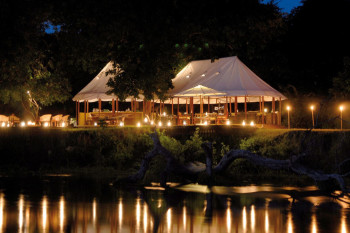
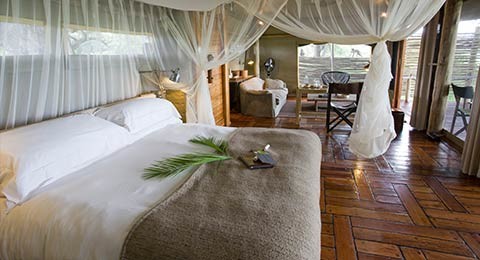
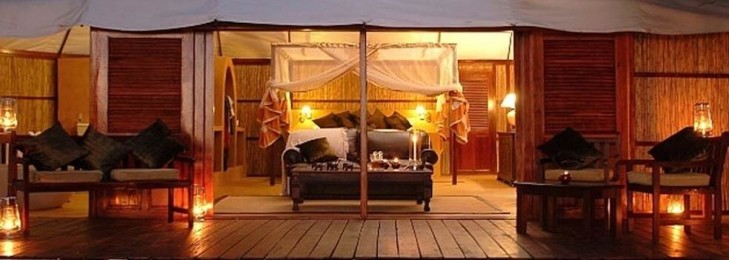
The Khwai River Lodge, just north of the Moremi Game Reserve in Botswana, has reopened following the completion of refurbishment's to its accommodation and public areas. The camp now features 12 thatched luxury tents. Each sports a shaded viewing deck, air-conditioning and 24-hour lighting. Upgrades to the public areas included the addition of 1,500 new indigenous trees and plants, a heated swimming pool, inside and outside fireplaces and a secluded viewing hide.

The Khwai River Lodge is one of three camps operated by Gametrackers in Botswana and complements Eagle Island Camp in the Okavango Delta and Savute Elephant Camp in the Savute Channel.

Mozambique Lifts Ban on Elephant Hunting, July 4 1999

Mozambique will lift its ban on elephant hunting in the next month and start selling off 1,8 tons of ivory seized from poachers. The ban was introduced in 1990 after the government signed the Convention on the International Trade in Endangered Species (CITES). The convention was amended this year to allow elephant hunting under strict conditions. Mozambican Minister of Agriculture and Fisheries, Agostinho Carlos do Rosario, said the ivory would be sold abroad and the revenue generated spent on the conservation of the country's remaining elephants.

Mozambique has about 15,000 elephants. The lifting of the ban is especially welcomed by peasant farmers in Niassa, who regularly lose their subsistence crops to elephants.

Rwanda to Re-open Gorilla Park, July 4 1999

Rwanda is to re-open the Virunga National Park after two years of closure caused by war. The decision will inevitably raise again the issue of whether tourists should be encouraged to visit such potentially dangerous areas (Due to safety concerns Ultimate Africa does not arrange travel to Uganda and Rwanda).

In March, eight western tourists were killed by suspected Hutu rebels while viewing gorillas in Bwindi park, in neighboring Uganda. However, the Rwandan tourism office said it believed security in the Virunga National Park was now sufficient to allow full scale visits. Tourism was suspended in June 1997 following attacks by Hutu rebels crossing the border from the DR Congo.

The park will be patrolled by 80 specially trained armed wardens, backed by army troops. At first, just 16 visitors a day will be allowed in for one hour at a cost of $250 per person.

Rwanda has lost considerable tourist income since the park was shut. Before civil war broke out in 1984, income from visitors wanting to see the silverback mountain gorillas raised US $700,000 a year. Of the 630 gorillas estimated to exist in the wild throughout the world, some 300 live in the Virunga region.

The park will remain closed on the DR Congo side of the border.

Japan Buys African Elephant Ivory, July 18 1999

Japan has become the first country in 10 years legally to import African ivory under a scheme aimed at controlling the growth of the elephant population in southern Africa. The United Nations allowed a special relaxation of its international trade ban on condition that tusks from Namibia, Zimbabwe and Botswana were harvested only from elephants that had died of natural causes or killed to control population.

All proceeds from the deal, under which Japan imported 50 tons of ivory, must go towards elephant conservation. "We are completely satisfied that all the conditions were met," said Mario Hernandez, a member of the UN team which supervised the unloading of the ivory at a Tokyo harbor. The chairman of the Japan Ivory Association, Kageo Takaichi, said the imports would contribute both to the conservation of elephants as well as to the maintenance of Japanese culture. Ivory is an important part of Japanese life and art, and is used to sculpt figures and make seals for use on official documents.

However, environmental groups say they are worried that, if such trade is sanctioned, it could lead to an upsurge in elephant hunting. The World Wildlife Fund said it would continue to monitor the traffic in ivory.

The amount Japan has paid for the ivory has been kept secret until later this year under the terms of the contract between Japan and the exporting countries. The ivory was sold in a series of auctions earlier this year - but Japan was the only country allowed to bid. The UN said the sale had been limited to one country in order to ensure that higher demand did not encourage elephant hunters.

Zimbabwe, Namibia and Botswana - known as the ZNB group - argue their herds of African elephants are now so large they are damaging the environment. They say the elephants trample crops and destroy the vegetation on which other animal species depend. In other African countries, elephant numbers have yet to recover from the poaching of the 1970s and 1980s. Kenya has been one of the biggest supporters of the ban. It lost 85% of its elephants to poaching between 1973 and 1987.

Air Zambezi Expands Zimbabwe Routes, July 18 1999

Zimbabwe’s increasingly popular southeastern lowveld is once again air-linked to the country's two major cities. On July 1, 1999 Air Zambezi started operating their four-times weekly scheduled return flights between Harare and Buffalo Range (Mondays, Tuesdays, Thursdays and Saturdays), and between Bulawayo and Buffalo Range (Mondays, Tuesdays, Thursdays and Sundays). Air Zambezi have also taken over connecting flights between Victoria Falls and Hwange, as well as the Harare – Kariba - Victoria Falls route from Air Zimbabwe.

New River Lodge on the Zambezi, July 18 1999

Cresta Hospitality will soon begin construction of a multimillion-dollar five-star lodge on the banks of the Zambezi River four kilometers upstream from the Victoria Falls. Strategically designed to complement Cresta's Mowana Safari Lodge in Botswana's Chobe National Park, the 80-bedroomed Cresta River Lodge will follow a similar architectural design to Mowana, and is scheduled to open in January 2001. Facilities will include a small-scale yet typical Zimbabwean arts and craft village, game drives and boat cruises departing directly from a private mooring jetty and there will be regular shuttles to the Falls and transfers to adventure activities.

Airlines Rush to Win More South Africa - United Kingdom Flights, July 18 1999

Airlines, eager to sink their teeth into a bigger slice of the airborne pie, are applying to expand services between the United Kingdom and South Africa. British Airways is applying for two more flights between London and South Africa. Virgin Atlantic plans to request four additional flights from London. Last month South African Airways (SAA) announced the introduction of two additional nonstop flights from Cape Town to London bringing the number of its weekly nonstop flights on that route to nine. Industry observers say that, should the additional capacity be granted to the two UK-based airlines, it would not automatically result in lower fares. "The request by the two airlines for more flights is part of carefully worked out sustainable growth plans. The demand definitely exists to justify the additional capacity and therefore there will not necessarily be cheap seats up for grabs," an observer said.

UK and SA government officials will meet today to discuss Virgin Atlantic's request and that of British Airways - which will ask for one additional flight to Cape Town and one to Johannesburg. SAA has increased its weekly service between Cape Town and London by 200% in the past nine months and its return trip seat capacity to 6,102 per week - an increase of 236%. In addition SAA operates 12 weekly flights to London from Johannesburg.

British Airways runs six weekly flights from London to Cape Town and 13 to Johannesburg. British Airways passengers recently rated Cape Town as one of the top five long-haul destinations in the world. "There is certainly enough demand to justify the additional services we are requesting," said British Airways southern Africa GM Louise Fowler.

Tanzania Builds Road to Slave Town, July 18 1999

Tanzania is building a modern tarred road from its capital Dar es Salaam to Bagamoyo, a former slave-trading town, in a move to promote tourism. The project will give a considerable economic boost to Bagamoyo, which has many tourist attractions reflecting different periods of Tanzania's pre-colonial and colonial history.

Bagamoyo was a holding depot for slaves brought from the African interior. The fortified house, where slaves were kept before being led down a tunnel to the sea and the dhows waiting to ship them across to Zanzibar, still stands.

The small town, 70 kilometers from Dar es Salaam, gives the impression of having slept through the 20th century for lack of economic development.

Tourists to Zanzibar Double in 4 Years, July 18 1999

Tourist arrivals in Zanzibar have doubled in four years, from 41,433 in 1994 to 86, 445 in 1998, Zanzibari Minister of Information, Tourism and Youth, Issa Mohammed, has said. Zanzibar's participation in international exhibitions in Western countries has greatly publicized the islands, hence attracting more tourists, he said.

Zanzibar, comprising the twin islands of Unguja and Pemba, as well as a number of smaller islands, is famous for its beaches and historic sites.

Robben Island Attains World Heritage Site Status, July 25 1999

Robben Island, where Nelson Mandela was imprisoned for many years, has officially been proclaimed South Africa's first World Heritage Site, a status which is expected to draw thousands more tourists to the Western Cape each year. In many ways the Western Cape represents the essence of South Africa's political history, with Robben Island as the symbol thereof. Application for the Cape Peninsula National Park, which incorporates Table Mountain, also scheduled to be declared a World Heritage Site, has also been made.

SAA Strengthens Ties with South America, July 25 1999

South African Airways now provides four flights a week between South Africa and South America. This month, the airline introduced a non-stop service between Johannesburg and Buenos Aires on Tuesdays and Saturdays, and a non-stop service between Johannesburg and Sao Paulo on Sundays and Thursdays. Previously, the airline provided a service between Johannesburg and Buenos Aires via Sao Paulo. SAA has concluded codeshare agreements with both Varig Brazilian Airlines and Aerolineas Argentinas to provide "seamless connections" to major onward destinations.

New Hotel for Victoria Falls, July 25 1999

Cresta Hospitality plans to build a five-star hotel in Victoria Falls, southern Africa’s premier tourist destination. The construction of the hotel, which is expected to have between 80 and 100 upmarket rooms, has been pegged at not more than US$30 million. The development will take place along the Zambezi River, where the Victoria Falls Town Council’s caravan park is situated. This will place the new hotel between the Rainbow Tourism Group’s A’ Zambezi River Lodge and Zimbabwe Sun’s Elephant Hills Intercontinental Hotel.

Cresta Hospitality’s managing director, Martha Nyazema, said the multi-million dollar project will be a joint venture between her company and the town council. "Plans are at an advanced stage of development for a new five-star safari hotel in Victoria Falls. It is expected that the upmarket hotel will open for business by 2001 and Cresta has already acquired the site for the development of the hotel," Nyazema told local journalists at a media briefing, on Wednesday.

"Cresta’s vision is to become the leading hospitality group in Africa, managing a group of world-class hotels of first choice, supported by African brands also of world-class quality. The group’s future product focus will therefore be the Cresta Lodges, which are three to four star select service hotels, and Resort Hotels, which are five-star hotels to be opened in key locations throughout Africa.

Return to Weekly Update Archive