ULTIMATE AFRICA SAFARIS
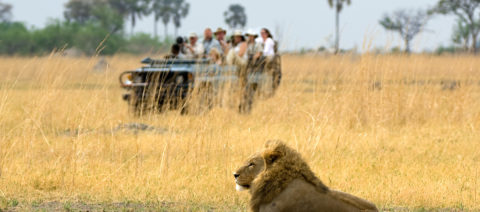
Ultimate Africa travel and wildlife news archive June 2001 Duba Plains (Okavango Delta) Camp Report, June 3 2001 It has been a wonderful month at Duba Plains Tented Camp in Botswana. The weather has been glorious with bright blue skies. The average minimum and maximum temperatures were 15 and 29 degrees Celsius respectively and they had only had 2mm of rainfall. Once again lion have been sighted nearly every day. James is still very involved with his research which adds a different dimension to the guests overall enjoyment. They estimate that there are 59 lion in the area and about 6 of the females are pregnant. We hope to see cubs in the next few weeks. The interaction between the lion and the buffalo has been most entertaining with the lions not always coming off as "King of the Jungle". There have also been regular leopard sightings towards the end of the month. Guests were lucky enough to see a troop of baboon actually chase off a young male last week. The floodwaters had come in with vengeance at Duba this year and they have experienced more animal activity in camp than usual. Lion and elephant have been in camp on almost a nightly basis. King's Pool (Savuti, Botswana) Camp Report, June 3 2001 Kings pool has definitely lived up to its reputation as the noisiest camp in Botswana. They have had mating lions keeping guests awake at night as well as hippo and lots of elephant. Wild dogs have also been seen often and even fed off a dead elephant for a few days. Cheetah have been sighted on the airstrip as well as along the channel. Zebra started moving into the area this week as well as kudu and waterbuck. Water is drying up in all the inland pans so sightings are expected to continue improving. Xigera (Okavango Delta) Camp Report, June 3 2001 Xigera seems to exude a comfortable peace...The water rose quickly this month causing all of the lions to gather around the airstrip. There were many lion sightings and even some kills. At the beginning of the month one of the male lions mated with a female for several days. Leopards were rare this month - only 3 sightings, one of which was in camp near Tent 7 & 8 during siesta time. On the mekoros, there were several sightings of Pels Fishing Owl and Sitatunga. Jao (Okavango Delta) Camp Report, June 3 2001 High water levels in the Delta have affected the driveable areas that we have available, so boating and mekoro excursions are now the top activities. Guides are still doing short drives and walks with the best game drives on Hunda Island, which is a 45 minute boatdrive from camp. They have vehicles parked on the island. Kenyan Tour Operators Want Reduced Tourist Fees, June 3 2001 Major players in Kenya's tourism sector seem to have finally accepted their government's re-introduction of entry visas. The grudging acceptance might have been occasioned by, among other factors, the government's promise to tourism industry stakeholders that it would reduce the airport departure tax to $20 from $40, which has yet to be implemented. The Director of Tourism, Mr. Clement Mwatsama, confirmed that the government did promise the reduction. Some players have recommended the establishment of a tourist card in the same way that Cuba and the Dominican Republic have done. "Since the government has conceded that the visa imposition was not meant to control immigration into the country, but to raise revenue from tourists, it should make visa acquisition as easy as possible," said the Chairman of the Ecotourism Society of Kenya, Mr. Jake Grieves-Cook. Two weeks ago, Kenya Airways initiated a website, which makes visa applications easier. By downloading information from http://www.kenya-airways.com visitors can now fill and sign visa application forms before entering the country. New Team to Manage Part of Masai Mara, June 3 2001 Part of Kenya's most popular Masai Mara National Reserve will be put under professional management under an agreement reached between the Trans-Mara Country Council and the newly-established Mara Conservancy. According to the agreement, 465 square kilometers of the 1,812 square kilometer national reserve, commonly known as the "Mara Triangle" will be managed by professionals. The new team is expected to run the day-to-day affairs of the reserve and supervise revenue collection. It is also charged with the responsibility to secure the area against poaching and human encroachment. The move is a radical initiative by the Trans-Mara County Council, which holds the land in trust for the Masai community, adding that the Mara Conservancy, a non-profit organization, will also be responsible for building and maintaining infrastructure in the reserve on a renewable five-year contract basis. Vehicles Banned from South Africa's Beaches, June 3 2001 All vehicles are to be banned from South African beaches. Draft regulations, published in the Government Gazette, state that nobody will be allowed to drive any vehicle in the coastal zone without authorization. "Coastal zone" refers to beaches, dunes, estuaries and their wetlands. The regulations apply to all vehicles except those used for official purposes by state employees in genuine emergencies or rescues, in approved mining activities, on a public road or for official purposes within a proclaimed harbor. Exemption may be granted to people who use vehicles within a site approved for boat-launching, for scientific research or for carrying out any activity that has been approved in terms of the Marine Living Resources Act. Kruger Rhinos Sold to Expand National Parks, June 3 2001 On June 15, the Kruger National Park will offer 20 white rhino for sale at the Game Capture Auditorium at Skukuza in the Park. The sale forms part of an effort by South African National Parks (SANParks) to raise funds for its Park Development Fund. The sale is expected to raise more than R4,5-million (US $560,000) which will be used to acquire additional land in the Addo Elephant National Park, Marakele National Park, Cape Agulhas and Namaqualand National Park. The expansion of these parks complies with the government's objective to increase the surface area of formally conserved areas in South Africa from 6% to 8% by 2010. Air Botswana offers Johannesburg to Kasane Service, June 10 2001 Air Botswana has officially launched their new two-hour Johannesburg to Kasane service. Air Botswana will fly three times a week from Johannesburg to Kasane on Sundays, Tuesdays and Thursdays using its ATR42-500 turboprop aircraft. SAA Mulls Alliance with Air Zimbabwe, June 10 2001 South African Airways (SAA) is considering an alliance with Air Zimbabwe to service some of the direct international and regional routes currently not being fully utilized by the two airlines, a senior SAA official has said. Bonang Mohale, SAA's executive vice president told journalists in Harare last week that there had been very little the two airlines had done to explore some routes that were not fully serviced. "It will make us very happy to have a strategic alliance with Air Zimbabwe and even Air Namibia and this will fully market us as a region," Mohale said. Poachers Rule Zambia's Biggest Wildlife Park, June 10 2001 Zambian officials have noted that poachers now rule its largest national park, Kafue, due to a severe shortage of game wardens and a one-year ban imposed on hunting in January by President Frederick Chiluba. The 22,400-sq km (8,650-sq miles) Kafue National Park covers parts of central, southern and northwestern Zambia and has less than 500 wardens. Conservationists say at least 2,000 are needed to watch over a park of that size. "Kafue has been heavily hit by poachers and if something is not done soon we might end up with a national park with no animals," said Tourism Ministry spokesman Gabriel Tembo. He said the policing of game was hampered by financial constraints and a government ban on hunting. Game meat is prized by Zambians and poachers target buffalo, sable, antelope and impala. Tembo said elephants were also hunted but on a smaller scale due to a partial global ban on trade in ivory tusks. But conservationists say tusks from Zambian parks were still smuggled to Zimbabwe and Botswana, and then on to Asian buyers. Zambia's elephant population is estimated at between 22,000 and 30,000, down from about 200,000 in the 1970s. A broader animal census of the 19 national parks in Zambia has not been carried out for a decade due to a lack of cash. Poaching activity is highest in the traditional wet period between January and May when the parks are virtually deserted. Kafue wardens have confiscated 34 guns, including eight assault rifles, and 250 wire snares this year, Tembo said. He said the autonomous Zambia Wildlife Authority (ZAWA) needed $5.4 million annually for its operations but had received only $558,000 from government so far this year. The authority has trimmed its game warden staff to 1,500 from 2,500 under a restructuring program required by Zambia's foreign lenders. Tembo said the authority was seeking alternative ways to fund its operations, including granting licences to private tour operators and investors to set up tented camps in game parks to lure more tourists. "The Wildlife Authority is supposed to support itself mainly through income from hunting. But since hunting has been banned this year, they are depending on government which has also not performed to our expectation," Tembo said. Tourism Minister Michael Mabenga on Wednesday appointed an interim board charged with making the authority more efficient, less expensive and less bureaucratic. Tsetse Fly Spraying begins in Botswana, June 17 2001 The spraying for tsetse flies has started in the northern parts of Botswana's Okavango Delta with almost miraculous results. Within one day tsetse flies and mosquitoes had disappeared and the plains were still full of butterflies! New Pom Pom Camp to Open mid July, June 17 2001 The new Pom Pom Camp in Botswana's Okavango Delta area is on track to be open July 15, 2001. It's going to be a stunning camp - mixing comfort, simplicity and style - with good game viewing. They are seeing lots of leopards and lions! Kalahari Transfrontier Lion Project Boosts Lion Conservation, June 17 2001 The Green Trust, a subsidiary of the World Wide Fund For Nature - South Africa (WWF-SA), announced that the Kalahari Transfrontier Lion Project, which will come to an end on June 22, 2001, has contributed hugely valuable information for lion conservation as well as for improved park-people relations. The Kalahari Transfrontier Lion Project was initiated because of rising concerns about the impact of lion killing by neighboring farming communities on the future viability of the Kalahari Transfrontier Park (KTP) lion population. In sub-Saharan Africa, large carnivores such as lions have decreased substantially during the past five decades, largely due to increased conflict with human development. Lions in protected areas such as the KTP often cause livestock losses along the borders of protected areas and it is not surprising that they are persecuted for this. Large carnivores like lions are important to the ecology of the KTP and low-density lion populations that are restricted to arid habitats, such as the KTP, may be of great importance for lion conservation. With growing human pressure in the more temperate zones the long-term survival of species, such as lions, in these habitats, especially in Transfrontier Conservation Areas, may hold an important conservation key for the species, the Green Trust explains. Furthermore, lions are of great aesthetic appeal and financial value. Tourism is a growing industry in southern Africa and lions are an important attraction to national parks and other protected areas. It was, therefore, important that the population ecology of free-ranging lions in the KTP be studied to provide a baseline understanding of population regulation, and to guide long-term conservation of this and other lion populations. To this end, The Green Trust, along with the Endangered Wildlife Trust stepped in to fund the Kalahari Transfrontier Lion Project. The study revealed that over a four-year period from 1997 to 2001, a total of 93 lions were shot outside the KTP borders in Botswana, equating to about 3% of the park population. The good news, however, is that a population viability analysis produced from the research for this project suggests that the KTP lion population can easily sustain the current rate at which problem animals are killed and that the lion population is likely to maintain its genetically healthy status for a long time to come. Two workshops will be held on the 19th and 21st of June 2001 with KTP management staff and representatives from neighboring farming communities. The aims of the workshop are to present the results of the Kalahari Transfrontier lion study, as well as the community survey and a proposed large carnivore management plan. Issues pertaining to problem carnivore management and how the management plan can be refined will then be discussed in various workgroups. This exercise will thus serve to inform all stakeholders of the results of the project and hopefully through open dialogue and mutual understanding open or improve communication channels between park management staff and neighboring communities, and result in a mutually acceptable large carnivore management plan, The Green Trust said. For more information on the lion project, contact Dr. Paul Funston at paulf@parks-sa.co.za The Green Trust was founded in October 1990. It is a subsidiary of WWF South Africa (World Wide Fund For Nature) in a mutual benefit partnership with Nedbank who have donated 1 million South African Rand per year for ten years to the Trust. In 1999 Nedbank renewed this commitment for a further five years to the year 2005 - pledging 7million Rand to the Trust during this time. New Johannesburg Helicopter Tours, June 17 2001 Wilderness Safaris are introducing a new helicopter excursion around Johannesburg. They have found that most people come into Johannesburg for the night and there is little time for any meaningful travel around the city. Most people leave without getting an idea on what this city is all about. This new helicopter trip will solve this problem and give guests a great overview of the city and show them a lot more than most people would see in a couple of days. This new helicopter tour will take guests over the city; over the gold mines; over some of the townships, and then head out north to the Magaliesberg Mountains. The helicopter has headphones for all passengers and the pilot is gives a good commentary on the history and the sights of the city. The cost starts at US $750 an hour and varies according to which helicopter is chosen. The top of the range Bell 407 which seats up to 6 guests costs US $1,025 for an hour. Lunch on remote mountains can be added at a nominal cost. Rocktail Bay and Ndumo offer Incredible Diving, June 17 2001 The diving at Rocktail continues to amaze even the most well traveled divers. 5 German dive enthusiasts arrived and classified the diving at Rocktail Bay as "better than Barbados" and equivalent to the Great Barrier Reef (Australia). It's not only the scuba divers who are having incredible diving experiences in the warm waters off Rocktail. Non-scuba guests are hopping off the boats and getting great snorkeling too. Most snorkelers are even swimming with dolphins. The dolphins seem to actively seek out our snorkelers. The first whales for the year were seen last week. Work Begins on Rehabilitating Chapman's Peak Drive, June 17 2001 One of Cape Town's most scenic drives along Chapman's Peak is one step closer to reopening following the Western Cape government's announcement that it has awarded a contract for the removal of the soil and rock material from the surface of the drive. The work is being undertaken in order to allow engineers the opportunity to assess the road surface, complete a topographical survey and inspect the structures supporting a portion of the road. This will enable a further step to be taken in the ongoing drive to rehabilitate and reopen the road. It is hoped that this will lead to construction starting in 2002 with the reopening of the road a year thereafter. Wilderness Safaris June Zimbabwe Update, June 17 2001 Wilderness' Zimbabwe camps are running at about 70% occupancy this month. There is plenty of fuel and food in the camps. It seems as though some agents like to jump onto rumors very quickly when it comes to Zimbabwe. A case in point was the exporting of foreign currency by local Zimbabwe residents when they leave Zimbabwe. Locals are only allowed to take US $500 per person when they leave Zimbabwe. Circulars were sent out, (some by organizations that should know better) stating that this law now applied to all people leaving Zimbabwe including tourists. This rule ONLY applies to Zimbabwe residents leaving Zimbabwe. Tourists can bring in as much money as they want - and export what they have not spent. Hwange Park June Update, June 17 2001 This month has been phenomenal for leopard sightings in the Linkwasha concession. Over twenty were seen. We have been expecting the temperatures to drop slowly this month as we move towards the cold season. On the 7th we were all caught unaware; the temperature dropped by 25°C in less than 24 hours! The lowest temperature was 2°C and in some parts of the concession it dropped to below 0°C as there was frost! They are ready to tackle the cold. The heaters in the rooms are turned on every night and the hot water bottles are now part of the linen! During the month guests on one drive saw the Big Five (lion, leopard, rhino, buffalo, and elephant)! Three different prides of lion have been recorded in the concession. A large male leopard killed a zebra foal and managed to get it up a tree much to the guest's disbelief. The elephant are making their appearances in the late afternoon and in the evening. Large herds of buffalo, sometimes up to 400, have been seen around the major waterholes in the concession nearly everyday! There was only one sighting of ten wild dogs this month. With most of the migratory birds now gone the number of species have dropped considerably. Sightings worth mentioning: a pair of Lanner Falcons mating, Miombo Rock Thrush and Familiar Chat. The Teak trees now all have their pods and the Ordeal trees and Terminalia have started shedding their leaves in preparation of the dry months ahead. Venus is still in the morning sky, waxing every month, is now half full which has made it more visible to the naked eye during the day. Towards the end of the month, Saturn, Jupiter and Mercury have moved out of site. The next time they'll be visible again, and for only 3 minutes, will be during June's total eclipse at the north of the country. Zambian Yellow Fever Requirements Dropped, June 17 2001 The Yellow Fever inoculation regulations for Zambia have been dropped. Guests who arrive into Johannesburg from Zambia do not have to worry about being denied access for not having inoculation certificates. Mozambique's Coastline Exploited by Poachers, June 17 2001 Mozambican authorities have issued a stern warning to poachers exploiting the marine life along the country's 2,600 kilometer coastline. Maritime official Danie Sitoe said most of southern Mozambique's coastline has been overfished, and also suffers other abuses. He said some foreigners come to Mozambique as tourists, but carry out illegal diving and fishing and remove coral and other marine wildlife. In addition to over-fishing, indiscriminate use of 4X4 vehicles by tourists are destroying eggs laid by turtles on Mozambique's beaches, threatening these marine animals with extinction. With limited resources, Mozambican authorities are not able to patrol the coastline effectively. Kenya Proposes Reduced Airport Departure Tax, June 17 2001 The Kenyan Minister of Finance, in his budget speech on Thursday 13th June, 2001 proposed a reduction in the present airport departure tax of US $40 per person (international departure) to US $20. Kenya's Flamingo Deaths Linked to Pollution, June 17 2001 A mysterious spate of flamingo deaths has again struck Kenya, reviving fears that pollution is threatening the future of these birds. Scores of dead flamingos were found on the shores of two lakes in western Kenya this week after large numbers of the birds began dying two months ago. However, researchers say the exact cause of the tragedy remains a mystery. The World Wildlife Fund's Rift Valley Lakes specialist Ramesh Thampy noted that the entire African population may be lost if a solution is not found soon. Thampy is quoted as saying that several toxins had been identified in the bodies of flamingos in the past. Kenya and its east African neighbors have expanded their industrial base and this resulted in pollution from factories, sewage works and fertilizers gradually building up in lakes. Previous analysis of flamingo tissue in Kenya has found nine heavy metals in every bird. Researchers suspect that flamingos poisoned by pollutants can no longer handle the stress of flying up to 300 kilometers a day as they migrate between Ethiopia in north east Africa to Botswana in the south west of the African continent. Previous flamingo deaths occurred in 1993, 1995 and 2000. In 1993, an estimated 40,000 flamingos perished in a span of three months. The deaths took place again in mid-May this year, peaked in the last week of May and subsided in early June, according to the experts. Privatization of Part of Maasai Mara Opposed, June 17 2001 The privatization of a section of Kenya's Maasai Mara Game Reserve has met with resistance from community leaders, who are accusing the local authority of signing away their birth right. On June 11, 2001, the management of the 690 square kilometer Mara Triangle, which has previously been run by the Trans Mara County Council, became the responsibility of a private firm, the Mara Conservancy Ltd. The Mara Triangle forms the north-eastern part of the Mara-Serengeti ecosystem. The Mara Conservancy will be responsible for managing the area as a sustainable ecosystem and wildlife habitat, securing it against poaching, building and maintaining infrastructure, collecting and distributing visitor revenues and staffing all operations. However, this move has met with strong opposition from the 21 members of the council, who are claiming that the privatization process is characterized by alleged corruption, nepotism and irregularities. According to the councilors, the 10-year renewable contract with Mara Conservancy Ltd was never sanctioned at any full council meeting and they have questioned the competence of the firm's directors as conservationists, claiming some of them were illiterate. Cabinet minister Julius ole Sunkuli, however, dismissed these allegations, and is quoted as saying that the move is long-overdue and is meant to promote tourism and raise the council's revenue as well as address confusion surrounding the reserve's management. He reportedly said the Maasai Mara is currently under-developed without proper infrastructure and that its potential has not been exploited to the fullest. Ultimate Africa disagrees. We feel the small park has been grossly overdeveloped for many years. Rwanda's Rare Gorillas being Killed, June 17 2001 Rwandan soldiers spread out across Virunga National Park this week to protect the endangered mountain gorillas, after the remains of one male were found cooked and eaten by Hutu militiamen. A second gorilla reportedly met a similar fate. The two gorillas, from a subspecies of which there are only 355 left in the wild, were both believed to be lone silverback males who recently reached maturity and were forced out of the family group, researchers said. Scientists recently found that these gorillas were a different subspecies from the 300 Bwindi gorillas living on the northern side of the Ugandan mountains. The Rwandan army is now deploying troops around the gorilla family groups and around the park. The troops supplement the park rangers, who already track and protect the gorillas. Liz Williamson, who works at a gorilla research center run by the Dian Fossey Gorilla Fund International, is quoted as saying that it is a terrible loss because the population of gorillas is so tiny, any single individual is invaluable genetically. As the June-September tourism season begins in this tiny central African country, authorities are pulling out all the stops to assure visitors that it is safe to trek up the steep volcanic mountain slopes to the gorilla sanctuary. Soldiers accompany tourists up the mountains, while others line routes to gorilla feeding grounds. Gorilla tourism is Rwanda's third highest hard currency earner after tea and coffee exports. After a four-year civil war and the 1994 genocide, tourists are just beginning to return to Rwanda. Ugandan Authorities Confiscate 5 Tons of Hippo Teeth, June 17 2001 The Uganda Wildlife Authority (UWA) and police officials confiscated five tons of hippo teeth worth from a Kampala businessman over the weekend. The team discovered the teeth, the biggest amount ever found, at the residence of Mr. Smith Ewa Maku in Kampala. African's Marvels at Solar Eclipse, June 24 2001 The first total solar eclipse of the new millennium has swept across southern Africa, with thousands watching the sky go dark from Angola to Mozambique and Madagascar. The eclipse took about an hour to travel eastwards from the Atlantic to the Indian Ocean. Thousands of tourists traveled to the continent, where many wildlife enthusiasts gathered to see the effects of sudden darkness on animal and bird life. In some areas villagers stayed indoors, warned by witch doctors that the eclipse was an event with great power, to be treated with respect. At Mana Pools in northern Zimbabwe, night insects suddenly began to appear, and the temperature dropped sharply as the sun was obscured. Wildlife researchers' initial observations suggested that many animals were confused by the sudden onset of darkness and the equally quick return to full daylight and a warm afternoon. Kenya Airport Tax Reduced, June 24 2001 In Kenya, the airport departure tax has been reduced from US $40 per person to US $20 per person. This tax is already included in each traveler's ticket price. Tanzania Airport Tax Increased, June 24 2001 In Tanzania, the airport departure tax has been increased from US $20 per person to US $30 per person. This tax must be paid direct by traveler's in US $ cash at the time of departure. Zambia's Victoria Falls Fees Increased, June 24 2001 The Musi-O-Tunya Park (Zambian side of Victoria Falls) entry fee has been raised from US $3 to US $10 per person to cash in on the boom in tourist's visiting the Zambian side of the Victoria Falls. Meanwhile, landing fees at Livingstone Airport have been increased from US $25 to US $255 for charter flights. Hippo Attacks Tourist in Zimbabwe, June 24 2001 Jordi Mesdre, a tourist visiting Lake Kariba in Zimbabwe to view the solar eclipse, said when he returns home to Spain that he would gaze at wild animals only in the zoo, after he was attacked by a hippopotamus last Saturday. Mesdre and his friend, Inaki Berregui, were returning to their hotel just after midnight when they came across the hippopotamus with its calf. The two waited for the animals to cross the path, but the animals stopped to graze about 12m from them. As Mesdre walked back towards Berregui, the hippo charged at him. He fell to the ground and thrust his hands and feet at the hippo's muzzle, sustaining several bruises from its teeth while scrambling backwards on his back. He managed to retreat several meters away and escaped. Mesdre sustained injuries on his legs and arms after the attack. Speaking from his hotel bed he said "It was terrifying, but after falling I could only try to fend off the beast and I consciously did not scream in fear of aggravating it." New research Project on Okavango Delta's Nile Crocodiles, June 24 2001 An exciting new project to study the ecology and physiology of the Okavango Delta's Nile crocodiles is to be launched later this year through the Department of Nature Conservation, University of Stellenbosch, in collaboration with the Kalahari Conservation Society in Botswana. The long-term objective of the four-year research program is to gain a better understanding of the ecology and physiology of the Nile crocodile in the unique Okavango Delta, so that a conservation strategy can be implemented. For more information on the research project, contact Dr Leslie at aleslie@land.sun.ac.za Chief's Camp Abandons Wildlife Viewing Walk Plans, June 24 2001 Chief's Camp, one of two permanent tented camps in Botswana's Moremi reserve, have decided not to offer wildlife viewing walks due to the rules of the Moremi National Park Authority, which do not allow guides to carry fire arms. The area around chief's camp is renowned for excellent game viewing and a large number of predators. Chief's Camp will now await the revision of rules before establishing walking safaris in Moremi. Namibia Cheetah Study Seeks Funding, June 24 2001 A new effort is being made at collecting valuable data on Namibia's cheetah populations. According to Lise Hanssen of AfriCat, cheetahs, although the most high profile large carnivore in Namibia, remain the most elusive. Even though AfriCat and other organizations have spent many years working with these graceful felines in Namibia, very little is known about them. "Information on density, predation, mortality, reproduction, hunting behavior and group structure is essential for proper conservation of the species," Ms Hanssen explains. "Many cheetahs are killed every year in conflict with livestock farmers and we have no idea how sustainable this loss is to the cheetah population," she says. Due to the difficulty of undertaking a project of this nature, three organizations have teamed up for the years 2002 to 2004 to finally get the necessary data on Namibia's cheetahs. AfriCat, Okatumba Wildlife Research and the Ministry of Environment and Tourism will establish four study sites in which all cheetahs will be captured, radio-collared and released. These areas will include the Khomas Hochland, Omitara, the Ovipuka Conservancy and the Paresis mountains, west of Otjiwarongo. The cheetahs will be tracked from the air every week and all locations will be followed up on the ground. "This will be the largest effort in cheetah conservation ever undertaken in Namibia. At present we are looking for conservation partners that would like to contribute financially to this study," Ms Hanssen says. Lise Hanssen can be contacted at telephone: 264 (0) 67 304566 or 306585. By fax: 264 (0) 67 304565 or e-mail: africat@natron.net Mala Mala Receives Accolade, June 24 2001 The readers of the US based Travel & Leisure magazine have selected Mala Mala Game Reserve in South Africa as the best property for service in Africa and the Middle East. Penguins Succeed Against all Odds, June 24 2001 In a joint media release, the South African Foundation for the Conservation of Coastal Birds (SANCCOB), the Avian Demography Unit of the University of Cape Town, and Cape Nature Conservation, said that the thousands of African penguins cleaned and rehabilitated after last year's Treasure oil spill have made a remarkable recovery. "After the traumatic experiences of being oiled, captured, transported, force-fed, medicated and living in a totally unnatural environment, the 16,300 penguins cleaned and released by SANCCOB have made the successful transition back into the wild", reported Dieter Oschadleus, from the University of Cape Town's Avian Demography Unit. Oschadleus was speaking at a press conference marking seven years to the day of the Apollo Sea spill and the one-year anniversary of the MV Treasure spill, which threatened the survival of 41% of the vulnerable African Penguin species. The evacuation of more than 19,500 unoiled birds from Dassen and Robben islands had also proven to be very successful. More good news is that information for all South African penguin colonies indicates that 2001 is a good year for breeding. Blue Flag to fly on South Africa's Beaches, June 24 2001 The Department of Environmental Affairs and Tourism (DEAT) has announced that South Africa has become the first country outside Europe to be awarded official Blue Flag status for its qualifying beaches. Beaches that qualify environmentally would in future be allowed to fly a blue flag as indication of their status. Environmental Minister Mohammed Valli Moosa reportedly said that the Blue Flag was a well-known quality brand for beaches all over Europe. He explained that tourists chose blue flagged beaches because they were ensured of high standards for bathing water, safety, amenities and access. Those responsible for the management of beaches in South Africa have until June 29 to apply for Blue Flag status for the first official season. A jury will then forward successful applications to an international jury in Copenhagen for final selection. The successful beaches will receive their status in September. The decision to allow South Africa Blue Flag status was taken at the 20th General Assembly of the Foundation for Environmental Education in Copenhagen, Denmark. Johannesburg Experiencing Temporary Fuel Shortage, June 24 2001 South Africa is experiencing a temporary fuel shortage due to a recent incident at the main oil refinery supplying Johannesburg International Airport. This is impacting all airlines to and from Johannesburg. Effective immediately all New York JFK - Johannesburg departures (SA202) will be making a brief stop in Ilha do Sal to take on fuel minimizing the required uptake in Johannesburg for the return flights. This will obviously result in a later arrival of 4:05 PM in Johannesburg. Please note, South African Airways flights from Atlanta are not affected as these services operate via, or onward to, Cape Town. This disruption is anticipated to last until July 1, 2001 after which the schedule will return to it's usual 'non-stop'. Malawi Allows 200 Crocodiles to be Hunted, June 24 2001 Malawi will issue licenses to 20 hunters to kill 200 endangered Nile crocodiles in the country's lakes and rivers. By international agreement, Malawi is allowed to kill 200 of the reptiles and trade the skins internationally. The Nile crocodile is an endangered species worldwide and is a protected species in Malawi. The decision to issue the hunting licenses follows numerous reports of crocodile attacks on people. Licensing of Private Wildlife Ranches Good News for Uganda's Tourism, June 24 2001 Uganda will begin issuing licenses for private ownership of wildlife ranches, a move that will hopefully expand tourism as well as promote better conservation of wildlife. According to the Uganda Wildlife Authority (UWA), private wildlife ranching will help ease the burden of the government as the responsibility of wildlife management and conservation will be shared with private wildlife ranch owners. If fully implemented, the Ministry of Tourism expects that wildlife ranching will introduce competition in the tourism industry and improve the lot of animals. Branching into private ownership of wildlife is part of a wider plan to diversify and expand wildlife management. Among these are plans to degazette some of the existing conservation areas, permit the sale of non-endangered wild animals and to share park revenue with neighboring communities. Permits will be issued to firms and individuals wishing to trade in or export wild animals, which are not on the endangered list. This will, however, be done in consultation with the Convention on International Trade in Endangered Species (CITES). In Uganda, 20% of revenues accruing from gate collections to national parks will be shared with the local authorities. The money will go directly into development projects created by the people themselves. Revenue sharing has already started in some parks in western Uganda, although they have been suspended pending further consultation. Warning Against Gorilla Trekking in Virunga Mountains, June 24 2001 After the U.S. State Department issued a Public Announcement on May 23, 2001 warning against gorilla trekking in the Virunga Mountains in Rwanda and at Mgahinga in Uganda due to rebel activity in the region, the Uganda Wildlife Authorities and US Embassy representatives have agreed to visit the relevant parks in order to fully assess the situation. The Ugandan Wildlife Authority has not suspended gorilla treks into Bwindi Impenetrable Forest. Visitor "Tastes" Local Kindness, June 24 2001 Good Samaritans in Zambia's Kanyama township yesterday rescued an adventurous tourist from being searched by thieves after he fell into a deep sleep after a Kachasu (fiercely potent home-distilled alcoholic drink) and Chibuku opaque beer drinking spree. Police Spokesman Lemmy Kajoba yesterday said the incident occurred in the morning hours of Tuesday when the tourist decided to visit a local township. Mr. Kajoba said the tourist, whose name has been withheld, went to the township to "taste" the local brew accompanied by a Zambian guide. He said after the guide saw that the tourist was too drunk to walk, he sought help from Good Samaritans who organized themselves and carried the snoring tourist to Katondo police post in Lusaka's city center. Mr. Kajoba explained that the tourist was left at the police post where he slept for more than four hours. After sobering up, police booked him a taxi, which took him back to his hotel. Harare Airport to Expand, June 24 2001 Hardly three months after completion the new Harare International Airport the Zimbabwe government has advertised a multi-billion dollar tender for the extension of the terminal. Aviation sources said the envisaged expansion project, to be funded by the government of Zimbabwe, should see the construction of two departure lounges, each with a capacity to accommodate a full Boeing 747. The government also wants to build two more airbridges, each connecting to the new departure lounge and a corridor joining the departure lounges to the current terminal building. The lounges would be built on either side of the current terminal. Return to Weekly Update Archive |