ULTIMATE AFRICA SAFARIS
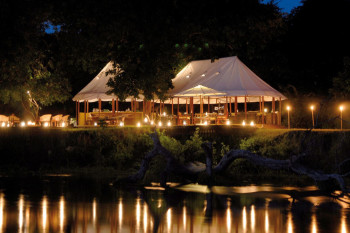
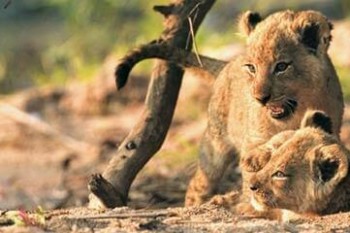
Ultimate Africa travel and wildlife news archive March 2003 Duba Plains Tented Camp February Update, March 2 2003 Duba Plain's Tented Camp is located in Botswana's Okavango Delta and is reputed to have the highest density of lion in Africa. Here is the camps February update: The summer rains continued to fall sporadically throughout February with a total of 68mm. The average temperatures experienced were a minimum of 22°C and a maximum was 32°C. We managed an average of nine lions seen per day and a total of thirty-nine pride sightings. Not all of the regular lions were accounted for, only totaling forty-three of the sixty odd lions normally tracked down. We did not pick up the Old Vumbura Pride (7 lions), new males (3 lions) or the Vumbura Pride (10). A bonus was a sighting of a new unnamed, irregularly seen pride - a lioness with three very young cubs. In total, kills witnessed included seven buffalo and four warthogs. The buffalo continued with their avoidance of the lions, however, several spectacular kills by the Pantry Pride were witnessed. The Tsaro pride remains fairly split up, with no sign of their new cubs yet. It appears at least three lionesses have now given birth. We expect to see the older cubs (three weeks old at present) within the next couple of weeks. The entire pride was accounted for, with the five young males moving around without the lionesses. This has allowed the four Skimmer Males to occasionally join up with the Tsaro lionesses. One sighting involved eight of the Tsaro lionesses being chased off a recent buffalo kill by ten hyenas. With no male lions present, they did not put up much resistance. As the hyenas began to enjoy their free meal, the four Skimmer Males turned up. The hyenas naturally vacated the area at speed. This did not assist the lionesses as the males were in no mood to share the spoils. The Pantry pride gave us the best lion viewing of the month. The beginning of February saw the pride really struggling to find any prey. This resulted in the skinny little male cub, which was abandoned in December for two weeks, finally succumb to starvation. From that point on, the rest of the pride has not looked back. They pushed further into the Tsaro prides territory than ever before, in search of the buffalo herd. This risky strategy paid off handsomely with several successful buffalo hunts, as well as dominating a couple of clashes with the Tsaro females. One morning involved the Pantry pride isolating a big bull buffalo, eventually pulling it down and putting it out of its misery. Within minutes, three Tsaro females arrived on the scene in an attempt to steal the kill and see off the trespassing Pantry pride. They failed miserably, with one of the pregnant females being corned by the Pantry pride. She was severely attacked, but managed to escape with some nasty puncture wounds around her rear end. She will recover, but may think twice about challenging her determined neighbors. Another incident saw the Pantry pride challenge the five Tsaro Males for a buffalo calf, but alas, they failed this time. The Tsaro Males are steadily gaining in confidence and will soon be an awesome force. The Pantry pride cubs are learning fast. They do not hold back when it comes to pulling a buffalo down, at sixteen months of age they are showing considerable skill and courage. One of the cubs tried a little to hard and paid the price of being tossed several meters through the air by a big bull buffalo. This usually proves more than enough of a deterrent to the youngsters, but on this occasion, it went straight back on jumped on again. The Duba Boys are still seen regularly and are spending more time than usual with the Tsaro females. Whether this is a good thing or not, remains to be seen. They are not the fathers of the new cubs, which does not bode well for the pride. The next month or so should answer our concerns. The Skimmer pride was fairly scarce as they remain to the north of the Paradise lagoon. The one adult female was seen once with her three sub adult female offspring. The two older lionesses must still be in hiding with their new cubs. With the annual flood arriving in less than a month, we should find the Skimmer pride moving back to their usually haunts further south. This will make it far easier for us to locate them, hopefully with several new additions. The biggest surprise of the month came in the form of a shy cheetah. They are not regulars in the Duba area due to the high lion and hyena populations. The cheetah was fairly shy and immediately moved off. This may have been caused by the close proximity of the Duba Boys and the scent of the Tsaro females with their cubs nearby. The hyena pack continues to thrive with four black young ones at the den. With their bold and inquisitive nature, they are a definite highlight for anyone visiting Duba. The buffalo are finally giving birth in large numbers. Several guest have departed overjoyed with the privilege of having witnessed the birth of a wild animal. Moremi Rhino Re-Introduction Project Update, March 2 2003 Wilderness Safaris of southern Africa have been responsible for re-introducing rhino into Botswana's Moremi Reserve. Here is the latest project update: There are currently 15 white rhino at Mombo Camp in the Moremi Reserve (7 females and 8 males). It has been three months since the second batch of ten white rhinos were released. The project continues to be extremely successful. Joint Okavango Wilderness Safaris (OWS) / Botswana Anti Poaching Unit (APU) monitoring patrols are locating all of the rhinos on a regular basis, ensuring their safety and collecting a great deal of valuable data on the rhinos' movements and habitat preferences. So far there has been no evidence of any poaching or other illegal activities in the area, showing that the presence of the APU is an effective deterrent to illegal hunters. Following their release, the new rhinos covered a lot of ground as they explored their new home. However, they now seem to be settling down and their movements between sightings are much less pronounced. For the most part, the rhinos have remained in the groups they were in while in the bomas. With the onset of the rains, there has been some seasonal movement of the rhinos towards new grass and water sources, as expected. Of course now that there are more rhinos in the area we are encountering larger groups (up to four at one time) and guests at Mombo are enjoying more rhino sightings on game drives. We have witnessed some interesting interaction between the adult bulls released earlier, and the newly released females, evidently with a view to mating. Currently 12 of the rhinos are within 25km of Mombo, with six within the Mombo game drive area. Two others have recently left their usual area - we believe they have moved west as they did temporarily last year and the 15th rhino is the one which was re-captured by the Department of National Parks and Wildlife near Gumare and returned (for his own safety) to Chief's Island. It is entirely natural that the rhinos - especially males as they approach maturity - will move slightly further afield, seeking their own territories. We are expecting our next consignment of ten white rhinos from South Africa during the first half of this year, hopefully when temperatures will be low enough to enable the Botswana Defense Force Air Wing to fly the rhinos directly to Mombo airstrip. Everyone involved in this project is working hard to ensure that 2003 will be another great year for Botswana's growing wild white rhino population, and of course looking forward to the day when this population begins to grow organically, that is to the birth of the first rhino calf, which will be the ultimate seal of approval on this project. Kenya may Scrap Tourist Visa Fee, March 2 2003 The Kenyan Government is considering revoking the US $50 tourist visa fee as a way of boosting tourist numbers. The Kenyan Minister for Information and Tourism, Mr. Raphael Tuju said the move would play a positive role in encouraging more tourists to visit Kenya. Tuju said the visa fee was introduced more as a commercial venture than a way of controlling tourist flow and would be done away with in due course. "It appears the visa fee was brought in as a way of generating income, in which case it is not an immigration issue but a commercial one," said the minister. The minister said the country would have to improve its road infrastructure and other facilities as well as diversify its tourist menu in order to attract more visitors and compete with other destinations. Tanzania Needs More Tourist Facilities, March 2 2003 At least 8,500 world class hotel rooms will be needed to cope with tourist demands in Tanzania two years hence, a study has shown. And, to reach that number, more investments are needed in the tourism sector. According to the Integrated Tourism Master Plan for Tanzania: Strategies and Action Plan Update, 5,000 of the rooms are already available in the country; and another 500 or so are currently either under construction or refurbishment. That leaves a deficit of 3,000 rooms. "While there has been a considerable amount of new investment in recent years - particularly in and around Dar es Salaam and at places like Bagamoyo - the pace of investment needs to be increased if the targets are to be met," the Update says. In that regard, the Master Plan challenges the private sector to invest more in the industry, and to operate commercially. This is especially so because the private sector is now widely regarded as the engine for growth of the economy. In recent years, there has been considerable increase of private investment in tourist hotels whose number rose from 210 in 1995 to 329 in 2001. According to the Tourism Division of the ministry of tourism and natural resources, over 525,000 tourists visited Tanzania in 2001. This was a 5% gain compared with tourist arrivals in 2000 - despite the worldwide downfall in tourism arrivals in the aftermath of the terrorist attack in the US on September 11, 2001. An anticipated growth target for 2005 has been put at 670,000. In the year 2000, there were slightly less than 502,000 tourists, compared with the 295,000 in 1995. National park statistics show that Europeans account for some two-thirds of the visits to Tanzania, while Americans form a further 30%. Within Europe, the main source markets are Britain, Scandinavia, Italy, Germany and France, which together accounted for just over 70% of the European arrivals in Tanzania in 2000. The secondary markets are Switzerland, the Benelux countries and Spain, together accounting for a further 19% of arrivals. Although the figure of some 500,000 visitors in 2000 may appear significant when considered in the context of relative market shares worldwide, Tanzania receives only a small proportion. In 1998, World Trade Organization statistics show, the country received less than one-twelfth of those who visited South Africa. Camp Amalinda Closes, March 9 2003 We are sad to announce that Zimbabwe's Camp Amalinda has closed. This incredible lodge, built into the beautiful rock formations of the Matopos Hills. provided travelers with a truly unique African experience. The owners, the Bennetts, have started Star of Africa in Zambia and will focus their energies on this new safari endeavor. Wildebeest Migration Update, March 9 2003 In the Serengeti generous rains have led to a flood of wildebeest and zebra on the short grass plains of the south. The calving season started earlier than usual with many of the wildebeest giving birth at the end of January. SAA Pilots May Strike, March 9 2003 South African Airways (SAA) pilots are to meet next week to decide on what steps to take against the airline for consistently undermining collective agreements, according to the SAA Pilots Association. The already strained relations between the airline and its pilots took a turn for the worse last year following several protracted disputes over demands by the pilots that their salaries be put on a par with their international counterparts. The pilots will consider going on strike in a bid to force SAA to implement agreements. What happens if we go to war with Iraq?, March 9 2003 Ultimate Africa is a travel agency that specializes in travel to Africa. Although we do not see any risk for travelers to Africa during a possible war with Iraq (especially if they are flying direct from the USA to Africa thus avoiding Europe and the middle East) we can understand that some travelers may wish to cancel or postpone their arrangements. Most African safari companies (tour operators who operate safaris in Africa) have noted that they will not charge cancellation fees if the cancellation is due to war being declared in Iraq. However guests, at the time of cancellation, must book the same itinerary on new dates for travel within a year. There will be no extra cost - no matter the time of year chosen. Normal cancellation fees will continue to apply if the war does not occur, when the war is termed over, or if travelers wish to cancel without booking new dates. Kruger to Build International Border Gate, March 9 2003 South Africa's Kruger National Park will, for the first time, give visitors direct access to neighboring Mozambique by building an international border post. Park spokesman William Mabasa said South African National Parks (SANParks) had budgeted R40 million (US $5 million) to build the new Giriyondo border post north of Letaba camp. "Tourists are currently not able to travel from Mozambique to South Africa through the park," Mabasa said. The border will ultimately promote tourism within the 35 000 square kilometer Great Limpopo Transfrontier Park, which incorporates the Kruger in South Africa, Gonarezhou National Park in Zimbabwe and Limpopo National Park in Mozambique. Mabasa said access roads to the new border gate as well as roads in Pafuri and north of Tshingwedzi in the Kruger would also be upgraded. Kenyan Parks' Fees Increase Welcomed, March 9 2003 The Kenyan tourism industry welcomed the country's national parks and reserves entry fees increase announced by the Kenya Wildlife Service. The Kenya Tourism Federation said the 10% increase was reasonable, but urged that it be accompanied by improved infrastructure and security. "If an increase in price is accompanied by an improved quality of service then we have nothing to complain about," said Mr. Fred Kaigwa, the federation's acting chief executive officer. It would be the first increase in five years, said KWS director Michael Wamithi. Three categories of the eight national parks and three national reserves will charge the same rates, but will be varied, depending on age groups and nationalities. In all of them, non-Kenyan adults will pay US$30 per person, while children aged between 3 and 18 and students and organized groups will pay US $10 per person. The affected parks and reserves are Amboseli, Aberdares, Lake Nakuru, Tsavo East, Tsavo West and Meru. Others are Shimba Hills, Kakamega, Ambuko Sokoke in Malindi and Mt Kenya. Robin Pope's Weekly Zambia Update, March 9 2003 Robin and Jo Pope run several very successful safari camps in Zambia. Here is their weekly update: Wild dog are being seen on a regular basis at the moment around the Lupunga Spa. Clare reports a group of 12 comprising of 6 adults and 6 young. In addition to the wild dog there has also been a rare sighting of a side-striped jackal just inside the park, black sparrow hawk in the Chendeni Hills as well as lots of European storks and bee-eaters. Nkwali has been receiving regular visits from elephant, giraffe and hippo. There was also a leopard on the loose last night and the baboons kept everyone awake with their alarming. The weather in the valley has been dry and the river has dropped by about a meter in the last 2 days, however the lack of rain has meant very high daily temperatures and humidity. South African Airways War Update, March 16 2003 All South African Airways (SAA) flights to international destinations - the United States, Europe and Asia - are operating as scheduled despite prospects for war in Iraq. Should passengers traveling to and from Europe and Australasia wish to cancel their tickets, normal cancellations conditions apply. However, conditions for those traveling to and from the Middle East and the United States are different. Tickets purchased between March 10 to March 31, 2003 using restricted fares (lower cost fares with cancellation fees and penalties) may be changed without penalties anytime before March 31, 2003 for travel until December 31, 2003. Customers may choose to change their destination, travel dates or class of service, subject to availability. All changes must be made no later than three days prior to the originally scheduled travel date and the original ticket value will be applied as a credit toward higher fares or where ticket taxes have increased. New Canon Digital Camera, March 16 2003 Take all the good things from the hot selling Canon D60 digital camera and add new chip technology that promises increased performance and expanded color space. Base the whole package on the well proven Elan 7 chasis and focus system. Team it with Canon's excellent lenses. Stir liberally and offer the whole package for a suggested list price of US $1,499 and what have you got? Well unless Canon really dropped the ball somewhere in the execution you've got a winner - The Canon 10D. The big news here is the new chip called the DIGIC imaging engine. A CMOS based design; it maintains the 6.3 megapixel capacity of the D60 as well as its 1.6X 35mm effective focal length. The big news is it can capture an expanded color space (Adobe RGB vs. sRGB). According to Canon that expanded color capability enables the 10D to render images that rival film and capture the luminous quality that you find in slides. Digital images often fall a bit flat and require a tweaking in Photoshop to get the three dimensional look you get from film. This new DIGIC technology promises to provide that level of quality right out of the camera. Another quality improvement at the chip level is the ability of the DIGIC processor to virtually eliminate signal noise. Signal noise is stray light and off color pixels. The result of the expanded color space and reduced signal noise is said to be a "dramatic" improvement in the gradation of highlight areas and the rendering of highlight detail. Improved detail means that the images hold up better when they are blown up or tightly cropped. Sample images on display in Canon's booth at PMA did indeed show impressive detail in highlight areas. But experience has taught us to look with skepticism at trade show samples (though we're casting no aspersions at Canon). We'll withhold judgment on the expanded color space and highlight detail until we can get a production model in our own hands. Another feature Canon is crowing about is the claim that the release on the 10D equals that of a film camera. Typically there is a slight lag in even the best digital cameras compared to film cameras. The lag can be especially long in all-in-one digitals. The focusing system lifted from the Elan 7 has proven itself over the years and we found the metering system to be very good in the D60. The exception to that was the auto white balance, which has been a sore spot in every digital SLR we've tested. We always advise setting white balance manually. It will be interesting to see if this is improved on the 10D. White balance bracketing is included. Like the 1Ds the 10D has the ability to shoot in dual mode. This mode records both JPEG and raw files simultaneously while you're shooting and combines them into a single raw file. The JPEGS can then be quickly stripped out when the files are loaded into your computer using the included Canon software. The camera supports both Fat16 and Fat32 file interfaces, which means it will be compatible with larger format CompactFlash cards now being introduced such as the Lexar 4GB card (see Big Memory in this issue). While we're on the subject of capacity sports shooters will be happy to hear that the 10D can shoot 3 frames per second and hold 9 frames in the image buffer. In the firmware department the 10D offers you the opportunity to fine-tune settings such as contrast, sharpness, saturation, and tone far more than was possible in the past. How usable these controls are, and therefore how much they'll actually be used in the field, remain to be seen. Earlier we mentioned the chassis. The interesting news there is that the 10D is built on a magnesium chassis covered with a rubber skin. This design should make the 10D quite durable and shock resistant even if it's not as rugged as the 1Ds. The controls are typical EOS controls. Any Canon shooter would be at home with this camera almost immediately and a D60 shooter wouldn't even have to look at the manual to get started shooting. Finally the 10D is EXIF compatible which will take the hassle out of printing if you have and EXIF compatible printer and Canon just happens to make a couple of EXIF printers. Expect to pay list price for the immediate future as supplies will initially be short. If you're going to wait around for a bargain keep in mind that the D60 was in short supply for quite some time. But with a starting price of $1,499 it will be interesting to watch what happens with the price as supply catches up with demand. When it does will Canon eventually price the 10D at the first serious sub-$1,000 digital SLR? US Warns Against Travel to Kenya, March 16 2003 The United States warned its citizens on Friday, March 14, 2003 to think twice about traveling to Kenya and said it had indications of "terrorist" threats in the region. "All American citizens considering travel to Kenya are advised to re-evaluate their travel plans in light of the current situation," the US State Department said. "The US government has received indications of terrorist threats in the region aimed at American and Western interests, including civil aviation," it added. "The government of Kenya might not be able to prevent such attacks." In a separate warning issued on Thursday, the State Department said groups like the al Qaeda network blamed for the September 11 attacks could target seaports in East Africa. Friday's warning is stronger than one issued on December 24, when the Department said there was a risk "terrorists" might use shoulder-fired rockets to hit aircraft in Kenya, much like an unsuccessful attempt in Mombasa in November, but did not advise US citizens to rethink their travel plans. Here is the Public Announcement in full: PUBLIC ANNOUNCEMENT - U.S. DEPARTMENT OF STATE Office of the Spokesman - March 14, 2003 This Public Announcement is being updated to provide additional information regarding potential terrorist activities in Kenya. It also reiterates the Department of State's continuing concern about the possible heightened risks to American citizens and interests in Kenya. This Public Announcement supersedes the Public Announcement of December 24, 2002, and expires on July 17, 2003. The U.S. Government has received indications of terrorist threats in the region aimed at American and Western interests, including civil aviation. The government of Kenya might not be able to prevent such attacks. All American citizens considering travel to Kenya are advised to reevaluate their travel plans in light of the current situation. On November 28, 2002, there was a car bomb attack on a hotel near Mombasa, Kenya, in which 15 people were killed, and an unsuccessful attempt to shoot down an Israeli charter plane departing Mombasa on the same day. The threat to aircraft by terrorists using shoulder-fired missiles continues in Kenya, to include Nairobi. These incidents have highlighted the continuing threat posed by terrorism in East Africa and the capacity of terrorist groups to carry out attacks. U.S. citizens should be aware of the risk of indiscriminate attacks on civilian targets in public places, including tourist sites and other sites where Westerners are known to congregate. American citizens in Kenya should remain vigilant, particularly in public places frequented by foreigners, such as hotels and shopping malls, and should also avoid demonstrations and large crowds. In particular, there is an increased threat against Westerners in the capital, Nairobi. Americans residing in and visiting Kenya are especially advised to reconsider non-essential travel to the coastal region. U.S. citizens planning to travel to Kenya should consult the Department of State's Consular Information Sheet for Kenya, the East Africa Public Announcement and the most recent Worldwide Caution Public Announcement, which are available via the Internet at http://travel.state.gov. American citizens may obtain up-to-date information on security conditions by calling 1-888-407-4747 toll-free in the United States, and 317-472-2328 from overseas. U.S. citizens visiting or resident in Kenya are encouraged to register with the U.S. Embassy, where they may obtain updated information on travel and security within Kenya. Security updates are e-mailed to all registered Americans on a monthly basis. American citizens may complete a registration form on-line at http://usembassy.state.gov/nairobi/wwwhcon3.html or may request one by email at: kenya_acs@state.gov. American citizens living or traveling in Kenya may call the U.S. Embassy in Nairobi at 363-6000 during normal business hours; after-hours phone numbers are 537-809 and 0722-514-246. Zimbabwe may implement VAT, March 16 2003 The Zimbabwe Government is planning to implement a Value Added Tax (VAT), which could mean an increase of 15% on all services utilized in Zimbabwe. The implementation and thus the exact tariff changes have not yet been finalized but please note that there is a possibility that we will have to re-quote Zimbabwe itineraries once the details are finalized. Being a Government tax, this is out of our control and we will advise you of any changes as soon as possible. Disease Threatens Gorillas, March 23 2003The Ebola virus that has claimed many human lives in central Africa is also threatening the region's great apes, conservationists say. More than 80 people have died this year in the outbreak, in the Gabon / Congo-Brazzavile border area. There are now fears for one of the largest concentrations of western lowland gorillas. Some scientists believe the virus may have killed thousands of apes in the last few years. The warning comes from IUCN-The World Conservation Union, which represents 10,000 government and non-government scientists from 180 countries. Dr William Karesh, of the US Wildlife Conservation Society (WCS), co-chairs the veterinary specialist group of IUCN's Species Survival Commission. He believes the Ebola outbreak has affected tens of thousands of square kilometers over the last five or six years. In that time it has killed hundreds of people, and Dr Karesh says there is "a real possibility" that thousands of great apes have also succumbed. He said: "For years, many of us have been trying to point out that disease and health (whether wildlife, domestic animals, or human) are critical factors that have to be included in effective conservation planning." Dr Jean-Christophe Vie, of IUCN's Species Program, said: "Diseases affecting wildlife have not always been properly taken into account in conservation planning in the past. Chimpanzees and gorillas are already endangered, and Ebola adds yet another threat to those already facing these species, such as deforestation and the wild meat trade." Ebola haemorrhagic fever is described by the World Health Organization as "one of the most virulent viral diseases known, causing death in 50-90% of all clinically ill cases". The virus was confirmed in Congo in December 2002. Six gorillas, all from one family group which had been followed by researchers for 10 years, were found dead at the time in a sanctuary covering roughly 11,000 square kilometers (4,250 square miles) in north-western Congo, near Gabon. Local people have been involved in establishing the sanctuary as a protected area to prepare gorillas for the arrival of tourists. At the end of January eight gorilla families were found to have disappeared over the previous two months - Conservationists reported what IUCN calls "the quasi-disappearance" of the species from the sanctuary. IUCN says primates are especially susceptible to many diseases affecting humans, apart from Ebola, because of their close relationship to us. It says: "The transmission of the virus from the forest near the affected villages follows contact between hunters and the carcasses of great apes. "Infected hunters have reported eating the dead gorillas and chimpanzees (although it is illegal to do so)." Several organizations have been working for some years to monitor the health of the region's gorillas. They include WCS, Ecofac (Conservation and Rational Use of Central African Forest Ecosystems), and CIRMF (Primatology Center, International Medical Research Institute, Gabon). Dr Karesh said managing the problem was near-impossible because of the region's instability. He urged a program of Ebola research and prevention. Lowland gorillas, which are classed as endangered, live in tropical rain forests in the DRC, Congo-Brazzaville, Gabon, Equatorial Guinea, Cameroon, and the Central African Republic.
South Africa Considered Safe Haven, March 30 2003 South Africa is perceived as a safe haven away from the arena of global conflict. It is now the world's fastest-growing tourism destination, according to South African tourism statistics. "SA is definitely on the world agenda from a leisure destination point of view. The big international tour operators are having to find additional products as we are the main attraction right now" according to Chris Hoare, commercial executive for Nationwide Airlines in southern Africa. SAA Cancels a Quarter of U.S. Flights to New York, March 30 2003 South African Airways (SAA) is canceling more than a quarter of its New York-bound flights during April 2003. SAA has taken the decision after experiencing slow bookings for flights to New York next month, amid indications that travelers are shunning the city for fear of a retaliatory attack. Of the 60 scheduled flights, only 44 will take off. SAA CEO Andre Viljoen said the cancelled flights were those departing on Mondays, SA201, to New York via Ilha do Sal and returning on Tuesdays. Also cancelled were Wednesday flights, SA201, to New York via Ilha do Sal, returning on Thursdays. "The cancellations are temporary and for the month of April only. (The decision has been made) because of the low demand for seats on the New York route, possibly linked to the war in Iraq." Flights to and from Atlanta were not affected. SAA said passengers booked on the affected flights would be accommodated on the next flights. The South Africa Airports Company said that Johannesburg International Airport was still busier than usual, with many cricket watchers leaving the country this week. Serengeti Update, March 30 2003 Here is a report from Gary Strand who runs a private safari concession on the border of Tanzania's famed Serengeti National Park: The thunderheads from the east finally swelled beyond the clouds limitations blackening the sky with lightning streaked weather fronts, giving way to a tropical deluge normally associated with coastal storms. The Ngaroi is green again! I'm sat looking across the kopjes of the Alamana Camp where just a few days ago the same vista included a family grouping of 30 or so elephants browsing happily amongst the Drapanalobium Acacia as they steadily moved towards the Alamana River. Alamana is always an exciting place for us to be, with seemingly endless game sighting opportunities, vistas and cultural interplay with the Masai the remoteness of the camp and exclusivity of the area create a haven of exotic experiences. Last evening at the end of our night game drive we returned to camp eye shining nocturnal creatures around the kopjes and acacia woodland when at the base of the main camp-fire kopje one set of eyes didn't quite fit in with the impala, dik-dik or bush babies that are normally resident within the rock outcroppings. As we approached closer a large male leopard stood up from the grass, looked at us lazily from his hidden vantage point where he was almost certainly weighing up a small family group of impala seeking refuge close to camp. The sightings this season from the Alamana Camp highlight the positive effect our continued seasonal presence and conservation policies are having on the resident and non-resident game of The Ngaroi and it is with some pride that our persistence with an exclusive approach to tourism in this community is resulting in such a high quality game and cultural experience. Here is a letter from Gordy Bartow with reflections on how he perceived his safari experience. To everyone- From the startling sounds of silence to the roar of the lion, the thunder of thousands of zebra migrating through the golden grass plains of Ngorongoro and the Serengeti. Vistas that go on forever, the red skies of dawn and the vermilion of sunsets. All this and more is Tanzania. The people are magnificent. Never have we met people so kind with such a refreshing outlook on life: always caring and so happy that we have come here. The wonderful Masai who protect us at night with razor sharp spears. They greet us with their smile and soft 'sopa' or 'jambo', which means hello. The kindness and fellowship shown by people who have very little of what we call the treasures of life, in truth really have more. Our wilderness camp is truly that. Gary Strand has a community conservation project with the Masai that allows him exclusive use of approximately 300 square kilometers of game rich land bordering the Serengeti National Park, giving us a breathtaking chance to experience the real Africa. We have seen real beauty and have witnessed crocodiles attacking and killing a zebra forty paces from where we stood on the banks of the Grumeti River. All this is dangerously wild. Being in the wrong place at the wrong time or being careless can cost you your life. Gary Strand, our "Bwana" and his two guides are everything your imagination can expect. Our Guide Naiman has the sharpest eyes and the greatest knowledge of every living animal, bird and plant in Tanzania. Our other guide Godfrey, who calls me "Bwana" and I call him the same, is a great hulk of a guy who has a heart of gold, who believes in God and his family, and tells us he sends his love to you too. Gary doesn't like roads, if there might happen to be any he just drives off road so we can get the feel of the real Africa. Just a note about the incredible "wilderness camp"-we have all the luxuries of home! The days start early, around 6AM to 2PM driving and walking in the wild game viewing as we wish with lunches served after. We drive in the evening or walk to a kopje for sundowners returning around 8:30PM for a five course dinner served by candlelight followed by drinks around a roaring campfire then falling into our beds exhausted! Please know that we send our love to all of you and hope that someday you will have a personal experience in this special place, the birthplace of mankind Love Mom and Dad. The short were weak this year and the migratory herds flooded into the long grasslands around Moru Kopjes at the beginning of March, lining up and down the slightly magadi waters of Lagaja and the seasonal rivers emanating from the kopjes. With such bare grasslands around Ndutu the vast herds were faced with impossible choices for good grass selection ending up split between the hills and valleys of Moru and the Hidden Valley depression. One lion kill was particularly dramatic with the hunt unfolding at last light as the sun dipped into the hills at the back of Moru. A single lioness stalked an abandoned wildebeest calf along the banks of the Loiyangalani River timing her finale perfectly as the sun, lion and wildebeest calf's reflected images shimmered in the still river waters. Crocodile action came on the Grumeti River in the western corridor of the Serengeti, a particular favorite inclusion on my safaris since spending many a day with filmmakers Mark Deeble and Victoria Stone during the filming of 'There be Dragons' and 'Tides of Kirawira'. This particular kill involved a zebra and 20 to 30 Crocodiles! Careful positioning allowed us to sit in the shade of a small group of trees within meters of the action, adrenaline pumping, cameras whirring as the zebra dispatch unfolded in front of us! Spinning, tearing bodies churned the muddy waters of the Grumeti as the distribution of zebra and dominance displays created a behavioral feast (excuse the pun) With that under our belts some ninety minutes after the initial attack we headed back to our tents for cold beers and lunch, genuinely in awe how Mother Africa could keep blessing us with these unique glimpses of life in the bush. Robin Pope's Weekly Zambia Update, March 30 2003 Robin and Jo Pope run several very successful safari camps in Zambia. Here is their weekly update: Nkwali Camp has reported some great wildlife viewing whilst in the park with lots of elephant and a super leopard walking up the road. Another highlight was a lion kill - apparently the lion had pulled down a big bull kudu. All in all they saw 20 different mammals on one game drive and lots of birds. The river is still dropping and Simon says that he has not seen the camp this dry in years. However, recent days have seen rain in the hills around the camp and the feeling is that there is plenty of rain about and some will hit the camp. The average rainfall for he year is 800 ml and to date we have had 890 ml so that is a good sign especially if we still have more in the air as our weather expert seems to feel in his bones!! Progress in underway with the renovation of Robin's House. The second bathroom is being built and the place will be finished and ready for the first guests who will arrive at the beginning of July. This is quite an exciting project and we are so pleased that it looks like it is going to be a great success with lots of interest from both families and couples looking for some privacy - particularly those on honeymoon. Chiawa Camp February Update, March 30 2003 Here is the February report from Chiawa Camp situated on the Zambian side of the Lower Zambezi River: Fortunately we have had enough rain to avert any drought. The bush is still very wet and lush and our first foray of the season into the Park has whet our appetites. Elephant and buffalo have been in camp, a leopard attacked the baboons in the trees at the back of camp, and lions have been roaring nearby. Excellent, despite being drenched in the boat on our return journey during a heavy thunderstorm! War and Peace and Your Upcoming Travels, March 30 2003 At Ultimate Africa we are often asked our opinion regarding the safety of travel in today's world. We read a recent article written by European travel guru Rick Steves and thought many of you may find it interesting: Rick Steves - Throughout the past month I've been contacted by the LA Times, USA Today, Time, CNN and Fox . All are asking, "How are travelers reacting to the prospect of war?" and "What should travelers do in the event of a war in Iraq?" Feeling oddly like I'm disappointing the reporters, I explain that the travelers I talk to seem unfazed. While mindful that war is serious business, they continue to pursue their travel plans. In a dozen classes so far this year-lecturing to thousands of travelers, with plenty of Q&A time-my students are more concerned about the rising Euro (now worth $1.08) and which countries they should lace together with their wonderfully flexible new "select" railpass. Maybe it's just the kind of travelers we're dealing with, but our guidebooks and tours have never been selling better. January was our best-ever tour sign-up month, with more than 600 people sending in deposits. Apparently lots of travelers are refusing to put their dreams on hold. Even with all the talk of war, terrorism, airport security headaches, and a bad economy, there was more tourism last year than ever. The World Tourism Organization reports a 3% increase over 2001 with over 700 million people crossing a border on vacation. International arrivals in Europe were up 2% to 411 million (58% of world total). Are travelers smarter than the media's anxiety-based "conventional wisdom" would indicate? Sure, it's human nature to feel anxious about some things, even when our brains tell us it's unfounded. I know that 30,000 commercial planes took off and landed safely in the USA every day last year without a single fatality-yet I'm still edgy on take-off. After 9/11, I was nervous in a stadium filled with 50,000 potential terrorism victims. But the twinges of anxiety haven't kept me, or most other folks, at home. What is the reality? In its February 2003 edition, Conde Nast Traveler did a solidly researched study on statistical risks we all face in travel and in everyday life. In 2002 over ten million Americans enjoyed traveling through Europe and none were targets or victims of terrorists. In 2002 the chances that an American would be killed by a terrorist while traveling anywhere overseas were one in 9 million (31 Americans were killed abroad). There's a one in 18,000 chance you'll die this year in a car accident-450 times more dangerous than the risk of terrorism. But you'll still drive. You may die this year from a number of causes. Here are a few of your odds: Heart disease 1 in 300 Afraid of flying these days? Statistically, you'd have to travel four times every day for 2000 years to end up in a fatal plane crash. Worldwide, over a million people die each year in road accidents-about the same as if a fully-loaded 747 crashed every four hours. Out of every 1,000 transportation deaths, 720 are by car and 2 are by Airplane. While many travelers may feel fine about the low "death" risks, they still have other concerns about overseas travel: unfriendliness because we're American; getting stranded overseas without being able to fly home; airport security headaches; being away from loved ones. Let me address these legitimate concerns: War increasing the risk of terrorism: While war will likely increase the risk of terrorist attacks on Americans, I believe the relative danger towards Americans within the USA or traveling elsewhere will not change. In other words, if it becomes more dangerous to be an American, it will be no more dangerous to be an American in Milan or Barcelona than in Miami or San Francisco. Statistically, Europe has been (and should continue to be) a safer, less-violent place to travel than America. If there is a terrorist attack in America-or in Europe-my staff and I do not plan to stop traveling. We believe that during times of international misunderstandings, travel can be a vital force for peace. It is more important than ever that Americans keep traveling. Travel insurance: If the only reason you are considering purchasing travel insurance is to cover a cancellation due to war or terrorism, our answer is no. Travel insurance usually does not cover this. One post-9/11 exception is that some policies will extend cancellation coverage to travelers whose flights begin, end, or transfer in cities which are the target of a terrorist attack (this is very limited-for example, if you plan to fly from Boston to Frankfurt, and New York and Paris experience bombings, your decision to cancel your trip will not be covered). Ask your travel agent for details. We do recommend considering the purchase of travel insurance if you are interested in protection related to medical emergencies and airfare coverage. Anti-Americanism: Anti-American sentiment is being hyped by news organizations because it makes readers/viewers anxious, and nowadays that passes for hard-hitting journalism. Europeans I have spoken with are very concerned about how they and Americans could have come to such different conclusions about whether Iraq presents an immediate danger to the rest of the world. With something like 80% of Europeans (not just French and Germans, but Spanish, Greeks, Norwegians as well) against a pre-emptive strike, traveling Americans can expect questions from curious and concerned Europeans, but not rude behavior (we have just completed two tours in France and Italy with not a single report of anti-American behavior). Having said that, our French friends find it pretty silly that French fries and French toast are being renamed over here. These responses by some Americans offend their sense of reason-and they wonder how we can have a reasonable debate in the face of such immature reactions to a serious and legitimate difference of opinion. (For reports from the field, see the ricksteves.com graffiti wall forum on anti-Americanism and freedom fries.) Anti-war protests: Travelers who witnessed February's massive protests in Europe described them as far more "anti-Bush" than anti-American. We can expect to see more protests in the coming weeks. Count on our TV news to give generous coverage to any violence, tear gas or arrests that may occur, creating the impression that this is happening on every street in Europe. In reality, protests are (and have always been) a fairly easy risk for savvy travelers to avoid. State Department Travel Advisories: When considering how seriously to take government travel advisories, keep in mind that true danger is always extremely local-a fact generally ignored in these warnings. For example, a bomb threat against the US Embassy in Rome (affecting a four-city-block area for a day or two) may appear as an overall Italy warning, causing people to cancel three-week vacations in Tuscany. Overreacting to an advisory by canceling your trip will cost you lots of money, and do nothing to increase your safety. Our responsibility to you is to keep everything in perspective when these advisories are issued, and to make clear-headed, intelligent decisions related to the safety of our traveling customers and staff. And remember also that right now Canada and many European countries have issued travel advisories to their citizens traveling in a land they consider more dangerous than their own: the USA. Getting stranded overseas: On 9/11 many were stranded in Europe for a few days. I was there. Sure, it took a few days to sort things out for flights home. But e-mail and telephone communication was impressively easy. Being away from loved ones: Phone communication (a dime a minute now from Europe to the USA) and e-mail access is a snap. Many travelers even travel in Europe with a cell phone (purchase there for $75) in order to be accessible with a private number around-the-clock . What are my travel plans for 2003? I'll be in China in April, Spain in May, France in June, Italy (with my wife and kids on one of our tours) in July, Scandinavia in August, and Poland in September. This war will be an event of huge consequences in America and the Middle East. Each American will deal with it as he or she feels compelled. And I expect it to affect European travel much like the first Iraq war and the Kosovo and Bosnia conflicts. It will be a boon for the news media, we'll all have plenty to talk about...and millions of Americans traveling in Europe will have safe, happy trips in spite of it all. As American troops get on with the business of war, many travelers will decide to stay home. But most of us will experience the fun and wonders of Europe first hand. I see no reason to put your European travel dreams on hold. If everything else in your life is coming together in a way that provides a springboard for experiencing our beautiful world, this is still a great time to dive in. Written by Rick Steves. Return to Weekly Update Archive |