ULTIMATE AFRICA SAFARIS
Phone toll free 1 800 461 0682

Ultimate Africa travel and wildlife news archive

November 1999

Kenya’s Forests Endangered, November 7 1999

According to recent study Kenya’s forests will be decimated within the next 50 years with conservationists and custodians tacitly admitting their impotence in checking the threat.

A scientific study carried out by leading conservation bodies in the country has confirmed previous unsubstantiated reports of massive tree harvesting, marijuana cultivation and illegal human activities.

The East African Wildlife Society blames the massive forest destruction on poverty saying that the vicious cycle of poverty leaves the common man to turn to forests for settlement and also for basic needs. However the director of Kenya Wildlife Service Mr. Nehemiah Rotich says that the major problem is the laxity on the part of the law.

The report comes barely two weeks after the government, alarmed at the fast decimation of forests banned all licensed activities in all forests in the country.

The total land area of Kenya is 582,644 square kilometers. Forests and wildlife cover just over 2% of the total land area.

Poachers, Oil Pollution Threaten Congo’s National Park, November 7 1999

Poachers, along with the oil and the timber industries are threatening the west African state of Congo’s splendid new Counkouati National Park. The Congolese government established the park on August 7, 1999 to preserve wild animals and vegetation in order to develop scientific research and tourism, park director Marcehl Tati said. Elephants, gorillas, chimpanzees, buffalo and panthers roam the park, which is also home to many species of bird. The beaches are also used by large numbers of sea turtles to lay their eggs.

The World Bank, the European Union and several environmental protection organizations have provided cash to set up the park, which is situated about 100 kilometers north of the Congolese oil port of Pointe-Noire, close to its neighbor Gabon. But facilities for protecting the park are derisory - 22 poorly-equipped rangers who occasionally mount patrols to fight hunters.

Poachers from the neighboring province of Lekoumou have set up a vast encampment, flagrantly ignoring the law, in the park. "The hunters are killing the small species but also the elephants, said Tati, who demanded three times’ more rangers.

The pollution comes from off-shore pumping of oil in Congolese and Gabonese territorial waters. Lumps of crude oil form in the sea and have washed up on the beaches, threatening the fragile ecology and fauna, said Tati. Environmentalists said that even more seriously, the government has granted concessions of 9,000 hectares to timber companies in the heart of the reserve.

Elephant Poaching on the Rise?, November 7 1999

Wildlife and environmental groups are divided over whether or not there is now a rapid increase in the rate of elephant poaching in Kenya and other parts of East Africa. The London-based Environmental Investigation Agency stated that two hauls of illegal ivory which were seized in Portugal and Dubai last month were indicative of the fact that poaching is again on the increase. Another haul of over 220 pairs of tusks was seized in August while on shipment to China from South Africa in containers marked ‘timber’.

The Kenya Wildlife Service has made a number of dramatic hauls of ivory in the last few months including a shipment of 700 kilograms from a North Korean diplomat, the largest seizure in more than a decade. A further 350 kilograms was seized in Maralal two months ago and there have been poaching incidents reported in Samburu and Tsavo national parks in recent weeks.

According to the EIA "the indications are that ivory poaching across Africa including Kenya is on the increase again. The ivory market is definitely on the move again mainly because it appears that legal ivory sales are insufficient for the Japanese market."

Two years ago the CITES convention on endangered species agreed to a limited trade in ivory between the three southern African states of Namibia, Botswana and Zimbabwe, and Japan. It was a move which was much criticized by many wildlife and environmental groups who feared at the time that it could again lead to an increase in poaching. The EIA acknowledges however that it is difficult to establish that the increase in poaching was because of the changes to the CITES ruling on ivory sales.

However Robert Barnett, a program officer with Traffic, a wildlife trade monitoring scheme noted that there was no evidence of an increase in poaching. He believes the increasing success of Kenya Wildlife Service officers in tracking down poached items is because of better training.

Mr. Barnett noted that parcels containing poached items can be mailed abroad from Kenya because the post office has no X ray facilities.

Kenyan Customs on Alert as Ivory Seizures Grow, November 7 1999

Improved training of Kenyan customs officers has seen the seizure of illegal wildlife shipments rocket in Kenya. Rob Barnett, a program officer with Traffic, a wildlife-trade monitoring scheme, said there is no evidence of an increase in poaching and customs officer’s agree. "In the year prior to the workshop there was only one seizure of wildlife parts at Nairobi airport. In the four weeks since the seminar there have been as many seizures. It seems fairly obvious to me that the training has had an impact," Barnett said. "It’s all very well having legislation in place to protect wildlife but if you don’t enforce it then it’s meaningless," said Barnett.

Lack of equipment is one obstacle. Hundreds of thousands of parcels are sent abroad from Kenya every year by post but the post office has no X-ray facilities. Nairobi airport has only one operational X-ray machine.

Turner Donates Money to South Africa Park, November 7 1999

CNN founder Ted Turner, calling himself a modern-day Robin Hood, yesterday announced US $50-million in grants from his foundation that will help Africa and other Third World regions, including a stretch of beach with unique vegetation south of Cape Town.

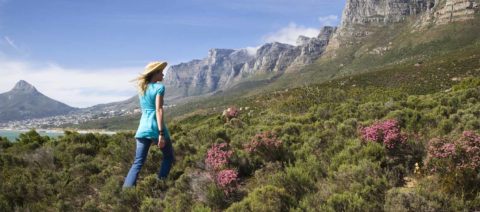
Turner and his wife, Jane Fonda, announced the grants on a windy hillside in the Cape Peninsula National Park, one of seven ecologically sensitive areas South Africa wants to have declared as World Heritage Sites. "We are trying to be like Robin Hood, taking from the rich and giving to the poor," a jovial Turner told reporters. "We are very happy to help."

He applauded efforts to eradicate alien vegetation in the park, saying: "In my spare time I go and pull weeds too." South Africa will receive US $45,000 to help in its World Heritage application. Turner was in Cape Town to attend the first meeting outside the US of the UN Foundation, one of two organizations set up in 1997 to administer his donations of $1-billion to United Nations causes. The money will be paid out in 10 annual installments of about $100-million.

The foundation’s mission is to support the UN’s goals and objectives and to promote a more peaceful, prosperous and just world. It has already allocated US $137 million to UN agencies dealing with child health, conservation, peace, security, human rights, women and population issues.

Lions and Leopards Kill 21 Tanzanians, November 7 1999

Lions and leopards have killed a total of 21 people in southern Tanzania in the first 10 months of this year according to a Tanzanian newspaper. According to Human Settlement Development of Tanzania a further 22 other people were injured by the wild animals during the same period.

Tanzania is famous for its wildlife protection, but villagers often complain that lions, crocodiles and other fierce animals pose threats to their personal safety.

Swedish Envoy Calls for Protection of Lake Victoria, November 7 1999

Swedish ambassador Inga Bjork-Klevby has asked the government of Kenya to protect the country’s largest inland water body, Lake Victoria. The envoy said uncontrolled disposal of sewage, poor solid waste management, non-functional water treatment facilities, the discharge of partially treated effluent from poorly-regulated industrial activities and poor agricultural practices were to blame for the rapid deterioration of the lake’s ecology. She said that the communities living around the lake basin should work with the government to tap the resources in the area in order to alleviate poverty.

Battle Looms over Victoria Falls Rainforest, November 7 1999

The National Museums and Monuments of Zimbabwe (NMMZ) says it is taking over the running of the Victoria Falls from the Zimbabwe Department of National Parks with effect from December 1, 1999. The Zimbabwe Department of National Parks says that National Parks will continue to run the Victoria Falls rainforest area and that NMMZ is mistaken.

Charles Chipato, permanent secretary at the Zimbabwe Tourism Ministry denied that NMMZ was taking over the Victoria Falls. Chipato said that the national monument was within a national park and that therefore the Department of National Parks were legally entrusted with the running of the park and everything within it.

New Elephants at Victoria Falls, November 7 1999

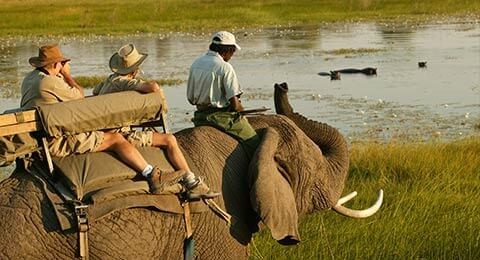
The Elephant Company which offers elephant back safaris, has now been operating for eleven months on the Nakavango private estate, 11 km from Victoria Falls. The most recent arrivals in the herd (now 12 strong) are three elephant from Manzhou Game Park - part of Mazowe Citrus Estates - which recently changed ownership. There are two bulls - Big Boy and Mocha - and one cow named Tatu.

The company has now split the herd into two groups of six in order to provide greater personal attention to guests. The animals are fed and trained separately and even feed in two groups. (The elephants roam freely on the estate each day between 10 am and 3 PM)

A two year old male elephant, which seems to have been orphaned, has joined also joined the herd. The young male was seen in the area trying to join, and being rejected by, a herd of wild elephant. On the day he joined the Elephant Company herd he was extremely anxious and undernourished. "After the afternoon outing he went back to the boma with our herd and was fed and penned with the other elephants for the night to protect him from predators. He was very weak and vulnerable at that point and would have been a prime target for lion." According to Mr. Murray of the Elephant Company. In the past week Elephant Company guests had been treated to two lion sightings, so the potential danger for the little elephant was high. The young elephant has been named Tandani, which means "love one another". He goes along with his group for training and grazing, and he wanders freely around the herd while they are on safari with guests. "He really is a bonus for our guests. Tandani enjoys going out on walks and is quite amusing, but the main thing is that we managed to save his life when his chances for survival, especially at this time of year, were very slim," said Murray.

CNN Mistaken in Referring to Air Zimbabwe as High Risk, November 7 1999

CNN quoted Airsafe as its source for the information on Air Zimbabwe in a recent story regarding the poor safety record of several international airlines. The Air Zimbabwe safety record, it turns out, included the wartime shooting down of two Viscount aircraft in the late 1970’s during the Rhodesian civil war. The viscounts in question were flying Air Rhodesia colors.

Air Zimbabwe argues that the wartime shooting down of aircraft should not factor into the same safety statistics with such items as manufacturing defects, equipment fatigue and pilot error.

Since Zimbabwe’s independence in 1980, when Air Zimbabwe came into being as an entity, not one passenger has died as a result of the carrier’s performance.

Air Zimbabwe has asked CNN for a retraction.

Night Lights for Victoria Falls Airport, November 7 1999

As of November 2, 1999 new lights at the Victoria Falls Airport allow the airport to remain open 16 hours a day, giving airlines and travelers greater flexibility.

The Valley Tonga of Zimbabwe, November 7 1999

The Kunzwana Trust, whose mission is to promote the work of Zimbabwean artists and instrument makers for fair reward is promoting cultural tours to Siachilaba, a Tonga settlement in the remote Tonga valley of the Zambezi basin.

The indigenous Tonga people were displaced in 1957 to make way for the construction of Kariba Dam, moving to higher, drier and infertile ground. The area has remained almost completely unaffected by modern civilization, and survival from day to day is uppermost in the minds of many people in this 250,000-strong community. Penny Yon, operations manager for Kunzwana, observes "Amidst their poverty, what has survived for the Valley Tonga is a rich and vibrant culture, of which little is currently known".

Accommodation is offered with traditional meals and outdoor facilities in the home of Mrs. Mangoro, a local store owner.

Night Flights from Victoria Falls, November 14 1999

With the installation of a new lighting system and landing devices the Victoria Falls airport is now able to cater for night flights. As of November 2, the airport has been operating 16 hours a day instead of the previous 12 hours, from 6:00 AM to 6:00 PM. Although the airport could now operate a full 24-hour service this will not be offered due to both manpower constraints and low traffic in terms of aircraft flying into the Falls during the night.

Air Zimbabwe marked the extension of operational hours with a night flight out of the Falls, leaving at 7:00 PM, and other airlines are already readjusting their schedules to take into account the extended hours.

Overnight on Robben Island, November 14 1999

Overnight tours to Cape Town's Robben Island now depart from the Cape Town Harbor every Wednesday at 5:00 PM. The first day guests will enjoy visiting the prison itself, a sunset hike, braai (barbecue) under the stars, evening discussions about reconciliation, music, poetry recital and campfire tales. Day two features a hike to World War Two guns, the lime quarries, the 18th century lighthouse, the village and penguin colony. Ferry rides home leave at 4:00 PM. The tour costs US $75 per person and includes cottage accommodation, all meals and ferry rides.

Major Airport Upgrade at Victoria Falls, November 14 1999

Work started last week on the US $50 million expansion project to upgrade the Victoria Falls Airport, Zimbabwe’s second-largest in terms of passenger traffic. A new four kilometer runway capable of accommodating large aircraft, such as the Boeing 747-400 is to be constructed, and the present short runway will be extended and upgraded into a taxiway with a much longer apron to cater for more aircraft. A new airfield ground lighting system and related landing systems will be installed, complemented by the construction of a new control tower and airport terminal to cater for increased arrivals. The project is expected to take less than two years to complete.

Rafting Operator Reduces Rates, November 14 1999

Shearwater has reduced the price of its one-day rafting trip on the Zambezi River below the Falls by 20% from US $95 to US $75 per person. Shearwater expects to hold this new rate for an indefinite period and will also run specials for South African and Zimbabwean residents at selected times of the year.

Increased Safety at Victoria Falls, November 14 1999

Not only is Victoria Falls one of the world’s great tourist magnets, it is one of the safest. A tourist police force launched three months ago in the resort town is yielding positive results. According to Chief Inspector Makumani, officer in charge of the Victoria Falls station Zimbabwe Republic Police, no incidents of violent crime against visitors were reported in October 1999, and only one case of mugging was brought to the attention of the Zimbabwe Republic Police. Plain clothes foot patrols, uniformed police presence in and around the town, backed up by public cooperation in tipping off the ZRP and effecting citizen’s arrests have contributed to the success of the operation.

Typical crimes in the resort town included fraud, illegal foreign exchange dealings, pick-pocketing and abuse of dangerous substances.

The most prevalent crime in the town has been theft from hotel rooms, usually involving hotel staff, but the incidence of this crime has declined in recent months as hotel management were taking heed of police advice to vet potential employees before engaging them.

Makumani encouraged hotel management in the resort town to advise their guests to take pre-cautions against the possible loss of their possessions. In addition to simply placing information sheets, which often went unread in guest rooms, he suggested that reception staff or those accompanying guests to their rooms should advise on how best to ensure the safety of valuables.

Kenya Visa Waiver to Be Scrapped, November 14 1999

The Kenyan government is planning to re-introduce visa requirements for visitors from European countries to widen its revenue base according to Cabinet Minister Marsden Madoka. Mr. Madoka explained that the government scrapped the visa requirements as part of the effort to rejuvenate the tourism industry. Although he did not give the exact date when the visa requirement would be reinstated, he said "I can’t say when, but appropriate action will be taken at an appropriate time."

Oil Slick Washes up on Kenyan Beach, November 14 1999

An oil slick has washed up on one of Kenya’s Indian Ocean beaches leaving deposits along a 10 km (six mile) stretch of sand, tourism officials said last Tuesday. The oil was swept onto Shanzu beach, north of the coastal resort of Mombasa, on Monday morning’s tide.

Return to Weekly Update Archive