ULTIMATE AFRICA SAFARIS
Phone toll free 1 800 461 0682

Ultimate Africa travel and wildlife news archive

October 2001

Kings Pool Tented Camp September Report, October 7 2001

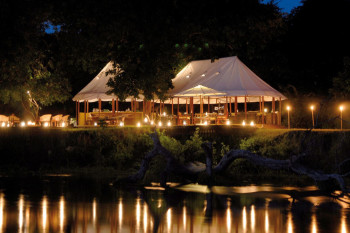
Kings Pool Tented Camp is located in Botswana's Linyanti / Savuti area. Summer has arrived in southern Africa - the fever berry trees have lost their leaves and are busy producing new leaves again. Elephants took over the camp this month. Elephant bulls have been moving through the main lodge area daily and several herds have been making their way to the water in front of the lodge each afternoon. On wildlife viewing drives some of the herds have been noticeably stressed and aggressive, bumping one vehicle and chasing several others.

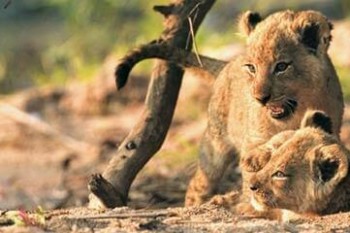
With water now being pumped to area near the underground viewing hide guests are enjoying some spectacular sightings of elephant from ground level. The resident lion pride has also returned to the immediate lodge area. Frank was charged one morning on his way to wake up guests and Peter had to wait for the pride to leave the front of his house so that he could host early morning tea. One boat trip was cancelled as one of the lion cubs was perched on the boat ramp, prepared to dissuade all boarders. Leopard sightings have also been good with several different leopards being seen along the river area.

Guests have been fortunate to see a cheetah several times along the Linyanti floodplain, and two packs of wild dogs are in the area. Sable and roan antelope are also in the area.

There were very few cancellations - just two couples cancelled in September.

The baboons now rival the hippo in ensuring that Kings Pool lives up to its reputation as the noisiest camp in Botswana.

Damaraland Camp September Report, October 7 2001

Damaraland Camp is located near the Huab River about 90 kilometers inland from the Skeleton Coast. Elephant sightings this month have been great. The breeding herd and bulls have been seen regularly, often 17 in one group. They have moved around this month, and thus guests have enjoyed sightings in very different areas. The elephants seem to be enjoying the rich Mopane veld up the Aba-Huab towards Twyfe1fontein. The scenery around the area is stunning with excellent backgrounds for photographs. Two of the cows in Oscar's group are looking very pregnant.

Oryx, kudu, springbok, steenbok, jackal and ostrich have been seen often and in good numbers.

Regular full-day trips into the northern mountains have produced some remarkable sightings of black rhino including a mother and her calf, two leopard, and another breeding herd of elephant, along with kudu, giraffe, jackals and much more. The highlight was when Douw spotted four cheetah in the distance, and managed to approach them and get within 50 meters. They were a mother and three almost fully-grown cubs!

Wildlife viewing was just awesome in September! Bird watching has been relatively good with regular sightings of Ruppell's korhaan, Rüppell's parrot, Monterio's hornbill; rosyfaced lovebirds; barecheecked babblers and longbilled lark. A hammerkop was also recorded up near Palm.

Letter Regarding Underground Wildlife Viewing Hide in Hwange National Park, October 7 2001

Firstly many thanks for giving me the opportunity to spend time in the excellent underground hide at Samavundlha Pan in front of Makololo Camp deep within Zimbabwe's Hwange National Park! Dave Christianson is definitely one of the best men in the country and on the African continent, quite unsung too! Herewith a list of mammals seen during my 31 waking hours between 10:00 AM on September 26th and 6:00 AM on September 28, 2001. Counting was effected during the days with the aid of 8 X 30 binoculars and during the night with USA military night binoculars. There may be a slight discrepancy in the exact numbers of baboon and elephant counted.

Baboon 267, Buffalo 138, Cheetah 1*, Eland 1, Elephant 464,  Giraffe 22, Hippo 2, Hyena 8, Jackal (Black backed) 8, Jackal (Side Striped) 1, Kudu 6, Lion 5, Mongoose (Banded) 12, Sable 14, Spring Hare 2, Warthog 4, Wildebeest 160, Zebra 137, Total Mammals 1252 from 18 species!

The cheetah was seen daily by guests at Makololo Camp only a few hundred meters from the hide. I was not able to see the animal from the hide, due to distance, elevation (the lack of) and grass. On the first night I counted until 2 AM. On the second night I stopped counting at around 11:45 PM. I was woken numerous times by the presence of many elephant around the pan and its calcium licks. I feel that at least another 100 elephant could be added to the above figures. No sign of stress or poor condition was seen from any of the mammals. There are two other well visited waterholes nearby, one about 150 meters away and the other in front of the camp, approx. 500 meters distant. What a pleasure it was to spend this time watching such a good variety and concentration of mammals. The elephants definitely stole the show, their nightly visits from around sunset till after midnight were filled with much noise and action. Drinking, wallowing, dusting, soil eating, pushing, shoving, fighting, screaming, rumbling, growling and trumpeting. This waterhole is without doubt one of the most popular on the African continent, being rivaled by one or two in Namibia's Etosha National Park. The draw card of the pan in front of Makololo, is that it is in an exclusive concession, therefore no interruption from a constant flow of vehicle movement.

Note from my diary: "When in a vehicle we so often don't stop to study a small family of zebra, mongoose or baboon. But in the hide there is not much else to do but enjoy the various animals social and safety behavior, then the innocence and fulfillment of drinking after a long walk on a hot day. The moon was three quarters full, but I only managed to stay up until 2:00 AM on the first night. From dusk until then there were non stop arrivals of elephant, ranging in herd size from 8 to 32 - A total of 265 elephant that night, which if you average elephant out at 2 tons each from calves of a few hundred pounds to bulls of 6 tons, there was over 500 tons of live mammals around the hide in a few hours, trumpeting, screaming, rumbling, roaring, drinking, wallowing, dusting, eating soil, pushing, shoving and having a great time, as only elephant can. It was an awe inspiring show! At dusk I placed my chair on top of the underground hide, I was now about four feet above the ground. On two sides of the hide was water; the natural pan and the sunken concrete reservoir which feeds the natural pan. On the other two sides of the hide were two very popular calcium licks. A number of elephant drank from the pan in front of Makololo Camp (about 500 meters away) and another pan about 150 meters distant, but they all seemed to come in to eat the soil from the licks around the hide. It is obviously much sought after as there was much fighting to get space in these calcium holes. While sitting up there with a mass of huge black pachyderm bodies milling around me, I thought it would be a good place to sleep. I was slightly apprehensive as the game drives had been seeing lion a few hundred meters away a number of times, so I put it off until the next night. The next evening at dusk I sat on the low roof of the hide again, it was a spiritual elephant experience that I find impossible to put into words, they came extremely close and were so polite when looking at me. I felt so humbled as an 11 foot, 6 ton Hwange bull would confidentially stride past me, only two meters distant, towering up to the moonlit sky. At one time a large cow reached out with her trunk to my sandaled feet, I felt the exhalation of her breath on my toes, shortly followed by the wet lips of her trunk which quickly withdrew after the smell. I could have screamed with joy or cried I was so touched by this gesture from a wild female elephant. I was not as diligent on this, the second night as I was rather tired. There had been an endless flow of elephant from 5:50 PM, so at 9:45 AM I turned in to my sleeping bag on top of the slab of the hide. Up until then 199 elephant had come into my vicinity, but as the night progressed I was woken every 20 minutes to half hour by a loud elephant growl, scream, rumble or trumpet. I felt so safe with all my huge black body guards towering above me, I knew they would chase off any lions that might come to inspect this lamb (black sheep) lying on the concrete alter. At around 3:00 AM I woke, the moon had set, the sky was covered in cloud (unusual for this time of year) all my body guards had left and I felt a little exposed and ridiculous lying out there on my concrete slab. Heavy sleep fortunately got the better of my worries and I woke at dawn to a lone black backed jackal drinking from the pan. I went for my morning constitutional, found a termite mound, perched on the side with all the right angles and view, only to be rewarded with 5 lionesses walking past in the shoulder (lion shoulder) high, yellow grasses of that expansive plain. What a way to end one of the most incredible nights of my life! I thought to myself, how many people have been fortunate enough to lie on a slab with hundreds (literally) of elephant cows, bulls and calves mingling around for 8 full hours and then to have 5 lions to watch from an open air loo, first thing in the morning! Thanks to great management the area has also been afforded protection from poaching and hardwood exploitation because of the tourist movement. There is a well maintained network of roads and the guides are extremely well disciplined in not driving off them. It was so encouraging to see a section of this massive park, well managed by tourist revenue."

Mombo Camp September Report, October 7 2001

Mombo Camp is located in Botswana's renowned Moremi Wildlife Reserve. During September the wildlife was exceptionally good - even for Mombo standards! There is a new pack of seven wild dogs including one puppy, and another pack of five which are being on a regular basis.

The Tortillas female leopard has finally allowed us to see her seven week old cub. Paradise plains' leopard cub is growing incredibly fast and has become very relaxed. A Female cheetah with two cubs are all over the concession and are very relaxed and productive. They must have killed at least 10 Impala this month, of which guests experienced at least eight sightings. Of course the Seroid cheetah boys are also around and another two young brothers in the area too.

There are lions all over, a different pride dominates each inch of the concession. Lots of mating going on so we expect many cubs next year....something to look forward to. A feeding frenzy was seen with one particular pride of fourteen killing a buffalo and calf. Less than six hours later they killed a full grown giraffe 80 meters from the first carcass.

Other wildlife has been awesome with breeding elephant herds in front of Rooms number four and five. The wild dogs were at the trading store on two different mornings.

One wild dog female killed a lechwe in front of Little Mombo, only one guest was in camp at the time and she was able to see it, along with Corle of course who was hyperventilating with excitement.

With regards to birds the summer migrants are back - the first Carmine bee-eater was seen on the September 18th. The yellow billed kites are all over the show.

Thys has been working like a dog to finish the boma's for the four rhino on their way up to us. He nearly lost a toe and a finger in the process but is still out there everyday with his team. The viewing platform has proved to be a popular sundowner spot. There is an unbelievable amount of excitement not only form the staff but from the guests too - knowing that Botswana will again have free roaming rhino! The four rhino are safely at Serowe waiting to come to their new home! We are hoping for another 10 in March / April 2002.

Mombo staff and guests enjoyed had a huge celebration on Botswana's independence day with a traditional dinner in the Boma. Guests were served sourghum beer from calabash and they loved it! The staff sang the national anthem for the guests - it brought many to tears.

Rhino Re-introduced in Botswana, October 14 2001

A program to re-introduce white rhino into Botswana's Okavango Delta was kick-started last week when Wilderness Safaris donated three rhino to the Mombo area in the Moremi Game Reserve. Gaberone Game Reserve in southern Botswana donated another rhino. Wilderness Safaris' Colin Bell says the four rhino, two males and two females, will form the nucleus of a rhino breeding program in the wilds of Botswana. According to Mr. Bell, a further 10 to 20 animals could be released into the Mombo area as part of a roan for rhino exchange between South Africa and Botswana.

Mr. Bell explains that rhino became extinct in Botswana in the early 1900s and an attempt to re-introduce rhino in the 1970's and '80s failed because poaching was rife. "The situation in Botswana today is very different and the Botswana Defense Force now runs one of Africa's toughest anti-poaching programs". He says Mombo was chosen as it offers the perfect food sources for the rhino and is surrounded by waterways, which prevent rhino from getting out. Future plans could include the re-introduction of black rhino, if the white rhino proves successful, says Bell.

Little Vumbura Tented Camp September Report, October 14 2001

Little Vumbura Tented Camp in located in Botswana's Okavango Delta. Here is the camp's September report:

September brought with it warmer temperatures and the subsequent drying up of the floodplains. Wildlife has congregated in these areas. Herds of zebra and wildebeest have moved down from the Selinda Channel to the north of us. A pack of wild dogs has been seen on several occasions. The pack consists of eight adults and one puppy. The resident lion pride, of which all seven cubs are still alive, have moved out of the floodplains and have been seen on numerous occasions feeding on buffalo. Huge herds of up to 1,000 buffalo, have congregated in the area.

Every night the resident bull elephants have been patrolling and the usual "dagga boy" buffaloes are present.

DRC Suffers Major Loss of Forest Area, October 14 2001

The Democratic Republic of Congo (DRC) was among the top 10 countries with the highest net loss of forest area between 1990 and 2000. This was as per the United Nations Food and Agriculture Organization (FAO) warning published in the 'State of the World's Forests 2001' (SOFO).

Crazy Statement of the Month - Possibly Year, October 14 2001

A recent story about rhino in South Africa's Kruger National Park made Ultimate Africa's staff chuckle. According to the article: "Rhinos can cover six minutes a second when charging". I believe the correct statement would be "Rhinos can cover six meters a second when charging". The incorrect statement still does not out do a statement made in one of our competitor's catalogs noting that "the Victoria Falls are over 5,000 feet tall"!

Matusadona Water Wilderness September Report, October 14 2001

Matusadona Water Wilderness is a floating lodge on Lake Kariba positioned just off the shore of Zimbabwe's Matusadona National Park. Here is their September month end report:

From the floating viewpoint guests have enjoyed the mauve and purple hues of the distant Matusadona mountain range, its sparse trees atop its distant ridges like sentinels keeping watch over the waters and wildlife below. A look down the Ume River offered a view of the corresponding Zambezi Valley escarpment on the Zambian shores.

During September wildlife continued to increase on the shoreline. Spoonbills and yellow-billed storks fished the shallows between the abundance of Marabou storks up the Chura river, while some two dozen white-backed vultures circled overhead descending to decorate the ground and drowned trees on the shore right off from the mother ship where a pair of lionesses brought down an impala mid-morning the other day. Guests walking with Obert returned just in time to watch them carry their wares over the hill, presumably to feed cubs.

Honest brought his guests over to walk after them a little, confirming that these were the same lions he had heard and followed last week. The young female was then lovingly accompanied by a large male and engaged in the regular throes of copious copulations customary to feline fashion. Jo on a cruise the week before found the same lions in the Shenga River feeding on a hippo. The male and two small cubs were witnessed on two of the four days the cats spent there.

Hippos have been seen regularly out of the water. Two males have taken to fighting on the island beside the mother ship. They also dispute over the title deeds to Obert's staff house, the shade there being a perfect location for a summer day's siesta. While the loser grazes, red-billed oxpeckers nurse his wounds gleefully.

Hyenas call nightly and have been seen on cruises by Obert, and walking to the new den by Honest.

Buffalo sightings have increased, a herd of about fifty animals drinking and feeding in the bays around Chura for five days. In the Shenga a dozen "Dagga Boys" and a few small groups have been seen.

Visits to the rhinos have been very fruitful. Wild rhinos, relocated and released rhinos (two pairs), and two maturing cows, one with calf, have all been seen in or en route to the Tashinga area. We are regularly seeing four and five wild rhinos in a morning. The baby rhinos offer some great photo opportunities.

Kudu, waterbuck, impala, bushbuck and warthogs decorate the evening shores daily as receding water exposes new grass. Elephants enjoying the family seaside vacation on their way to the Mopane-Combretum Grocery store often take a shortcut through the water between the rooms, the babies practicing their snorkeling techniques, to the great delight of the siestaing guests.

And then on September 29, 2001 professional guide Obert had a thrilling close encounter:

Obert embarked on a walk from Water Wilderness with four guests. His intended target, the lions that killed an impala the day before. He picked up fresh spoor of a large male which was in turn joined by the tracks of two small cubs, then two females. A careful stalk led the party into the "Little Shenga" where they were suddenly aware of a lioness moving away across the dry riverbed. Skirting round toward higher ground for an elevated view Obert and the guests were suddenly confronted by two small cubs... and their mother which growled at them threateningly. The cubs, perhaps three months old, ran in fright toward the clients. They stopped only a few meters away before crab walking, wide-eyed, under an overhanging combretum. Unimpressed, mother charged the Obert and the clients, roaring and demonstrating angrily. A powerfully built male lion burst from the thicket, black mane swaying to his quick, trotting gait, mouth open and breathing fiery threats. With him came a young female lion.

Obert ordered the clients to "Back up, Back up". Sensing fear the lions charged again, closing the gap with powerful speed. One can imagine their deep belly roars and piercing golden eyes.

An added threat caught Obert's eye as a second male lion boiled out from the undergrowth to the right. He angled left to encircle the human threat. 'Crrrack!' the sound of a shot cut through the already well-charged air. Quick to hand Obert's pencil flare made it's mark amongst the lion's talk stopping the big cat's plan. Angrily and still growling it moved back across the sand to join the other lions. Obert edged his party carefully out of harms way.

As Obert and the guests moved away everyone relaxed, investigating some of the secrets of the wild, lovingly unraveled for them by their guide. Baobab trees damaged by elephants offered materials for string-making lessons and bracelets for the ladies. Bird life was abundant, and while looking at birds a number of vultures were noticed in the trees a short distance away.

The now well-experienced clients searched the area to no avail. They continued on their way only to walk into a second pride of lions - a golden maned male, scruff-neck male, one lioness and her pair of two-month-old cubs. When the mother sounded a warning the cubs took to running, again straight toward the clients. This time Obert shouted at the dappled kittens which, when they saw him, ran away closely followed by a protective scruff. The large male and lioness female charged forward with all forms of roaring and performance. After a short retreat, Obert and the clients stood taking photographs until the cats moved back beneath the shelter of riverine brush.

Later, safely aboard Water Wilderness' mother ship the guests' adrenaline levels dropped off. Having difficulty finding words but unable to contain their fright, excitement and awe from their adventures, French, Dutch and stuttered English bubbled from their mouths.

New Airline Tax, October 14 2001

A new security / insurance tax has been introduced by southern African airlines. The additional tax of about US $5 per sector applies to domestic and international flights.

Most airlines are only charging this tax on tickets issued after September 29, 2001, however Air Botswana are making travelers pay at the airport for any ticket that doesn't include the tax no matter when the ticket was issued.

Following is a quick rundown of the new taxes:

South African Airways: US $5 per sector on a ticket

British Airways: R18.00 (roughly US $2) per sector on a ticket

Air Botswana: US $2.50 per sector on a ticket

New Zambian Departure Tax, October 14 2001

Zambia has adopted a new domestic departure tax, which effects all departures from all airstrips and airports. The US $5 per person tax must be paid at airports and airstrips.

Cancellations Not Occurring / Bookings Still Strong, October 21 2001

Many travelers are under the impression that the travel industry is facing massive cancellations and that specials abound. They can therefore wait and see what offers come along.

Tour companies that focus on mass tourism - large budget group tours have been hit hard and are offering great package deals. However safari inquiries and bookings continue at almost normal levels...In many cases we are having to waitlist bookings for travel during the best wildlife periods of 2002 as space is quite limited - so many people are already booked. Our Seattle office had only two cancellations - one for travel during September 2001 and another for a November 2001 safari. These two cancellations totaled 4 people.

So for those of you wishing to travel to Africa in 2002 I would suggest securing space at this time.

Important: The travel insurance we require all clients to purchase covers you for problems arising from acts of terrorism and the financial default of a tour operator - so in a worst case scenario, you are not "left up the creek without a paddle".  

Ndutu Camp Report, October 21 2001

Ndutu Camp is located just outside the Serengeti National Park in northern Tanzania. We are now well into the dry season and guests have enjoyed good sightings of all six species of cats and several encounters with striped hyena! Another “special” was a huge python, basking in the early morning sun, its beautifully marked body encircling the base of a tree.

A young spotted hyena has decided to use Ndutu as a base! It sleeps next to the garage every night and at dusk wanders around the lodge, often coming very close to the bar area and the fireplace. At first we were alarmed it might be sick, but after three weeks maybe it just likes the area! Nevertheless, the night watchmen keep a close eye, just in case!

There have been unusually early and scattered rainshowers resulting in a mosaic of greens and browns on the surrounding plains and woodland of Ndutu. Early in the month, a bushfire from the east lit up the night sky for over a week and in order to save the woodland around Lake Masek staff went out several days to either backburn or directly put out the flames in nearby area. With the lorry loaded with drums of water and staff armed with gunnybags they managed to control the fire! It rained soon after and already new green grass shoots are coming up, and small herds of impala and dikdiks are feasting on the fresh food in the area.

Very significantly, the magnificent scadoxus multiflorus lily, more popularly called “fire ball” lily, has started to appear everywhere. As these beautiful lilies always flower at the onset of the early rains, we hope the Rain Gods continue to smile on Ndutu! If it is up to the pair of toads, that presently live in the herb garden next to the kitchen, their constant croaking surely is a sign of rain to come!

A few days ago, two Maasai friends arrived, having walked from the Gol Mountains, a range of high hills to the east of Ndutu. Sometime ago, they had announced that they would come to Ndutu as they were very keen to watch wildlife videos!!!! They needed to cross a 40 kilometer wide short-grass plain and another 10 kilometers of woodland. Just a few kilometers from Ndutu they were lucky to stumble upon one of the camp's vehicles and staff working on the road. One of Masai had a badly swollen foot as they had to run for their lives when they encountered an elephant just inside the woodland border and had to climb a tree! And so on arrival they sat for two days, clad in their red shukas, in the video room by themselves and looked at scenes of the Serengeti. I know the place they call home and it is a stunningly beautiful.   More beautiful than any wildlife film or video could ever show! Where cultures cross life in Serengeti follows its natural course.

With the rains about to arrive, the dry and dormant earth will soon  transform the short-grass plains and woodlands of Ndutu and welcome the vast herds from the north!

Swiss Tourism to Kenya Grows, October 21 2001

The Kenyan coast has seen a downturn in tourism over the past several years. However this is about to change. The number of tourists from Switzerland is expected to reach more than 500 a week starting next month after a successful travel promotion.

Cheetah Relocation Postponed, October 21 2001

A planned release of five cheetahs from Zimbabwe's Chipangali Wildlife Orphanage into the Hwange National Park, has been delayed after a researcher bringing radio collars for the big cats postponed his trip to Zimbabwe following the September 11, 2001 terrorists attacks in the United States.

The cheetahs, a specially protected species in the country, were captured as problem animals on commercial farms after killing livestock. The five were held at the Chipangali Wildlife Orphanage.

Leading conservationist, Viv Wilson, said the cheetahs awaiting release into the wild are to be fitted with radio collars so that they can be tracked and their movements monitored.

Wilson has been commissioned by the Department of National Parks and Wildlife Management to conduct a census on the cheetah and leopard populations in Matabeleland north and south provinces.

The Wildlife Research Unit of the Chipangali Wildlife Trust has initiated a detailed survey and research program to understand the ecology, behavior, status and movement of cheetah and leopard on commercial, communal and state land in Matabeleland.

The survey being conducted by Wilson will determine to what extent cheetahs and leopards prey on domestic livestock on commercial farms and to collect as much data as possible on stock losses.

A detailed report would be produced on completion of the project, which will make recommendations to National Parks from which cheetah and leopard management plans will be formulated.

Spy Flies into Burundi, October 21 2001

Police in Burundi have arrested a suspected "spy" that flew to the central African country from Cape Town wearing a satellite-tracking device. The "spy" is a white stork, part of a University of Cape Town research program to monitor the migration patterns of the birds.

Zimbabwe Credit Card Warning, October 21 2001

Travelers visiting Zimbabwe should be cautious when paying by credit card. Many vendors are taking the US $ cost of an item or service and are converting this to the parallel (black market) Zimbabwe $ exchange rate and this amount is written on the traveler's credit card receipt. The banks then convert the Zimbabwe $ rate back to US $ at the official exchange rate and this amount is deducted from your traveler's accounts back home.

As an example: if a service costs US $100, they convert to Z $'s at the parallel rate at 200:1, so the guest's credit card is billed Z $20,000. The bank converts back to the guests bank account at US$56:1. So the traveler ends up paying US$357 for a US$100 service!

If you use a credit card in Zimbabwe pleas ensure that the signed receipt shows the charge in US $'s or converted to Zimbabwe $'s at the official government rate of Z $56:1.

Another option is to pay with US $ cash.

Environmental Help for Nile River, October 28 2001

Ten countries sharing the Nile River have earmarked a total of US $39 million for environmental projects along the river. This announcement was made by the chairman of the Nile Technical Advisory Committee. One of the top priorities will be to combat the water hyacinth and silting.

The implementation of the projects will start early next year and will benefit more than 600 million people over the next decade.

Helicopter Tours of Cape Region, October 28 2001

One of the most incredible ways to enjoy South Africa's Cape Peninsula's beauty is from the air, by helicopter. There are many tours on offer with one of the most popular being a helicopter flight to Cape Point, followed by a drive into the reserve, a visit to the penguins and a drive back to Cape Town.

Another popular option is a Cape winelands lunch tour. Guests fly over the Victoria and Alfred waterfront, across the Cape Flats to Stellenbosch and over the mountains for lunch at one of the famous Cape restaurants in the wine country.These include: Bosmans at the famous Grande Roche with magnificent views over the vineyards and mountains, the Cape Malay Buffet at the Jonkershuis Restaurant at Spier with a visit to the Cheetah Outreach Programme, Bartholomeus Klip for a gourmet country lunch followed by a game drive to see Cape Mountain Zebra and various antelope species, Haute Cabriere in Franschhoek in the underground red wine maturation cellar, Zevenwacht in Stellenbosch in a Cape Dutch Manor House, and Boschendal with its beautifully restored Cape Dutch Farm.

Another exciting option is a scenic helicopter tour of the Cape Point continuing to the Cape Winelands for lunch.

Ancient Crocodile was Length of Bus, October 28 2001

Scientists have released new details of a giant super-crocodile which lived around 110 million years ago and grew to the length of a bus. Sarchosuchus imperator specimens were first discovered in the Ténéré Desert in Niger in 1964 but new finds in the Sahara have made it possible to form a clearer picture of the giants. The creature is the largest of several different fossil crocodiles investigated by Paul Sereno of the University of Chicago and colleagues.

S. imperator's jaw and teeth suggest it ate a generalized diet of large, back-boned animals like fish, turtles and dinosaurs. Its name means "flesh crocodile emperor".

The new finds suggest that adults took 50-60 years to reach a full length of 11-12 meters (37-40 feet) and a weight of eight tons. The creature's eyes were tilted upwards, allowing it to conceal much of its body under water. "It was living an ambush lifestyle," said Professor Sereno.

CC Africa to Launch Walking Safaris, October 28 2001

Conservation Corporation Africa (CC Africa) will be launching exclusive tented walking trails at South Africa's Ngala Private Game Reserve in the Timbavati region of the Kruger National Park in November and at Phinda Private Game Reserve in Kwazulu Natal in April 2002.

Accommodation will be in five-star en-suite tents complete with flush toilets, comfortable beds, hot bucket showers and expert guides. "This is a demand- driven product," explains CC Africa operations director Tony Adams. Guests have indicated they want something more than luxury lodges and game-viewing from the confines of a land rover. They want an up-close-and -personal experience of the bush where they can experience its textures and silence with no vehicle intrusion." Adams says guests will be taught the basics of the art of tracking, and won't track the Big Five wildlife species. "These trails are about an ecology experience" he adds. The three-night trails will accommodate a maximum of eight people in four tents.

Botswana opens New Immigration Point with Namibia, October 28 2001

In a long anticipated move, Botswana has formally opened an immigration point in the Kwando, adjacent to the Mudumo National Park in Namibia. The border point will greatly facilitate tourism movement around the region by allowing guests access to the Namibian side of the Kwando/Linyanti rivers via Lianshulu (which serves as the Namibian border point) and into the Caprivi direct from lodges in the Delta, Moremi and Savute.

Kruger International Airport Construction on Schedule, October 28 2001

Construction of the Kruger Mpumalanga International Airport (KMIA) in Nelspruit, Mpumalanga, South Africa is on schedule and it is planned to open in 2002. It will be fully operational for international access by December 2002. KMIA will provide direct access from major international centers - continental Europe, the UK, North and South America, India, Australia, New Zealand and the Far East - to tourist attractions in Mpumalanga (namely Kruger National Park) as well as the Maputo Corridor and Mozambique.

Tourism Edges Out Horticulture in Kenyan Forex Earnings, October 28 2001

Tourism has regained its position as the second-highest contributor to Kenya's income. The Kenya Tourism Board managing director, Ms Betty Buyu, says the latest figures from the Central Bank indicated that tourism was runner-up to tea in terms of foreign exchange earnings. The sector was now ahead of horticulture and coffee in terms of contribution to the gross domestic product, she added. "Our dream at KTB is to regain the number one position where we used to be," Mrs Buyu said.

The Kenyan tourist product is being diversified. "We will be selling culture, our sports heroes and engage in cross marketing, where we link our export products like tea, coffee and flowers to the destination," she said.

Celebrities Enjoy Remoteness of Botswana, October 28 2001

Earlier this year Prince William visited Botswana. Botswana's peace and stability allowed him to travel with only two bodyguards. While in Maun, Botswana there was no press whatsoever. He visited the local pubs and drove around the shops with no problem.

A recent safari in Botswana for a party of friends and business colleagues of Oprah Winfrey, would have normally utilized heavy security. Not in Botswana.

Blue Train Re-Launches Route, October 28 2001

The Blue Train has re-launched its Garden Route trip between Cape Town and Port Elizabeth. The train's executive manager Ntahli Borotho says the train will depart earlier than before, thus affording guests more daylight hours to enjoy the magnificent scenery. The Blue Train can accommodate 84 and 76 passengers on its two trains respectively, with guests being looked after by 27 dedicated trained staff including personal butlers.

African Village Lodge opened on Lake Malawi, October 28 2001

Central African Wilderness Safaris offers an African village-style lodge on the Lake Malawi shore to cater for travelers in search of a more authentic African experience. The Njobvu Cultural Village Lodge is incorporated into an existing Malawian lakeside village and is designed to allow visitors to partake in the normal daily life of Njobvu, while still enjoying the comfort of staying in a lodge.

Visitors will be able to attend the village court, market and other social events, and will be entertained by local dancers, theatre groups and village entertainers at night. The lodge is just 14 kilometers from the Liwonde National Park near Blantyre.

Improvements at Kulala Tented Camp, October 28 2001

Recent improvements at Kulala Tented Camp in the Namib Desert include an elevated plunge pool with a large partially shaded deck with breathtaking desert vistas. Wooden raised walkways have been installed around the main thatched area encompassing the dining, bar and outdoor veranda. Tinted windows have been installed to prevent glare and overhead fans are now fitted in each tent.

Kulala Desert Lodge is running at virtually 100% occupancy and the guests are all loving it.

Improvements at Sossusvlei Wilderness Camp, October 28 2001

The main lodge area of the Sossusvlei Wilderness Camp in Namibia now boasts a star-viewing platform, away from any distractions of light from the lodge. Tinted windows have been installed to reduce glare and heat during the summer months. Horse riding is now on offer as a new, optional activity.

Return to Weekly Update Archive