ULTIMATE AFRICA SAFARIS
Phone toll free 1 800 461 0682

Ultimate Africa travel and wildlife news archive

October 2004

Chobe Anthrax Outbreak Update, October 3 2004,

The anthrax outbreak in the Chobe National Park is now ending, although the odd dead buffalo is still being found. This is important, as the number of animals dying is reducing fast. This is a sure sign that the outbreak is coming under control. There are, however, reports of animals having died on the Namibian (Caprivi) side of the river. The Namibian authorities are also isolating this zone, and should have it under control by now.

The Chobe Park itself is not closed… Only the area between Ihaha and Kabulabula has been sealed to tourists until the operation is complete. The regulations require that it remains closed for three weeks after the last carcass has been burned/disinfected and buried. With a bit of luck, this should be by the end of October. Ihaha and Kabulabula are on the Chobe River front close to Kasane. The rest of Chobe, i.e. most of the river front, Nogatsaa, and Tchinga are completely unaffected.

The Botswana Department of Wildlife and National Parks has done a great job in containing this outbreak, before it spread through the general wildlife populations.

I find it important to point out, that small outbreaks of anthrax are not uncommon in south/central Africa, particularly in wildlife areas. The anthrax spores remain dormant in the ground for years, and break out under exceptional climatic conditions like high rainfall or large floods (like those experienced along the Chobe this year. There have been outbreaks in the last thirty years in South Africa, Zambia and here in Botswana. There is, of course, some mortality amongst wildlife, but it soon comes under control. It can be assumed that many small outbreaks occur in remote areas, but are not ever detected by wildlife authorities or managers. This one is in a high tourism zone and so, obviously, was quickly noticed!

Another factor which needs pointing out is that, since recent international publicity surrounding "white powder" anthrax, being mailed to people as part of a terrorism technique, the general public are now in fear of this disease. There is, of course, a chance of the disease being caught by a human, but it is actually very small unless one is covered in the blood of an infected animal, and highly unlikely, now that the wildlife authorities have isolated the area. The "white powder" anthrax is a laboratory created strain of anthrax that can be used as a chemical weapon in warfare etc.

Chobe is safe to visit and this outbreak is completely natural

Robin Pope Safaris Weekly Update, October 3 2004

Robin and Jo Pope are considered the cream of the crop when it comes to Zambian tour operators. Here is their latest update:

Yesterday Robin and Jo invited us to their house for a family Sunday lunch - a lovely affair, super food and company but it was out done by the after lunch show. Just as we had finished eating, a group of about 10 elephants came to cool off at the watering hole in front of the house. They were busy spraying themselves and a little one was playing and rolling around in the mud. They are so efficient at covering every part of their bodies with the wet mud. The edge was quite slippery in places and of course the younger ones managed to slip and slide into the water - a couple even losing their footing and sliding in sideways - hilarious.

Almost at once another group appeared and then they just kept coming - in total we counted 42 elephants at the hole at one time. An amazing sight. As some moved off others came to join in and over a 30 minute period we saw 53 elephants pass in front of us. All seen from the raised balcony of the RoJo House. Such a treat.

Robin led a 2 night fly camping safari last week - with a well traveled old Africa hand. Jo zipped up to join them on the second night (commuting from the office in her Rav 4 -hairdressers car! and across the bumpy Mutunda Plain!). The staff had spotted a HUGE python in the main tree of the site under which the 2 tents were erected. The girth was as large as a large thigh it was decided. That night, despite us all knowing the python is no real threat, both tents were firmly and tightly closed!! And yes - it was still there in the morning.

Rocky writes about the last mobile group - on arrival at Tena Tena they put in a leopard order during tea and almost instantly puku and bushbuck were going crazy just behind camp - there must have been a leopard lurking. They checked around but no leopard was found and the guests returned to camp without seeing one but happy to have seen lots of other interesting sightings. The next day, just after this group left camp, a leopard was seen to walk right past tent no 5 to drink from the lagoon - missed again. Finally, on the third day, the group got to see their leopard - and discovered that it had made a kill the previous night - just 15 meters from Ross's house (Ross must have been tired to sleep through that!). It shows that perseverance pays off and that you do have to sometimes work for these wonderful sightings, even if they end up on the doorstep.

This week another 2 tiny baby wartlets were found abandoned and were delivered to our office. Hmmmmmm - a very difficult one. They were duly delivered to join Roxy, the previous baby warthog, whose new Mum, Anna, was delighted that he would have company. But they were very dehydrated and one had a possible broken leg. After much organizing the tiny wartlet was flown down to Lusaka to see a vet. All is well and he should be returning soon. However, Jo has put her foot down - no more rescuing of baby warthogs as we enter the wartlet season. We will have hundreds!

At Kawaza School the first classroom block is finished and the slab for the second is being thrown this week. We are delighted with how the project is going and a huge thank you for all those who have sent money.

Stay well and have a great week, Cheers Kim


Okavango Delta Helicopter Safaris, October 10 2004

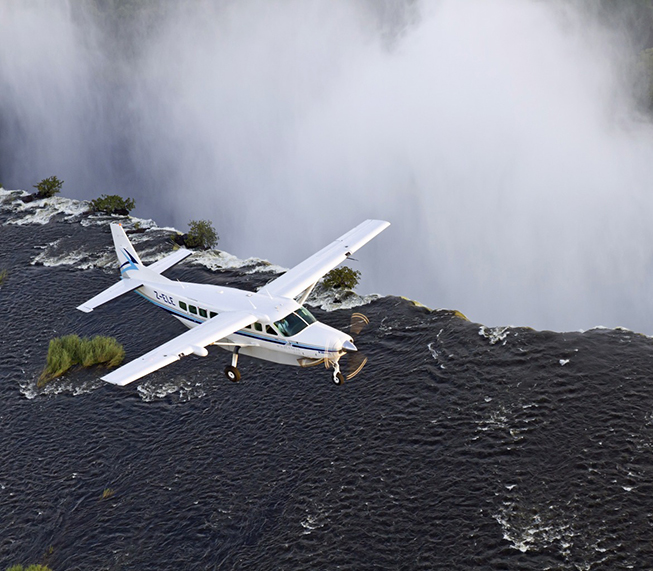
Orient Express Safaris has started helicopter flights over Botswana's famed Okavango Delta. For those people looking for a unique safari experience, this activity should not be missed! Guest's at Eagle Island Camp will travel along one of the main tributaries that supply the Delta exploring the more remote areas from the air as well as the water. After departing the airstrip guest's are first exposed to the permanent water areas with high concentrations of crocodile and hippo amongst the many islands near Chao and the Xo Flats. The flight continues east of the Boro over the larger Islands where guests may observe plains game and the occasional predator. Guests on a recent flight were vigilant enough to spot two leopards (on two separate occasions), on the edge of Chief's Island. Guests land at Nxoga Village where they will have a delicious champagne brunch. Guests will be returned to Eagle Island by motorboat. The excursion takes approximately 2 hours and is best done midday so as not interfere with other wildlife viewing activities. It may also be conducted in reverse i.e. boat then helicopter. As water levels fluctuate in the Delta this should only be booked for guests traveling between June and October each year.

Robin Popes Weekly Safari Update, October 10 2004

Robin Pope Safaris is considered one of Zambia's highest quality tour operators. Here is their latest news:

Kim has gone up to the Nsefu Sector to experience fly camping before the end of the season. It will be hot but the experience of being in a small totally temporary camp for a night is amazing.

The temperatures have risen but we are all saying that it is not as hot as normal. However, the river is lower than normal - we are already driving across at Nkwali, which we started 3 weeks later last year. The lagoons are drying up very fast now and the game is being forced to the river for water. This makes the viewing from the camps increasingly spectacular. From Nkwali we are seeing leopard almost daily coming down to drink. There are buffalo, giraffe, elephant as well as the usual suspects of various antelope. Wonderful to just sit quietly in camp and have the game come to you!!

Last week I organized the first drive up to the top of the Chendeni Hills. As some of you will remember, Gordon built a 22 km road up the rocky and very steep hills. It took 2.5 months, did considerable damage to Dobbin (our oldest Land Cruiser), and a number of casuals left the team as the work was too hard. But miraculously he reached the top. We had hoped to put a very small fly camp up there but we are still waiting for the permissions. So I took a group up, with lots of water, picnic and warnings of "this is an adventure and not a safari". We saw a number of different species, including duiker, klipspringer, rock hyrax, grysbok and to my delight a pair of black eagles. They were in the distance, ridge surfing. What a day - views, rocks, remoteness in abundance. I had forgotten how rugged the road was and it still amazes me that Gordon achieved what he did.

Dobbin was Robin's first vehicle and is over 20 years old. Not bad considering the conditions here. But it's chassis has been repeatedly rewelded. I have tried to put it on the "to sell" list a number of times but Robin quickly takes it off again. Robin managed to find another old cruiser of the same style and last week there was a chassis swap. The workshop staff worked fast and the whole vehicle was taken apart, moved over and rebuilt. Impressive in our "home spun" workshop.

Today is the last day of the last mobile of the season. It has been a great year for mobiles. They have been very full and the game has been excellent. Often it is a common animal that gives a memorable experience. Simon remembers creeping up to a warthog, getting closer and closer, and it still ignored the group. The last night of the mobile is always celebrated with champers in the river. It is sad to pack up the camp for the season…

Nsefu has reported outstanding viewing. On September 30 for example 3 afternoon/night drives, all with amazing and different sightings...

Jacob - 2 leopards, 2 honeybadgers, 2 hyena and then 3 lioness feeding on a puku

Daudi - 5 lioness, 1 leopard and 1 very new hyena pup suckling (now total of 3 at the den)

Kerri - day time leopard, 5 lions, 1 black necked spitting cobra on the hunt, and a great view of a genet marking it's territory (which is....reverse up to a tree and spray 1-2 feet up the trunk, take a sniff and walk off!)

Cheers - Jo

South African Airways Voted World's Best Business Class, October 17 2004

South African Airways new 180-degree, lie-flat Premium Business Class seat was just named World's Best Business Class Seat by Skytrax, the leading research advisors to the world airline and air transport industry.

The lie-flat seat bed aboard South African Airways Premium Business Class beat out top competitors Virgin Atlantic's Upper Class (#2) and British Airways Club World (#3), with the widest seat of the three and SAA's cabin layout and overall ambience winning out.

Airlines including Singapore Airlines, Cathay Pacific, Lufthansa and Quantas were not considered in this Skytrax award, as they either have or are in the process of installing angled lie-flat seats in their Business Class cabins, which provide a flat seat surface but do not provide a proper horizontal sleeping position.

In commenting on the award, Peter Miller of Skytrax said, South African Airways have not stinted on seat pitch (73 inches equating to or indeed better than many airline First Class standards), and have retained the traditional cabin layout - window and aisle seats, all facing forward!

The Skytrax research staff also touted SAA's comfort in the flat bed position and the privacy offered by the seat pod and supplemented by a separate side seat divider. "In naming the South African Airways seat as Best, we have taken into account the different uses and stages of a long haul flight - sitting and dining positions, sleep comfort, sleep privacy, cabin ambience, etc.", explained Miller. "The more spacious cabin layout - combined with a top quality seat - takes SAA into this prestigious position and the accolade for the World's Best Business Class Seat."

South African Airways recently introduced its new Premium Business Class, a blend of First and Business Class amenities, on its North American route, and has now completed upgrading all Premium Business Class cabins aboard its A340-600 and A340-300 aircraft to feature the private, lie-flat beds on all daily flights between its New York and Atlanta gateways and South Africa.

South Africa's premier airline and the African continent's most awarded carrier, South African Airways is the only airline to provide direct flights from the U.S. to South Africa with daily departures from New York (JFK) and Atlanta that couple travel convenience with award-winning service excellence. The airline features a young fleet enhanced by new Airbus aircraft offering the latest in airline comfort and entertainment, as well as a style of service and warm hospitality that is proudly South African.

Three Countries Allowed to Hunt Black Rhino, October 17 2004

The parties to the Convention on International Trade in Endangered Species (Cites) have granted Namibia, Swaziland and South Africa permission to hunt five of the once highly endangered black rhino population annually for sustainable utilization of the wildlife resource.

Representatives of over 166 countries agreed by consensus to allow the export of five black rhino hunting trophies each from Swaziland, Namibia and South Africa, marking the first time in many decades that hunting of this species has been approved by the UN body.

Cites also agreed to almost triple Namibia's leopard hunting export quota from 100 to 250 animals a year and double South Africa's leopard quota from 75 to 150 animals a year, again acknowledging that conservation efforts have been so successful in the region that hunting could sustainably increase.

Even a suggestion by Kenya and its allies in the donor fraternity that if the three countries would raise US $1 million from hunts - western donor countries and non-governmental organizations were prepared to raise that amount and buy the rhinos to stop hunting - could not sustain the argument to ban hunting of the flourishing species.

This would boost tourism receipts, not only in the respective countries, but in the whole region as this means that it is only in the SADC region where hunting enthusiasts can now hunt the big five - lion, elephant, buffalo, leopard/cheetah and rhino.

Safari Club International and other wildlife conservation bodies were instrumental in helping make hunting an important part of the management of two important African wildlife species - the elephant and the black rhino - resulting in permits for black rhinos and added permits for leopards being granted.

Although the black rhino was on Cites Appendix I (which bans trade), Cites parties noted that the black rhino populations were increasing in southern Africa, hence, the permission to manage the growing population through one of the most scientifically favored conservation methods - sport hunting.

Zimbabwe's Tourism Minister Francis Nhema said the region was rewarded for good wildlife management practices through sustainable utilization of the resource. "If the wildlife resource can look after itself, the better. We will commit limited resources to them and still let the few hunted animals benefit both the communities and the people living alongside them."

Although the decisions have disappointed some animal protectionist groups, Nhema insisted the money raised from the sales would pay for improved conservation efforts as Zimbabwe has always done.

He added that the belief was based on the understanding that the SADC countries were working together to establish wildlife conservation programs. Zimbabwe was working with Mozambique and South Africa on the Great Limpopo Transfrontier Park, the Four Corners program which includes Botswana, Namibia, Zimbabwe and Zambia, the Luangwa Conservation Programme (Zambia-Zimbabwe-Mozambique) and Okavango Transfrontier Conservation Park (Angola-Namibia-Zimbabwe-Botswana-Zambia). The black rhino had been on the decline since the 1970s due to hunting, war and increasing demand for land. It suffered a near-catastrophic decline from about 65,000 animals in the 1970s to only 2,400 in the mid-1990s. Poachers sought rhino horn because of the high prices it fetched in the traditional medicine markets of the Far East. In the Middle East, the horn has also traditionally been carved and polished to make dagger handles.

But according to a major study released earlier this year, numbers of the species in southern Africa have risen by around 40% over the last decade. As a result, the SADC region believes the time is right to introduce very limited hunting.

Each country would be allowed to export products from five animals only each year, and they would all be elderly males. The application was supported by the scientists and technocrats of the Cites Secretariat, who believe that taking elderly males could actually help herds to expand.

There are an estimated 3,600 black rhinos in Africa with 80% of the endangered species found in the southern African region. Zimbabwe, which has four black rhino intensive protection zones in Matopo, Sinamatela, Chipinge and Matusadona, has seen its population increase to between 500 and 1,000 animals.

"It is important to realise that black rhinos are on Appendix I and they are staying on Appendix I; their status has not changed," said Mr. Michael Williams, spokesman for United Nations Environment Programme.

Swaziland proposed that its population of the southern white rhinoceros be transferred from Appendix I to Appendix II to permit the export of live animals and trophies while Namibia and South Africa requested approval for the export of five black rhinos as hunting trophies. The white rhino was re-established in Swaziland in 1965 after earlier becoming extinct there and now numbers some 61 animals.

Pro-sustainable use delegates here viewed this historic decision as yet another clear indication this century that Cites had succeeded in making science triumph over the esoteric interests of powerful Western NGOs who fight against sustainable use. Revenue from rhino hunting would be used for rhino conservation.

Robin Popes Weekly Safari Update, October 17 2004

Robin Pope Safaris is considered one of Zambia's highest quality tour operators. Here is their latest news:

It has been a busy week on the game viewing front again. All of the camps have had amazing sightings recently with the dry season taking a firm grip on the Luangwa Valley and all of the animals having to rely heavily on what water is left in the big lagoons and the river. The monotonous drone of the cicada beetles in noticeable everywhere now - a true indication the hot season is now in full swing!

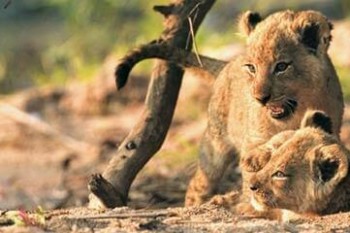
The two older little hyena pups at Nsefu are becoming increasingly bolder and more curious as the days go by and are constantly approaching the vehicles as they arrive at the den. One little fellow seemed to be putting in an application as a new mechanic at the Robin Pope Safaris workshop by trying to impress us with the attempt to remove the front left wheel of Kerri's game viewing vehicle with it's teeth! Although this sort of technique for removing the wheel is not common in the RPS workshop it certainly would command a lot of respect from the rest of the mechanics - and who knows - with the strength of an adult hyena's jaw, and the things that they are able crush, it would surprise me if they could do it!

Kerri had another fantastic sighting this week. A large commotion was heard coming from the ebony grove just up river from Nsefu during afternoon tea. All of the animals were alarm calling and the baboons, in particular were making a real fuss over something. All the guests jumped into the vehicles and rushed over to find a troop of baboons had chased a leopard up a tree and the frightened leopard was sitting at the very top of a sausage tree with baboons surrounding the bottom of the tree. The baboons kept up their harassment of the leopard until darkness fell - a case of the hunter becoming the hunted!

The carmine bee-eaters continue to provide great viewing from all the camps. Thy young are hatching and the adults are spending their days hawking insects from all over the place and returning to the river bank to feed the hungry little mouths. It never ceases to amaze me that the, in the myriad of holes to choose from, they find the right one! The fish eagles and yellow-billed kites are now eyeing up the carmine bee-eater colonies waiting to snatch the young chicks to appear on the edge of the holes.

A little amusing incident occurred yesterday morning, in our bathroom no less. Shanie was answering the call of nature, admiring the vast array of little frogs that have taken up residence when a large spotted bush snake fell out of the roof, caught one of the frogs and dashed back up into the rafters to eat his kill - not what you expect when trying to have a quiet moment!

Until next week, take care, Jo

Return to Weekly Update Archive