ULTIMATE AFRICA SAFARIS
Phone toll free 1 800 461 0682

Elephant in camp, Mana Pools, Zimbabwe, October 1997

Frequently asked questions

Africa is a magical destination. At Ultimate Africa we understand that ensuring your comfort and safety whilst traveling through this enormous and diverse land is of utmost importance. We have gone to great lengths to research and understand each portion of your trip. From air tickets and ground transfers, to detailed lodge information, we undertake to make your planning as simple as possible. But we cannot do it all.

There are numerous personal tasks which must be completed by each traveler before departing to complement our efforts, thus creating an organized and relaxing holiday. These include consulting with a local medical practitioner, visa (if required) and passport formalities, currency requisition, and of course, packing. We would be more than pleased to advise you on any of these topics. Upon booking each client receives in depth travel details for their particular safari tour including further details and special Africa safari tips pertaining to air travel, airport departure taxes, clothing, credit cards, currency, driving, electricity, health, language, laundry, luggage, passports, photography, safety, tipping, trip insurance, weather, and wildlife along with an African travel checklist.

Below.we have included answers to some of the most frequently asked safari questions. Please click on the following links to learn about a topic:

ACCOMMODATIONS

What are the accommodations like?

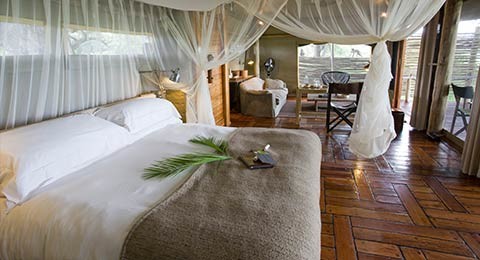
Upmarket safari lodges and tented camps provide first class accommodations. Rooms have proper beds with mattresses and duvets, en suite (attached, in room) flush toilets, basins and showers with hot and cold running water. Other amenities include mosquito netting, lamps, purified water in carafes, insect repellent, flashlights, wardrobes, and ethnic furnishings.

While canoeing or while on a camping safari facilities are more limited. In some cases guests sleep on cots in dome tents and the camp toilet and shower are shared by group members. In other cases, on remote camping safaris, guests may overnight in sleeping bags with no toilet / shower facilities.

Will we be "roughing it" if we stay at a luxury tented camp?

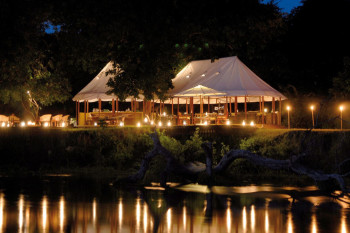
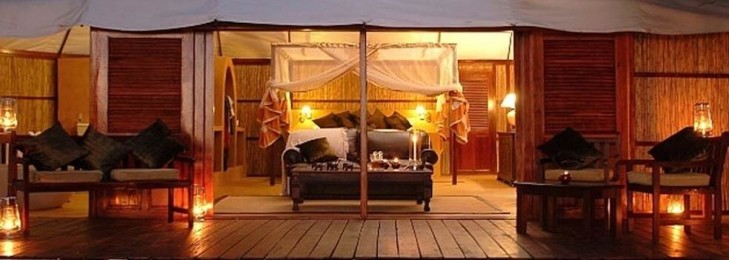
Absolutely not! While staying at a luxury tented camp you will enjoy the comfort of a proper room with the sights and sounds of camping - the best of both worlds. Most tented camp rooms consist of very large walk in tents with Velcro or zippered entries to keep insects out. Walls are canvas with large roll up viewing sections. Inside you will enjoy a proper bed (usually 2 twin beds or a king) with pillows and duvets, bed side tables, dressing table, wardrobe, throw rugs or full carpeting, battery powered (solar) lighting, en suite (attached, in room) shower with hot and cold running water, flush toilet, and basin. Some tents even include baths!

Return to top

COMPANY INFORMATION

Who is "Ultimate Africa Safaris"

Ultimate Adventures Inc., doing business as Ultimate Africa Safaris, is a licensed travel consultancy, incorporated in Washington state, USA since 1996 - Washington State registered Seller of Travel #601730459. The Washington State Department of Revenue offers a State Business Records database for use by the general public as a consumer protection program. Simply visit their website and search names that start with "Ultimate Adventures".. Alternatively you may phone the Washington Department of Revenue toll free 1 800 647 7706.

Ultimate Africa Safaris is a member of ASTA (Ultimate Adventures Inc. member #900139738) - the American Society of Travel Agents - recognized as a symbol of professionalism and integrity; the professional affiliation most often endorsed by the media when recommending how to find a reliable travel agent. Ultimate Adventures Inc. adheres to ASTA's code of ethics which may be viewed on their website at ASTA Code of Ethics. Lastly Ultimate Africa Safaris is endorsed by IATAN (the International Airlines Travel Agent Network).

What are your contact details?

Our address is 15611 SE Fairwood Blvd., Renton, Washington, 98058-8637, USA.

We can be reached toll free by phone within the USA on 1 800 461 0682. For international calls please use phone line 425 793 8877. Our fax line is 425 793 8878.

Our email address is info@ultimateafrica.com

Our main web address in http://www.ultimateafrica.com

Do you provide references from people who have booked their safaris with you?

Requests for references are welcome - please inquire with one of our consultants by email or by phone toll free on 1 800 461 0682.

Who runs / guides the safaris?

We are safari consultants (travel agents who specialize in Africa travel) and offer a comprehensive travel service which includes air ticket bookings, trip insurance, and land arrangements. We do not run or guide safaris.

We offer a wide variety of safari packages - some are group trips with set departure dates run by quality African tour operators such as Wilderness Safaris,  Afroventures, and Cheli and Peacock. Alternatively we offer tailor-made safaris that we design around your needs. These are handled by ground operators such as Gametrackers Botswana, Conservation Corporation, and East African Ornithological Safaris. Either way, we work hand in hand with your ground operator to ensure that your trip runs smoothly.

Who looks after us while on safari?

While on a group safari you will be looked after by your guide/s and or in-country host who accompanies you throughout your tour.

On a tailor-made tour where you are moving from one lodge or camp to another, without a group or in country host, you will be met by at each airport or transfer point by representatives from the lodges and camps at which you are staying. You will always have contact telephone numbers (including emergency cell phone numbers) and addresses for your ground operator. They are there to handle your arrangements - from flight changes, to lost contact lenses, to retrieving a bag that may have been left behind and having it delivered to your next destination. There is little to worry about as our past clients will testify...

Don't we pay more booking through your office?

No, you do not. We offer safaris from several major African tour operators at the same rates at which they sell their safaris. On tailor-made safaris we receive special reduced rates from the lodges, camps, and hotels, and in the end, the price to you is the same as booking direct without all of the hassles of trying to arrange all of your own accommodations, transfers, activities and stay on top of flight schedule and transfer timing changes.

Return to top

CULTURAL INTERACTION

Are their opportunities to meet with local people or visit real African villages?

There are many opportunities for cultural interaction. We can arrange tours to local schools, markets, and villages. Village visits may last a few hours or an overnight with your guide may be arranged. In some cases guests may participate in daily chores such as planting crops, brewing beer, or carrying water. From carrying firewood to sitting for hours around a smoky fire listening to stories many people feel that their lives are forever changed by this experience.

We can also arrange for tours with a local traditional healer who can guide you through the bush while teaching about the medicinal properties of certain plants and roots.

Please note many safari camps and lodges are located far from human settlement and offer no cultural interaction with locals.

Return to top

ENVIRONMENTAL SUPPORT / WILDLIFE CONSERVATION

Does your company support African environmental and wildlife conservation groups?

Absolutely! And by booking a safari through Ultimate Africa Safaris, Inc. you are helping to conserve Africa's environment and wildlife. Ultimate Africa Safaris actively supports local conservation efforts.

Return to top

GETTING TO AFRICA

Do you handle air tickets / Where should I purchase my air tickets?

We are able to handle all of your air ticket arrangements. We have great contract rates with several airlines and are able to access most flight specials that are offered.

This year we have noticed many more Ultimate Africa clients purchasing air tickets through websites offering special reduced airfares...this is absolutely fine however many travelers do not understand the real cost of NOT  purchasing their air tickets through our office.

Firstly, in many cases we are able to secure the same specials that the other websites are offering.

Secondly - by purchasing tickets through our office we are able to be of assistance in the event that changes need to be made to your flights. As an example recent Ultimate Africa clients were on safari in Botswana when South African Airways cancelled their mid day flight from Victoria Falls to Johannesburg. As we had ticketed the clients we noticed the change on our system and were able to rebook the guests onto the afternoon flight and notify the guests of this change. When the guests arrived at the Victoria Falls Airport several days later they noticed a large crowd of stranded travelers who had arrived for the mid day flight (which was cancelled) and were desperately trying to get onto the afternoon flight which of course was now fully booked! Our clients checked in and departed on the afternoon flight without incident.

In addition to being able to alter clients flights in the event of a schedule change or cancellation there are several tasks which we complete on behalf of our clients to help ensure an uneventful travel experience. Without giving away the details it is not uncommon for one airline in southern Africa to overbook their flights. Of course this leads to guests being bumped when space is not available for them. We complete a certain task on behalf of our clients to reduce the odds of them being bumped (and it is not simply reconfirming the flight). So far we have not had a single client bumped!

So, to cut a long story short, a cheap ticket isn't always the best deal.

What airlines fly to Africa?

Many of the major world airlines such as KLM, British Airways, Lufthansa, Qantas, South African Airways, and Swissair fly into Africa several times a week.

We are able to arrange flights from most major cities in the United States via either Europe (London, Frankfurt, or Amsterdam) or via South Africa to the starting point of your safari.

Flying via Europe we have great rates for flights aboard Northwest / KLM, British Airways and others .

Flying from the USA via South Africa you would fly aboard a combination of Delta to either New York or Atlanta and then non-stop to South Africa aboard South African Airways. From South Africa you would continue aboard South African Airways or another airline to your final destination for the start of your safari.

We also handle internal flight arrangements within Africa. Both international and internal flights should be booked together to receive reduced rates.

Can we earn mileage for our flights?

Flying aboard South African Airways you can earn mileage on Delta's mileage program. Flying aboard Northwest / KLM you will earn mileage on their programs.

Can we use our mileage to fly to Africa and have you book the internal flights only?

Absolutely. We are happy to arrange only the internal flights and land portion of your safari while you use mileage to fly into Africa.

Internal flights are not included in some of the itineraries. How much do these cost?

The cost of internal safari flights on scheduled airlines varies widely as does the cost of charter flights varies widely.

Return to top

HEALTH AND SAFETY CONCERNS

Is it safe to visit Africa?

At Ultimate Africa our number one concern is your safety. If we felt that traveling to Africa was unsafe we would not arrange African safaris. Certain country's can be considered safe while others cannot. We actively discourage travel to destinations that we we consider unsafe for any reason (click here to visit our "Where to go and when" page to view country by country safari comparisons and ratings).

In general petty theft does occur in Africa's major cities and towns. Visitors should take the same care as they would normally take in any other destination worldwide. Keep a close watch on handbags, wallets, and cameras when walking in crowded places. Avoid walking at night and place valuables in safe deposit boxes at hotels.

While at safari lodges and tented camps you are typically far removed from human settlement and crime is virtually non existent. We advise that valuables be locked away or kept under the supervision of the camp or lodge manager while on safari.

Importantly, travel safety concerns arising from a negative event in one African country do not apply to Africa in total just as travel safety concerns in Florida do not apply to a trip to Lake Tahoe. On our website at "Where to go and when" we rate each country by its ability to offer a safe, quality safari experience.

When planning an African safari, it is best to work with a company that has intimate knowledge of each country – not just its wildlife and attractions but also its unique cultures, economy and government as safety issues often stem from these areas. All of Ultimate Africa’s consultants are from Africa or have lived for many years in Africa. We are not travel agents reading from a catalog of tours! We return to Africa each year to refresh and expand our knowledge.

Aren't wild animals dangerous?

While viewing wildlife there is a degree of danger as the behavior of wild animals cannot be guaranteed. However most animals are frightened by the sight / smell of humans and rather than attack, will flee (unless cornered or provoked). Attacks on humans are rare.

While on safari you will be accompanied by licensed guides who are well trained & armed with an amazing understanding of the wildlife with which they share their lives on a daily basis. Many southern African guides carry firearms for your safety.

At your tented camp or lodge it is not uncommon for wildlife to wander through as camps & lodges are typically not fenced. An attack on a sleeping traveler would be highly unusual, occurring rarely when an animal has been frightened or provoked. Never venture outside your accommodations at night without your guide. Always consult with your guide/s when in doubt.

What shots or medicines do we need before traveling?

For most travelers a safari to Africa raises a number of red flags regarding health issues. For southern Africa (Botswana, Namibia, South Africa, Zambia and Zimbabwe) there are no required inoculations and health concerns are the same as those for travel to eastern Europe or the Caribbean. For east Africa (Kenya and Tanzania) health concerns and inoculations are the same as those for travel to South America or east Asia. The vast majority of traveler’s to Africa return from their safaris happy and healthy!

No matter where you travel in Africa (excepting parts of South Africa) a course of anti malaria tablets is essential and many doctors advise a dose of Hepatitis A vaccine. All childhood vaccinations should be up to date. We recommend that you visit with a local travel health specialist in your home town for further details.

What foods should we avoid? What about drinking water?

It is relatively safe to eat most of the foods offered by lodges and camps as they take great care to ensure that food is prepared in a healthy manner. If you are worried about contracting a "stomach bug" don’t eat salads, avoid ice cubes in drinks, and eat only fruits that have thick skins which are peeled (oranges, bananas).

Although water in many cities and small towns is purified and safe to drink, it is wise to drink only bottled drinks which are readily available (ask that water is opened in front of you as they may try to reuse the container at some of the larger hotels). In addition don’t swallow water during a shower and use purified water for brushing teeth. Don't worry - bottled water is readily available.

Are there a lot of insects?

As an example the peak wildlife viewing months of May through September in southern Africa occur during the dry season when insects are not typically a problem. For those of you traveling at other times there will be more insects however for most travelers the positive aspects of their safari experience far outweigh any annoyance caused by insects.

Return to top

LANGUAGE

English is spoken widely throughout east and southern Africa (with the exception of Mozambique). South Africa has eleven national languages. In Zimbabwe, English is actually the national language.

Return to top

LAUNDRY & ELECTRICITY

Can I have my clothes washed while on safari?

Most safari lodges and camps offer a complimentary laundry service (some have a small fee) weather permitting, however please note that undergarments are often excluded. You may wish to bring a small supply of liquid laundry soap (a small plastic travel bottle filled with Woolite works well for hand washing).

Is there electricity at the safari lodges and camps?

Electricity in east and southern Africa (Botswana, Kenya, South Africa, Tanzania, and Zimbabwe) is 220/240 volts. Most safari lodges and camps are not connected to an electrical supply. Solar lighting (backed up by batteries) is common, with many lodges having a generator which runs part of the day (morning and late evening). Lanterns also provide light at night. In most areas you will not be able to use a hairdryer or electric shaver.

Will I be able to recharge my video camera batteries?

If a camp or lodge is connected to electricity mains or has a generator you may be able to recharge your video batteries. Many camps and lodges have the correct adapter plugs however we recommend that you bring your own plug and converter. One of the best options for recharging video batteries is an adapter allowing you to recharge from a vehicle battery.

Return to top

MEALS, DRINKS & SPECIAL DIETS

What types of food are served on safari?

The food served at most upmarket safari lodges and tented camps is of the highest quality. Gourmet cooks bake fresh breads, and produce soups, salads, and entrees that could easily grace tables at top restaurants around the world.

Meals are international in flavor with soups, salads, cold meats, pasta dishes, meat and fish dishes, and breads. Your day normally starts with tea and biscuits before your morning activity. Returning to your lodge or camp late morning, brunch is enjoyed - cereals, fruit, bacon, eggs, sausage, and toast. Buffet lunches are typical with a warm dish such as stew served with salads, quiches and cold meats. Dinner consists of an appetizer followed by meat, fish and pasta dishes served with assorted vegetables and sauces. Dinner is followed by coffee (or tea), cheeses, and gorgeous desserts.

What about special dietary needs (vegetarian, diabetic, no spicy foods)?

Special diets are not a problem as long we no your needs in advance.

What drinks are available on safari?

On most safaris drinks are included in the all inclusive daily rate. This includes unlimited bottled water, soft drinks, local beers, wines and spirits (except in Kenya, Tanzania and South Africa where drinks are often separate). Special imported drinks i.e. Scotch whiskey, Champagne, certain wines, if available, are normally for your own account.

Please note that if you are staying on a bed and breakfast basis that drinks are for your account. These are typically inexpensive in US dollar terms.

Return to top

PACKING FOR YOUR SAFARI

What type of baggage / luggage should I take?

Luggage should be kept to a minimum - 12 kg’s / 26 pounds per person packed in a soft duffel bag. Hard sided suitcases and soft-sided internal frame carry on luggage are not acceptable as they will not fit in the baggage compartment on small aircraft which are often used for transfers between lodges and camps. On safaris that have no small aircraft transfers the weight and size allowance is not as important however you should still strive to bring as little as possible. Remember - a complimentary laundry service is offered at most safari camps and lodges.

What type of clothes should I take on safari?

When on safari it is best to wear grey, brown or khaki coloured clothing during the months July through October, and green clothing during the months November through June so as not to alert wildlife of your presence. White & other bright colours are definitely not recommended (blue actually attracts tetse flies!). Camouflage clothing is not allowed.

Bring comfortable clothes that are cool, but that can layer to keep you warm at night or on game drives. During winter months (June through August in southern Africa) bring a pair of gloves and a warm hat as temperatures can drop to freezing!

It is also advisable to bring a pair of sandals, comfortable walking shoes, a swimsuit, and a hat to block the sun.

We provide all clients with comprehensive trip information including a travel checklist upon booking.

Do I need to bring a sleeping bag on a camping safari?

In the majority of cases all camping equipment will be provided for you. If you need to bring a sleeping bag your consultant will advise you of this.

Return to top

PARK'S FEES

Park's fees are generally included in the overall trip cost. Your consultant will advise you of any park's fees that must be paid direct i.e. US $5 white water rafting river usage fee at Victoria Falls.

Return to top

PASSPORT AND ENTRY REQUIREMENTS

Most African countries require that you are in possession of a valid passport with an expiration date no less than six months after your return to the United States.

US citizens require entry visas for Kenya (purchase before travel US $50 per person), Tanzania (purchase before travel US $50 per person), Zambia (purchase at border US $25 per person), and Zimbabwe (purchase at border US $30 per person). Entry visas are not required for Botswana, Malawi, Namibia, or South Africa.

Return to top

RESERVATIONS AND TRIP PAYMENT

How do we book a safari with you?

First you need to contact our office by either email, fax (425 793 8878) or telephone (toll free 1 800 461 0682 within the USA or 425 793 8877 from outside the USA) and let us know when you would like to travel, how many people will be traveling, and the tour you are interested in.

Please note that in many cases the safari tours we offer can be altered (shortened or lengthened, accommodations and activities changed) to suit your time frame or budget. Please let us know your requirements and we will gladly make suggestions. With your input we can design a safari that suits your needs.

We will then check availability (this takes 24-48 hours as we check with the lodges and camps), and if space is available, we will make a provisional booking in your name. There is no obligation on your part at this stage.

Normally we can hold a provisional booking for 3 weeks within which time we will provide air ticket quotes, post a printed copy of the itinerary along with lodge / camp brochures to your mailing address, and allow you to decide if you wish to confirm your bookings.

Reservations are confirmed on receipt by Ultimate Africa of a US$500.00 non-refundable deposit or 20% of the land cost non-refundable deposit per person depending upon which tour is booked (the deposit amount will be noted on each personalized itinerary). Some overseas tour operators have deposit / payment schedules that differ from the above. Should they differ you will be advised at time of booking.

Initial trip deposit / payment must be accompanied by completed terms and conditions / reservation form, liability release / assumption of risk agreement and insurance acceptance / waiver forms. Each traveler must complete separate copies. Click here to download our reservation forms as an Acrobat Reader PDF file. Click here to download our reservation forms in html format.

Deposits may be made by credit card (MasterCard, Visa, and American Express) or by personal, business or certified check made out to Ultimate Africa Safaris and posted to our office. Air tickets and trip insurance may be paid by credit card (MasterCard, Visa, and American Express) or check. Please note that airfares are subject to change over time.

Upon receipt of your deposit we will mail you a confirmation letter, invoice, and trip details including a travel checklist.

Your final trip payment is due 75 days prior to departure. Your final land payment may be made by personal, business or certified check made out to Ultimate Africa Safaris and posted to our office. We regret that your final land payment may not be made by credit card however a credit card check is acceptable. If a reservation is made within 75 days of the trip departure the entire amount of the trip must be submitted at the time of confirmation.

Upon receipt of final payment your paid invoice will be posted to your mailing address.

What if we have to cancel our safari plans?

All cancellations must be made in writing, signed by the client, to Ultimate Africa Safaris and all trips are subject to the following, per person, cancellation charges based on the number of days before trip departure that we receive your written cancellation request:

More than 60 days: Loss of deposit
Between 30 and 60 days: 50% of trip cost per person
Less than 30 days: No refund of trip cost

Some of our overseas operators have cancellation fees that differ from the above. Should they differ you will be advised at time of booking and the higher fees prevail.

We encourage all travelers to purchase comprehensive travel insurance including trip cancellation and interruption coverage at the time of deposit. Some tours require comprehensive insurance coverage.

Return to top

SAFARI TRANSPORT

How do we get around in Africa?

While on safari you will be transferred between lodges, camps, hotels, and different national parks by road, boat and air.

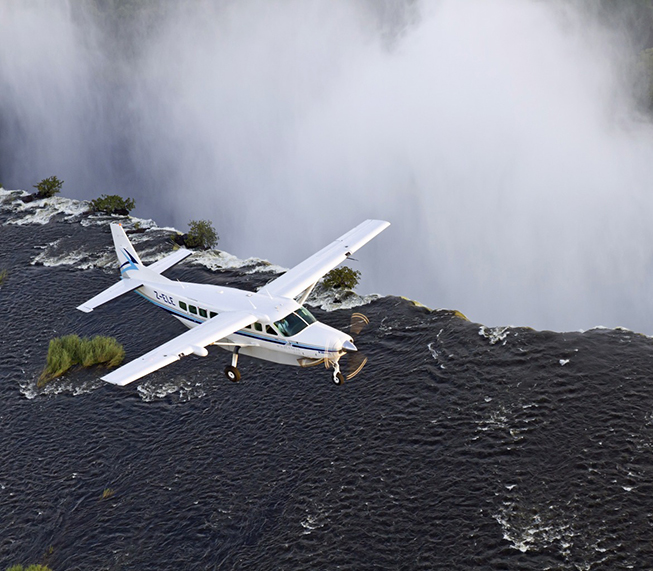
Air travel is the most convenient method of moving between destinations. Depending upon your choice of safari you may travel by scheduled flights. The majority of commercial airlines use modern jet or turbo prop aircraft. Alternatively guests may fly aboard smaller single, or twin, engine charter aircraft seating 6 to 10 people.

What type of vehicles are used on safari for wildlife viewing?

In east Africa our safaris are conducted in closed Land Rovers seating 5 passengers (all with window seats) with a guide and have roof hatches for game viewing. A small number of east African safari lodges / camps offer open sided 4x4 vehicles for game viewing.

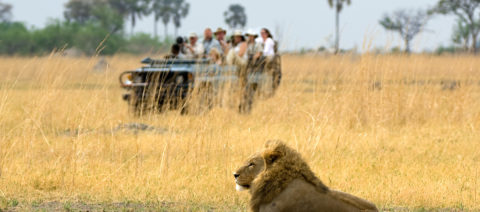
The majority of lodges and camps in southern Africa use open 4x4 Land Cruisers and Land Rovers seating 6 to 8 people total for wildlife viewing drives.

Wildlife may also be viewed from power boat (ski boat), river boat, canoe (2 man Canadian canoe), or pontoon boat (great for sundowners) depending upon the lodge or camp.

Return to top

SHOPPING IN AFRICA

What is there to buy in Africa?

Shopping while on safari is limited. Often lodges and camps have small curio shops where you can buy postcards, local goods such as carvings or books, clothing (hats, shirts), and film. At airports and in larger towns you will find African curio markets where you can by all sorts of carvings, masks, drums, jewelry etc...in general souvenirs and curios are inexpensive (in US dollar terms) - still, fun spirited bartering is the norm.

In most cities there are upmarket jewelers and art galleries where you can easily spend hundreds, even thousands, of dollars on African art.

Most reputable shops offer shipping of your purchase at extra cost.

Return to top

SPENDING MONEY

How much money should I bring? Cash or travelers checks? Are credit cards accepted?

You will need very little spending money on most safaris as the majority of meals and activities are included in your package cost.

You will need to pay for lunch, dinner, and drinks when you are staying at hotels on a bed and breakfast basis as is the case at most lodges and hotels in cities. Bills may be settled by US cash, by travelers check, or by credit card (accepted at most lodges, camps, hotels).

Credit cards may be used in large towns at restaurants and shops with MasterCard and Visa being most accepted. However, use may be restricted in small towns and country areas and non-existent in small retail shops.

Automatic teller machines (ATM’s) are situated outside most banks in towns and cities in southern Africa, and international credit cards often can be used to withdraw currency. However, as Africa is unpredictable please do not rely on ATM machines for your currency needs.

Should we purchase local currency?

US cash or travelers checks may changed into local currency at airports and banks. Small bills (US $1, US $5, US $10, and US $20) are best. Always keep your receipt so that when you depart you may change your money back to US dollars.

Click here for the latest international currency exchange rates.

Return to top

TIPPING

Tipping at restaurants (at your discretion) is 10%. Tipping at lodges and camps is always welcomed but the amount varies greatly. It is often best to tip the lodge manager who will distribute your tip amongst the lodge or camp staff. As a rough estimate you can tip US $3 to US $5 for each traveler per day at each lodge / camp.

Return to top

TRAVEL INSURANCE

All clients are required to purchase a comprehensive travel insurance plan before trip departure. This should cover you for events such as trip cancellation, delay or interruption, lost or delayed baggage, emergency accident, sickness and evacuation, accidental death, common carrier, 24 hour medical assistance, traveler's assistance, and emergency cash transfer. Please contact our office for an insurance application / brochure.

Return to top

TRAVEL WITH CHILDREN

Our family wants to enjoy a safari. Are children allowed on safari?

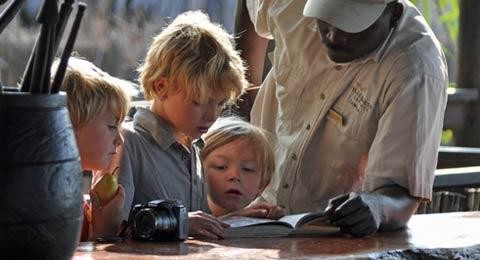
The majority of safari lodges and camps in southern Africa have a minimum age limit of 8 years of age. There are however a few great lodges and camps that allow children under the age of 8. Please contact our office for further details.

In east Africa traveling with children is quite easy as many lodges and camps have few restrictions.

Return to top

WEATHER

What is the weather like in Africa?

In general east Africa (Kenya and Tanzania) experiences dry weather during the months June through October. There are two rainy seasons - the long rains which fall March through May and the short rains which arrive in mid October and continue until mid December.

Temperatures are moderate throughout the year with average daytime temperatures around 70 - 80 degrees Fahrenheit. June us the coolest month as it is mid winter. Evenings and mornings are often chilly, with cold nighttime temperatures at Ngorongoro Crater due to altitude.

In general the climate in southern Africa (Botswana and Zimbabwe) is as near perfect as you can get with dry season temperatures similar to those of the Mediterranean, but without the humidity. Daytime temperatures average 70 - 80 degrees Fahrenheit. During the winter period June through August nighttime temperatures in some areas can drop to freezing or below - don't let this dissuade you from a safari as by mid morning temperatures are warm enough for shorts and a short sleeved shirt.

The rains occur each year during the period November through March with the dry season stretching from April through October.

Return to top

WHEN TO TRAVEL

When is the best time to travel to Africa to view wildlife?

In southern Africa (Botswana and Zimbabwe) the best wildlife viewing is during the dry season period April through October each year with July, August, and September being the most desirable months.

Wildlife viewing is, in part, predicated on the amount of surface water available. During the rains (November through April) wildlife is scattered as there is abundant surface water (puddles, perennial rivers) to drink. Once the rains end (mid April) wildlife congregates around remaining surface water supplies (pools, lakes, and large rivers).

Please note that travel during southern Africa's "green season", November through April, does have some advantages. The bush will be lush and green and many wildlife species will have newborn in tow. Dust, which can be a nuisance during the dry season, is greatly reduced and nighttime temperatures are milder than during the dry winter months. Some camps such as Mombo in Botswana provide incredible wildlife viewing year round...another Botswana camp, Duba Plains (which is noted as having the highest density of lion in Africa), actually offers the better wildlife viewing during the months October through May as the Okavango Delta flood waters are lower. The Victoria Falls are in full spate (heaviest flow) during the period January through June. Lastly, during the "green season" many northern migratory birds call southern Africa home making the region an ornithologist's paradise!

In east Africa safaris are best enjoyed during the periods mid December through the beginning of March and during the period June through mid October each year.

Return to top

WHY AFRICA

Why should I go on safari in Africa?

Africa remains the last outpost of raw adventure, a refuge from the modern world. From the splendor of the Serengeti teeming with herds of a million wildebeest, to the the pristine beauty of the Ngorongoro Crater; from Botswana's tranquil Okavango Delta filled with birdsong to the raging Zambezi River as it crashes untamed over Victoria Falls into the Batoka Gorge - this ancient land and its people offer a travel experience truly unlike any other.

Southern Africa in particular, in our opinion, provides travelers with the highest quality African wildlife and wilderness experience available in a land that is both clean and comfortable. Southern Africa is home a tremendous wealth of wildlife including Africa's Big 5 wildlife species (buffalo, elephant, lion, leopard, and rhino - both black and white). Zimbabwe and Botswana are home to Africa's largest elephant herds (over 50,000 elephant in Botswana's Chobe National Park alone!) and Zimbabwe stands out as having the highest concentration of leopard in the world!

Zimbabwean guides are considered the most highly trained and qualified guides in Africa. Professionally licensed Zimbabwean guides are able to take you walking / tracking within national parks unlike in Botswana, Kenya and Tanzania where you may not walk within national parks. In these countries walks are conducted outside parks, often on private land adjoining national parks and reserves.

In southern Africa you will enjoy wildlife viewing drives from open safari vehicles - great for photography - unlike in east Africa where closed safari vehicles with roof hatches are the norm. Night time wildlife viewing drives are also possible from certain camps and lodges. This gives you the opportunity to view nocturnal wildlife species such leopard, civet, and genet.

Wildlife may also be viewed by boat and canoe where you may encounter hippo, crocodile, and other species as they come to drink and bath.

Return to top

WILDLIFE VIEWING

How is the wildlife?

Wildlife viewing in Africa is tremendous if you travel to the right destination at the right time! Many safari companies tell travelers that any and every month is great for a safari. Often their clients are disappointed when they arrive at their destination and find the weather uncomfortable or that the wildlife has dispersed because of the rains. We tell our clients the truth, often times discouraging out of season travel to safari destinations. Each country has a safari season and during these months you will be able to travel comfortably and see tremendous amounts of wildlife.

Unlike in east Africa, while viewing wildlife in Botswana and Zimbabwe you rarely see other tourists or vehicles.

How is the birding?

Birding in Africa is spectacular, especially during the northern hemisphere winter when the northern migratory birds are present. From the flightless ostrich to tiny bee eaters, Africa is an ornithologist's paradise!

Return to top

Links to other pages:


ULTIMATE AFRICA SAFARIS
13032 - 204th Place SE, Issaquah, Washington, 98027-8572 USA

Tel (425) 793 8877 Fax (425) 793 8878
Phone toll free within the United States on 1 800 461 0682
www.ultimateafrica.com / info@ultimateafrica.com

Send mail to info@ultimateafrica.com
Copyright © 1996 - 2004 ULTIMATE AFRICA SAFARIS
Washington State Registered Seller of Travel #601730459