Ultimate Africa Safaris - African Travel Specialists
Speak with an Africa travel expert. Call toll free in the USA 1 800 461 0682 or email
  Home > Accommodations > Botswana
 

 More Information: 

Botswana

Kenya

Malawi

Mozambique

Namibia

South Africa

Tanzania

Uganda

Zambia

Zimbabwe

Hotels, Lodges and Camps of Botswana

In Botswana we work very closely with Wilderness Safaris and Orient Express Safaris. These two companies operate in Botswana’s most sought after wildlife and wilderness locations. For more budget conscious travelers looking for tailored safaris we work closely with Sanctuary Lodges. When it comes to scheduled group safaris we work with both Wilderness Safaris and Conservation Corporation Africa (CCAfrica).

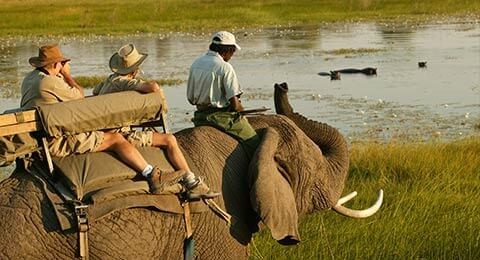
Abu Camp, Okavango Delta, Botswana – Abu Camp has been built within a private 400,000 acre reserve bordering the Moremi Game Reserve, in the heart of Botswana’s Okavango Delta. The camp is the base for twice weekly, three night / four day, elephant back excursions. Jack Lemmon noted "This must be the greatest camp in all of Africa." Steve Forbes noted "One of the 10 things to do before you die!" CNN noted "If you only do one safari in your entire lifetime, this is the one!" The camp is named after Randall Moore's legendary elephant, "Abu", the star of such motion pictures as "White Hunter, Black Heart" and "Power of One". He was born in 1960 and was thought to be from either East Africa, or from the Kruger Park in South Africa. As a youngster he was taken to the United States where he was used as a ride elephant at a wildlife park in Grand Prairie, Texas. He was brought back to Africa in 1988 for the filming of “Circles in a Forest”, and moved to Botswana in 1990 where he was instrumental in setting up the first elephant back safaris on the African continent. He continued to lead the Abu herd throughout the following twelve years. Abu died in 2002. The herd is now led by the matriarch, Cathy. Born in 1960, Cathy was captured as a youngster in Uganda. She was then taken to a zoo outside Toronto, Canada where she remained until she was returned to Africa, like Abu, for the filming of “Circles in a Forest”. She also came to Botswana in 1990. Due to her stable temperament and tractability, Cathy now leads elephant back safaris with 7 other elephants. The elephant family becomes the focus of half and full day elephant back safaris, with each of the adults carrying one or two guests in large, comfortable, custom made saddles (there are currently only four elephants that are able to be ridden. Two people can ride each elephant at a time. The remaining 4 guests may walk with the elephants or partake in other activities. Every guests will get the opportunity to ride the elephants during their stay). The youngsters accompany the herd, providing a constant source of amusement as they play and swim. Being part of an elephant family allows you the unique opportunity of approaching and interacting with a wide variety of game at close range, as on elephant back you more readily blend with nature. Michael Powers noted "There I was sweltering beneath the protective might of Abu's tusks, his huge feet by mine, his huge head above mine. Before I knew it I was at one with Abu; it was as if I too were an elephant. Unbidden, a whole new world revealed itself; for all my safari years, I had only ever been an outsider looking in. With the abruptness of the African sunrise, the mist cleared and I glimpsed the bush as "they" knew it - "they" of course being those humble beings I had come to see." Four other elephants from the herd have been released into the concession and are not part of the elephant back excursions. Other activities on offer include day and night wildlife viewing drives in open 4x4 vehicles, professionally guided walks, and mekoro trips. The camp itself is hidden within an ancient riverine forest overlooking a lagoon. The dining / bar areas are on raised wooden decks that wind around African ebony and sycamore fig trees. The lounge / dining tent has beautiful big sofas, with a breathtaking view over the lagoon and also features a well-stocked library and a study. Each of the 6 spacious tents has a private deck and en-suite bathroom with separate shower and bath. For guests looking for the ultimate in bush luxury and exclusivity, Villa Okavango is situated across the lagoon. There are 2 large bedrooms with en suite facilities and a spacious sitting room - all on a raised teak deck beneath shady trees. The villa has its own swimming pool and butler. It is designed for 4 people (or a small family).

Baines, Okavango Delta, Botswana – Walk with the elephants! Bordering Botswana’s Moremi Game Reserve to the south Baines Camp (named for famed nineteenth century explorer and artist, Thomas Baines) has been built in a seasonally flooded private concession. The area is home to a wide variety of wildlife including elephant, buffalo, giraffe, hippo, lion, leopard, cheetah and wild dog. Wooden decks offer expansive views over the permanent water of the Boro River and a lagoon. The 5 elevated suites feature moveable four-poster beds, allowing guests to sleep under star laden skies. The main area features an oversize deck for outdoor dining and views over the permanent water of the lagoon, as well as a swimming pool. Activities include day and night wildlife viewing drives, professionally guided walks, boating and mekoro excursions. Most exciting is the unique and educational elephant interaction (at extra cost). Guests accompany a trio of semi-habituated elephant (Jabu, Thembi and Morula were all orphans from culling operations. Adopted by Doug and Sandi Groves they strove to find ways that the elephants could act as ambassadors for their wild counterparts. In 1999 the Living With Elephants Foundation (LWE) was launched. LWE is dedicated to relieving conflict and competition between the African Elephant and human populations in Botswana) on a four hour foraging trek ending with a picnic lunch in the bush. Jabu, short for Jabulani, a Zulu name, means happiness and indeed Jabu’s zest for life is inspiring. Jabu is a proud and handsome bull, who enjoys his role as alpha elephant of the small herd. He is kind, playful, generous, big-hearted and dependable. Of the three elephants he is the most independent and confident. Thembi, a common Zulu name meaning trust, is the sweetheart of the herd and the smallest in stature. Perfectly formed, pretty and dainty, Thembi knows a few tricks for getting her way. Smart and very social, she loves to be the center of attention. Morula, named after a beautiful African fruit tree, is mild-natured, sensitive and easily bruised emotionally. She can be described as a wallflower but she blossoms beautifully when love and attention are focused directly on her. Morula weaves a powerful magic of her own as in her quiet and subtle way she captures your heart with her sincere, loyal and sweet nature. The elephants are not ridden.

Chief's Camp, Moremi, Botswana – The predator capital of Africa! Situated on Chief’s Island within Botswana’s exclusive Moremi reserve, this small camp, which opened September 1999, provides guests with an unparalleled Botswana wildlife experience. In fact the area is considered to have the finest game viewing in all of southern Africa. Wild dog, lion, cheetah and leopard abound in addition to large concentrations of buffalo, elephant and hippo. Recently reintroduced white rhino make Chief’s Island the only place in Botswana to view the Big 5 wildlife species! Earthy tones and natural textured fibers provide a contemporary African feel to the 12 luxury tented rooms all of which have an over head fan, en-suite bathroom and a viewing deck. Overlooking the seasonal Piajio Channel the main area is built under thatch and consists of a dining room, bar, lounge, reference library, swimming pool (with poolside spa treatments on offer during high season - May through October). As the camp is located within the Moremi Reserve activities are limited to daytime wildlife viewing drives in open 4x4 vehicles and mekoro excursions when water levels permit (typically between July and October when the Okavango Delta floodwaters rise).

Chitabe Camp, Okavango / Moremi, Botswana – Opened in 1997 Chitabe Camp is situated in the eastern central Okavango bordering the Moremi Game Reserve. Guests are accommodated in 8 luxurious twin bedded east African style tents, each built on raised wooden decks with ceiling fans and en suite facilities, verandah and private outdoor shower. The main area includes a dining room, bar, lounge and plunge pool. The Chitabe area offers a combination of open floodplains, wooded islands and lagoons - setting the scene for a wide variety of wildlife. Wildlife in the area includes elephant, buffalo, lion, leopard, cheetah, and wild dog along with numerous plains game species (a portion of the nightly rate is donated to Dr. Tico McNutt’s wild dog conservation fund. About 160 rare wild dogs inhabit this region). As the camp is situated on a private concession Chitabe's professional guides are able to offer guests day and night wildlife viewing drives in open 4x4 vehicles and professionally guided walks. In high water years mekoro excursions may be undertaken. In addition there are two wildlife viewing hides in the concession. Adventurous guests staying three or more nights at Chitabe may enjoy spending a night sleeping in one of the hides – an awesome experience (maximum 4 guests).

Chitabe Lediba Tented Camp, Okavango / Moremi, Botswana - Chitabe Lediba (formerly Chitabe Trails) is a very comfortable five-roomed tented camp set in an enormous concession that borders the Moremi Game Reserve. It is a five minute walk from Chitabe Camp. The rooms are as spacious and as luxurious as those at Chitabe Camp except that the tents are not raised on wooden platforms. Each East African style tent has en-suite facilities and an outdoor shower overlooking the floodplain. The main area includes the lounge, dining area and a plunge pool. Habitat varies from seasonally flooded grasslands, wooded acacia islands and lagoons. Due to it south eastern location in the Delta Chitabe Lediba is one of the last camps to receive the annual floodwaters. 10% of the area is permanently flooded, 56% seasonally flooded and 34% dry. As a result one would best view this camp as a dry land camp with excellent wildlife viewing. In fact there is a staggering amount of wildlife in the area with elephant, lion, leopard and cheetah among the major attractions. Another major draw card is that the area is one of the last strongholds of the rare wild dog and the camp and its owners, Dave and Helene Hamman, are proactively involved with their conservation. As the camp is situated on a private concession Chitabe Lediba’s professional guides are able to offer guests day and night wildlife viewing drives in open 4x4 vehicles and professionally guided walks. In high water years mekoro excursions may be undertaken. In addition there are two wildlife viewing hides in the concession. Adventurous guests staying three or more nights at Chitabe may enjoy spending a night sleeping in one of the hides – an awesome experience (maximum 4 guests).

Chitabe Walking Trail, Okavango / Moremi, Botswana – The 3 night / 4 day night Chitabe Walking Trail is an amazing experience! Wildlife in the area includes elephant, buffalo, lion, leopard, cheetah, and wild dog along with numerous plains game species. The first night of the trail is spent either at Chitabe Main Camp or Chitabe Trails Camp. On day 2 guests spent 4 to 5 hours on a moderately paced, informative, walk accompanied by an armed and professionally licensed guide. During midday guests will enjoy brunch and a siesta. Guests overnight at one of the two wildlife viewing hides located in the Chitabe concession (one hide is situated on the edge of a floodplain that often contains water and enables one to experience the sights, sounds and smells of the Okavango as you sleep. The second hide is built within a woodland area on the edge of an extensive open savannah plain which sees an abundance of elephant activity). Mattresses, pillows, duvets and mosquito nets make the elevated hides quite comfortable. Chemical toilets and hot bucket showers are also provided. Dinners are cooked over an open campfire. Beautifully appointed dining tables and chairs help complete the experience. The absolute silence, except for the nocturnal sounds of the Delta, is considered by most travelers as one of the highlights of their African safari. On day 3 guests are returned to either Chitabe Main Camp or Chitabe Trails Camp where they will continue with normal activities and overnight. There is a backup vehicle available should anyone prefer a mixture of walking and driving to, from or between the hides. The walking trails operate May through September each year. 3 nights must be booked in the Chitabe Concession to partake in the walking trail. Please NOTE that walking can lead to encounters with potentially dangerous wild animals. Walking is, therefore, at your own risk.

Chobe Chilwero, Chobe, Botswana - When it comes to accommodations, Chilwero is without question the most up market lodge in the Chobe area with access to some of Africa's most thrilling wildlife within the Chobe National Park. Situated on a hill overlooking the Chobe River's floodplains, the camp comprises 15 luxury bungalows, each with air conditioning, a private "sala", en suite bathroom and an additional private outdoor shower. The main area includes a library, temperature controlled wine cellar, swimming pool, spa and curio shop. Traditional campfires, fine cuisine and a fireside bar all add to the ambience. Activities revolve around wildlife viewing drives with professional guides in open 4x4 vehicles within the Chobe National Park as well as boat trips on the Chobe River. The downside to this property is its location in the very busy eastern part of Chobe National Park. This is the busiest wildlife viewing area in all of Botswana. Guests at Chobe enter the park on paved roads, often behind a line of other vehicles from the numerous nearby hotels and lodges (and daytrippers from Victoria Falls). Also note that vehicles are not allowed off road within the park. This is disappointing to travelers arriving from wilder safari areas of Botswana which have no development and where vehicles are allowed off road. If you must see Chobe in luxury this is the place…Travelers in the know instead visit the Savute / Linyanti area for a superior experience.

Duba Plains, Okavango Delta, Botswana – Lion and buffalo! Duba Plains is one of the Okavango's most remote camps and has the distinction of having the highest density of lion in Africa! The camp has been built on a tree shaded island surrounded by expansive plains which flood each year from about May to October. Duba Plains accommodates twelve guests in 6 tented rooms with ceiling fans, en suite facilities, and private outdoor shower. The main area includes a lounge, bar, dining area, and pool. There is also a wildlife viewing hide. As the vast open grasslands and floodplains are often isolated from the mainland by deep waterways, the variety of animals is not as high as in other areas within the Okavango. However, thousands of buffalo are hunted almost daily by up to four different prides of lions. In addition guests may view hippo, elephant, lechwe, sable and numerous other plain's game species in addition to a tremendous variety of birds. Unlike many camps Duba Plains offers wonderful wildlife year round - with great wildlife viewing during the low water months November though April each year! As the camp is situated on a private 30,000 hectare concession professional guides are able to offer guests day and night wildlife viewing drives in open 4x4 vehicles. Professionally guided walks are at the manager’s discretion and mekoro trips are on offer when water levels allow it (mekoro excursions are best between May and September).

Duma Tau, Linyanti Wilderness Reserve, Botswana – Imagine an elephant 10 feet from you as you eat brunch - seriously! We love Duma Tau! Bordering Chobe National Park within the private 125,000 hectare Linyanti Wilderness Reserve, this small luxury tented camp is comprised of 10 rooms and main areas. The spacious rooms have been built on raised decking with canvas walls allowing guests to enjoy the night sounds of Africa from the comfort of their beds. They include solar lighting and ceiling fans. Bathrooms are en-suite, with hot and cold running water. Each room has an additional outside shower. The main dining area and lounge overlook a plunge pool and beyond - an enormous lagoon. Wildlife abounds with large herds of elephant (especially June through October when elephant concentrations are simply astounding), zebra, wildebeest, impala, waterbuck, sable, roan, eland, and giraffe. In addition you are likely to see crocodile, hippo, and buffalo. And then there are the predators - lion (the lions in this area have been documented in National Geographic's films), leopard, cheetah, wild dog and hyena! Birding is also fantastic. Activities include day and night wildlife viewing drives from open 4x4 vehicles and professionally guided walks. In addition there is a 6 seat motor boat and a pontoon boat from which sundowner drinks may be enjoyed as hippos snort nearby (water levels permitting). There are many hides in the area where you can enjoy wildlife viewing away from a vehicle. One of the best is right at the source of the Savuti Channel. Adventurous guests staying three or more nights may opt to spend the night sleeping in a hide - an unforgettable experience (maximum 4 guests)! The Linyanti Wildlife Reserve is a multi-purpose area where hunting is technically allowed. However Wilderness Safaris, which manages Duma Tau Camp, does not allow hunting in their concessions.

Eagle Island Camp, Okavango Delta, Botswana – A water wilderness! Eagle Island Camp at Xaxaba (pronounced 'KaKaaba'), which means 'island of tall trees', is a water-based, luxury tented camp situated in the Okavango Delta. Guests are accommodated in 12 luxury air conditioned / heated tents that are raised on wooden decks. Each room has a sitting area and en suite bathroom including dual washbasins, a large indoor shower and double outside shower, separate toilet and dressing area. In addition the rooms have ceiling fans, lighting, room safe, intercoms, and hair dryers. Outside there is a spacious viewing deck and lounge with views over the lagoon. The main lodge area features a lounge, bar (the Fish Eagle Bar was voted by the New York Times as the most romantic bar in the world!), library, internet lounge with wi-fi, dining area and a heated, full size, swimming pool. Xaxaba is one of the Delta's most pristine natural locations, a region of myriad waterways, palm-treed islands and vast flood plains. The wetlands of the Okavango are a treasure chest of wildlife and natural wonders. Even though the Okavango Delta is technically known as a swamp, the water is remarkably clear, and free of impurities. It is also heavily stocked with fish. So it will come as no surprise that this area boasts the highest concentration of magnificent fish eagles on earth in addition to herons, cormorants, pelicans, darters and storks. Wildlife includes large herds of buffalo (500 to 700 strong), the odd elephant, hippo, crocodile, lechwe, and puku in addition to other species. Activities at Eagle Island include mekoro (traditional dugout canoe) excursions, boating, and professionally guided walks. In addition Eagle Island is the only property in Botswana to offer helicopter excursions as part of their all inclusive rate. In times of very low water wildlife viewing drives may be undertaken. Spa treatments are also on offer.

Jack's Camp, Kalahari, Botswana - Endless vistas of rolling golden grasslands…desert palms line the horizon…What a special location! Situated in the Makgadikgadi Pans area of the Kalahari Desert, Jack's Camp combines 1920's East African panache with desert biology and adaptation, stone age archaeology, bushman anthropology and the unique geology of the Makgadikgadi Pans. Originally established in the 1960s by the late Jack Bousfield, guests are accommodated in 10 luxury East African tents, which are rustic but elegant, each with four poster beds, ensuite toilet and shower. The main area includes a large tent for dining, a lounge with museum, library and drinks area, and a tea tent with Persian carpets and pillows (the tea tent even has a wind up gramophone). In the company of expert guides guests may learn more about rare desert species restricted to the area. Activity wise guest may partake in day and night drives in open 4x4 vehicles, professionally guided walks, quad bike excursions (limited during the wetter months) and walks with local bushman (the walks are a great way to learn how the indigenous San people survive in this seemingly inhospitable land). Guests at Jack’s Camp are practically guaranteed to see the very rare brown hyena and a morning walk with the meerkats is an unique experience not to be missed! During the green season guests may observe the only natural wildlife migration that still occurs in southern Africa. Enormous herds of wildebeest and zebra move south from Chobe and Moremi after the rains have brought new grass to the Kalahari. Huge flocks of flamingoes mass here as well. In the dry season 4 wheel drive quad-bikes are used more extensively to explore deep into the desolate pans (the salt pans are the largest in the world and are equal in size to Switzerland!!!). Another interesting excursion is to Chapman's Baobab - the historical tree where Livingstone, Selous and other early explorers camped. Guest’s staying 3 or more nights will be treated to a special surprise! The Sunday Times voted this camp as having the best service in the world and said: "The staff are experts at making you feel like an individual in a very special environment".

Jao Camp, Okavango Delta, Botswana – We really enjoy Jao as it is both relaxing and revitalizing. Situated in the private 60,000 hectare Jao concession bordering the Moremi Reserve, west of Mombo, the camp accommodates eighteen guests in 9 spacious contemporary African style luxury rooms - featured in Architectural Digest February 2002. The rooms are constructed of split bamboo and thatch with canvas walls. All rooms have en suite facilities including a bath, and both an indoor and outdoor shower. Raised walkways connect the rooms to the dining room and lounge area and wine cellar. There is also a spa, two plunge pools and an outdoor "kgotla" for dining under the stars. The area is renowned for its predators - lion, leopard and cheetah. Other wildlife in the area includes elephant, hippo, crocodile, wildebeest, and more. In addition to photographic safaris hunting is allowed by the Botswana government within the concession, however managers have deliberately decided not to hunt and forego approximately US $300,000 of revenue each year. Jao offers both land and water activities – day and night wildlife viewing drives, mekoro excursions, boating (when water levels allow it) and guided walks. Midday activities such as talks, candle making, paper making and mekoro poling lessons may also be arranged. Adventurous guests may enjoy sleeping out on the private sala attached to their room or, for guests staying three or more nights, sleeping out on a remote island (or on the floodplain) under the stars with a professional guide (maximum 6 guests). 

Khwai River Lodge, Moremi, Botswana – We love Khwai River Lodge! One of the oldest safari lodges in the country, Khwai River Lodge was opened in the late 1960’s by Sir Seretse Khama, the first President of independent Botswana. The lodge has been built overlooking the Khwai River floodplain, which forms a natural boundary to the Moremi Game Reserve at North Gate. Moremi was once the traditional hunting ground of the Batawana Tribe who, in 1963, as a result of their great love for the wilderness, proclaimed this area protected wildlife sanctuary. Guests are accommodated in 12 twin-bedded air conditioned / heated luxury tents with thatched roofs. Each room has a sitting area and en suite bathroom including dual washbasins, a large shower, separate toilet and dressing area. In addition the rooms have ceiling fans, lighting, room safe, intercoms, and hair dryers. There is a new honeymoon suite which features its own private plunge pool, double outdoor showers and bath. A private vehicle is also on hand for exclusive activities. The tents are set on decks overlooking the Khwai River and wildlife viewing from your hammock or outdoor lounge can be very impressive! The main lodge area offers a lounge, bar, library, internet lounge with wi-fi, dining area and large heated swimming pool. With a commanding view of the Khwai River flood plain this is the perfect location for observing the perennial drama of the African bushveld. There is also a wildlife viewing hide, a gym and spa with a variety of therapies on offer. Moremi roars with Botswana's largest, grandest, fastest, sleekest and most beautiful wildlife. Elephant, kudu, waterbuck, crocodile and hippo abound. Vast herds of antelope and zebra graze contentedly on the coarse grass. And where the antelope feed, the predators are not too far off: lion, leopard, cheetah, hyena and wild dog. Khwai River Lodge offers daytime wildlife viewing drives within the Moremi Reserve and night time drives and professionally guided walks outside the reserve. In addition the lodge can arrange a cultural visit to Khwai village.

King’s Pool Camp, Linyanti Wilderness Reserve, Botswana – Ahhh...to be serenaded to sleep by hippo (this camp has a serious reputation for noisy nighttime hippo). Situated in the same 125,000 hectare private concession as Duma Tau and Savute, bordering Chobe National Park to the west, King's Pool accommodates guests in 9 large luxury suites. Each has its own large bedroom area, lounge, two bathrooms, indoor and outdoor showers, and private plunge pool with sala overlooking the hippo filled King’s Pool lagoon. The main lounge, pub and dining room are under thatch, and there is a swimming pool built into the deck. The main area is linked to the bedrooms by raised walkways to allow animals to wander freely around the camp. Wildlife abounds in this area, especially massive herds of elephants during the dry winter months. There are also very good populations of impala, lechwe, kudu, zebra, giraffe, sable, waterbuck, buffalo and the smaller plains antelope. The major predators such as lion, leopard, cheetah, wild dog and hyena are regularly sighted. The reed and papyrus swamps are ideal for numerous and diverse species of birds and are a magnet for wildlife in the dry winter months. Activities include day and night wildlife viewing drives from open 4x4 vehicles, professionally guided walks at the manager’s discretion, and excursions aboard the camp's double decker boat on the Linyanti River (when water levels and the hippos allow it). There are also two productive wildlife viewing hides. One overlooks the lagoon while the underground hide allows guests to sit almost within arm’s reach of elephant’s feet and trunks in safety – simply amazing!!! Contrary to information on the internet hide sleep outs are not allowed at Kings Pool Camp. The Linyanti Wildlife Reserve is a multi-purpose area where hunting is technically allowed. However Wilderness Safaris, which manages King’s Pool Camp, does not allow hunting in their concessions.

Kwetsani Tree Camp, Okavango Delta, Botswana – One of our client’s favorite properties (and our’s too). Kwetsani Island is located in the private Jao Reserve to the west of Mombo and Moremi. The island is heavily wooded and Kwetsani Camp rests on stilts beneath the shady forest canopy, overlooking the floodplains. Guests are accommodated in 5 luxury tree house tents each with en suite facilities and an outdoor shower. The main area includes a lounge, bar, dining area and pool. Kwetsani offers superb land and water activities. In addition to peaceful mokoro (canoe) excursions you may enjoy exploring the palm fringed islands on foot. Day and night game drives are available as well. Wildlife in the area includes elephant, hippo, crocodile, lion, leopard, wild dog, zebra, wildebeest, giraffe, lechwe and more. Guests staying three or more nights may opt to spend a night sleeping out (on a remote island or on the floodplain) under the stars with a professional guide (maximum 6 guests). In addition to photographic safaris hunting is allowed by the Botswana government within the concession, however managers have deliberately decided not to hunt and forego approximately US $300,000 of revenue each year.

Little Mombo Camp, Moremi, Botswana – Little Mombo Camp has a wildlife viewing record unequalled in Africa! Situated off the northern tip of Chief's Island (on Mombo Island within the Moremi Game Reserve), Little Mombo provides one of the highest quality wildlife viewing opportunities in Africa - if the not the best! Large concentrations of wildlife including elephant, white rhino, black rhino, buffalo, lion, leopard, cheetah, wild dog, giraffe, wildebeest, zebra, large herds of buffalo, hippo, warthog, and many more species are common in this remarkably exclusive wilderness region. In fact the sheer numbers and variety of large mammals defy description. It is not unusual for guests to see the “Big Five” wildlife species in one drive. Technically the “Big Five” includes lion, leopard, buffalo, black rhino and elephant. Birdlife is prolific as well. Numerous award winning wildlife documentaries have been filmed at Little Mombo (National Geographic, BBC and others have filmed here) making this Botswana's top wildlife documentary location. Unlike many camps and lodges Little Mombo provides spectacular wildlife viewing throughout the year. All this owes much to Little Mombo’s position. When the annual Delta floods arrive each year the large mammals are able to move from the vast floodplains into the savannah grasslands and forests of Chief’s Island. When the flood recedes the nutrient rich floodplains are once again exposed. Little Mombo is a more exclusive extension of Main Mombo (it is connected to Main Mombo by raised wooden walkways). Guests at Little Mombo are accommodated 3 luxury tented suites each with bedroom, lounge, bathroom with his and her showers, a large viewing deck, and an outdoor shower. The accommodations exceed those of most 5 star hotels! The guest suites are connected to the main areas by walkways built up to two meters off the ground. This allows wildlife to wander freely through the camp. One often finds that animals take refuge under the rooms. The dining room, pub and living area overlook the open plain in front of the camp and there is a plunge pool for relaxing in the heat of the day. Little Mombo also has a boma for outdoor dining under the stars. As the camp is located within the Moremi Reserve activities are limited to morning and afternoon wildlife viewing drives in open 4x4 vehicles. Many people ask about night drives which are prohibited due to park regulations and when this might change. In our estimation, not anytime soon as the talks have been going on for over 5 years now… Two new hides have been constructed and provide superb locations for midday wildlife viewing. One hide is at Hippo Pools and the other is located west of camp on an island. Guest comments include “we couldn’t decide whether we would see more wildlife staying in camp or going out on a drive” and “worth every penny”. Most memorably a past Ultimate Africa client said “we sat in one place and all the animals of Africa passed by”.

Little Vumbura Camp, Okavango Delta, Botswana - Bordering Botswana’s famed Moremi Wildlife Reserve Little Vumbura offers, in our opinion, the best mix of water and land activities in the Okavango Delta. The exclusive wildlife viewing concession (130,000 acres located about 25 kilometers north of Mombo Camp) provides incredible wetland and savanna wildlife viewing – from red lechwe, waterbuck, hippo, and crocodile in the wetter areas to sable, kudu, wildebeest, and tsessebe on the open plains. Herds of elephant and buffalo occur along with the predators - lion, leopard, wild dog, and cheetah. Birding is also spectacular. Completely rebuilt in March 2007 guests are accommodated in 6 large walk in luxury tents with solar lighting, ceiling fans, furnishings, en suite toilet, basin and shower (1 room is a family room). Each room also has a private outdoor shower. The main area includes a dining room, pub and plunge pool. As the camp has been built in an area of permanent water activities include mekoro (canoe) excursions, boating (awesome), professionally guided walks, and day and night wildlife viewing drives in open 4x4 vehicles across the Okavango's outermost open savannahs. Little Vumbura has partnered with villagers who live to the north allowing them to derive direct benefits from tourism - through concession fees, employment opportunities and training.

Mombo Camp, Moremi, Botswana - Mombo has a wildlife viewing record unequalled in Africa! Situated off the northern tip of Chief's Island (on Mombo Island within the Moremi Game Reserve), Mombo provides one of the highest quality wildlife viewing opportunities in Africa - if the not the best! Large concentrations of wildlife including elephant, white rhino, black rhino, buffalo, lion, leopard, cheetah, wild dog, giraffe, wildebeest, zebra, large herds of buffalo, hippo, warthog, and many more species are common in this remarkably exclusive wilderness region. In fact the sheer numbers and variety of large mammals defy description. It is not unusual for guests to see the “Big Five” wildlife species in one drive. Technically the “Big Five” includes lion, leopard, buffalo, black rhino and elephant. Birdlife is prolific as well. Numerous award winning wildlife documentaries have been filmed at Mombo (National Geographic, BBC and others have filmed here) making this Botswana's top wildlife documentary location. Unlike many camps and lodges Mombo provides spectacular wildlife viewing throughout the year. All this owes much to Mombo’s position. When the annual Delta floods arrive each year the large mammals are able to move from the vast floodplains into the savannah grasslands and forests of Chief’s Island. When the flood recedes the nutrient rich floodplains are once again exposed. Guests at Mombo are accommodated 9 luxury tented suites each with bedroom, lounge, bathroom with his and her showers, a large viewing deck, and an outdoor shower. The accommodations exceed those of most 5 star hotels! The guest suites are connected to the main areas by walkways built up to two meters off the ground. This allows wildlife to wander freely through the camp. One often finds that animals take refuge under the rooms. The dining room, pub and living area overlook the open plain in front of the camp and there is a plunge pool for relaxing in the heat of the day. Mombo also has a boma for outdoor dining under the stars. On our last visit to Mombo we had a large herd of buffalo sleeping under our room each night and encountered elephant traffic jams between our suite and the main camp area several times. The game drives are even better! As the camp is located within the Moremi Reserve activities are limited to morning and afternoon wildlife viewing drives in open 4x4 vehicles. Many people ask about night drives which are prohibited due to park regulations and when this might change. In our estimation, not anytime soon as the talks have been going on for over 5 years now… Two new hides have been constructed and provide superb locations for midday wildlife viewing. One hide is at Hippo Pools and the other is located west of camp on an island. Guest comments include “we couldn’t decide whether we would see more wildlife staying in camp or going out on a drive” and “worth every penny”. Most memorably a past Ultimate Africa client said “we sat in one place and all the animals of Africa passed by”.

Muchenje Lodge, Chobe, Botswana - The Chobe / Savute / Linyanti area is home to some of Africa’s greatest concentrations of wildlife and is often described as one of, if not the best, wildlife viewing area in Africa today. During the dry southern Africa winter month’s wildlife numbers can be staggering. Chobe’s elephant population, estimated at 120,000, is the highest density of elephant in the world (this is more elephant than the entire country of Kenya). In addition to elephant travelers regularly see nearly all the major species: giraffe, hippo, zebra, impala, tsessebe, roan, sable, wildebeest, kudu, buffalo, waterbuck, warthog, eland and accompanying predators including lion, leopard, hyena, jackal, and bat-eared fox. Lucky guests may also see cheetah and wild dog. Bordering Botswana’s renowned Chobe National Park, the lodge is set on an escarpment edge and has been designed to take full advantage of breathtaking views over the Caprivi Strip. Guests are accommodated in 10 thatched chalets, each with en-suite facilities, a ceiling fan, and private balcony. The thatched main lounge and dining area overlook a waterhole. There is also a bar, library and swimming pool. Muchenje Lodge offers the most diverse range of safari activities in the entire Chobe region. Activities include day and night wildlife viewing drives in open 4x4 vehicles, professionally guided walks, mountain biking, village / school visits (great experience), and boat cruises on the Chobe River (great experience - a must for all guests)! The lodge has a fantastic swimming pool. Guests should keep in mind that this area is much more developed than other areas of Botswana. There is mains electricity, paved roads nearby, and at night lights can be seen in the distance (in the day cattle can be seen grazing across the river). This can be disappointing if arriving from Botswana’s wilder areas. We recommend no more than 2 nights in Chobe (if coupled with a visit to the wilder Savute / Linyanti area).

San Camp, Kalahari, Botswana - San Camp is located deep in the Kalahari Desert on the edge of the Makgadikgadi Pans, the largest saltpans in the world. A maximum of 12 guests are accommodated in 6 large walk-in canvas tents on slightly elevated wooden platforms with en suite facilities. Camp amenities include a mess tent for dining. After the rains (December to April), there can be enormous herds of wildebeest, zebra and springbok (with the accompanying predators) on the open grasslands. The summer rains also leave a warm shallow layer of water that entices waterfowl and flamingos. Activities are conducted in open 4x4 vehicles, custom designed for this terrain and accompanied by knowledgeable guides. In the winter months only, all-purpose ATV vehicles (quad bikes) are available, allowing guests to travel across the saltpans. Walks with a Bushman tracker and a visit to Chapman's Baobab - the historical tree where Livingstone, Selous and other early explorers camped, are possible.

Savute Elephant Camp, Chobe, Botswana - The elephant capital of the world! Savute Elephant Camp is located on the Savute Channel in Chobe National Park. Guests are accommodated in 12 twin-bedded luxury air conditioned / heated tented rooms with thatch roofs. Each has a sitting area and en suite bathroom including dual washbasins, a large indoor shower and outside double shower, separate toilet and dressing area. In addition the rooms have ceiling fans, lighting, room safe, intercoms, and hair dryers. Outside guests may enjoy wildlife viewing from their private deck / lounge area. The main lodge includes a thatched roof dining area, lounge, bar, and internet lounge with wi-fi. There is a large heated swimming pool which overlooks the waterhole where, during the dry season, hundreds of elephants gather (along with other wildlife). Savute personifies the eternal contrast of Africa. In Savute, you realize that precious little has changed on these dry plains since time began. The opportunities to view game and the astonishing birdlife are unsurpassed. The professional guides are almost telepathic in their ability to find wildlife. They will point to what appears to be an empty horizon. From the emptiness, magnificent creatures will appear, as if conjured by some unearthly magic. In the early morning and evening, your professional guide will guide your open sided four-wheel drive safari vehicle to within close viewing range of passively grazing herds of impala, tsessebe, giraffe and zebra as well powerful predators: lion, leopard, cheetah and wild dog. You are also likely to see plenty of wildebeest, buffalo, warthog, kudu, black-backed jackals, steenbok, bat-eared foxes, vultures, hornbills and eagles. However one animal reigns supreme - elephants are numerous and very big in Savute. In fact the entire camp / lodge has been encircled with electric fencing to protect it from the incredibly dense population of pachyderms! When the rain comes in December, this arid region changes completely and the once dry plains sustain, for a short period, herds of migrating zebra in their thousands. In their trail are the opportunist predators such as lions and hyenas. It is truly a spectacle to behold. Activities include daytime wildlife viewing drives and bird-watching from the purpose-built hide. This area also presents guests with the rare opportunity to view rock paintings drawn by the early Bushmen, who once inhabited the region. As this camp is situated in the Chobe National Park, park regulations prohibit night drives and walking.

Savuti Camp, Linyanti Wilderness Reserve, Botswana - Some of the best elephant viewing in all of Africa! Situated in the private Linyanti Wilderness Reserve along with Duma Tau, King's Pool, and Linyanti Camp, this small luxury tented camp offers an incredible and exclusive African wildlife experience. Rebuilt in March 2007 guests are accommodated in 7 large walk in tents each with en suite facilities (1 room is a family room). The camp has a thatched dining area, pub and plunge pool, all on raised wooden decks. The camp is located along the Savuti Channel, a legendary wildlife region that is known for its large numbers of predators - especially lion and hyena and dense concentrations of elephant. In addition guests may see leopard, cheetah and wild dog. There are also good numbers of plains game including roan, sable and giraffe. Situated directly in front of camp is a small water hole and the famed “woodpile hide” which provides brilliant up close wildlife viewing.  As the camp is located outside the Chobe National Park boundary activities are not limited by park regulations. Guest’s at Savuti may partake in day and night wildlife viewing drives and professionally guided walks. Adventurous guests staying three or more nights may opt to spend the night sleeping in a remote elevated wildlife hide in the area - an unforgettable experience (maximum 4 guests)! The Linyanti Wildlife Reserve is a multi-purpose area where hunting is technically allowed. However Wilderness Safaris, which manages Savuti Camp, does not allow hunting in their concessions.

Seba Camp, Okavango Delta, Botswana - Seba Camp is set in an ancient riverine forest in the heart of Botswana's Okavango Delta. It offers ten guests (including children of any age) secluded, luxurious accommodation overlooking a lagoon teeming with animal and bird life. Guests can enjoy more than game viewing as the camp is a base for research on elephant behavior and a center for wildlife filmmakers. The camp has 5 well-appointed and spacious elevated tents, designed specifically to blend in with the Okavango landscape. Each has its own en-suite bathroom and a private deck on which to relax and observe the passing panoply of wildlife in and around the perennial lagoon. The dining and bar areas are also set on raised teak decking with spectacular views. There is a swimming pool and a well-stocked library. Apart from the large elephant population, there is an abundance of wildlife in the area including large herds of buffalo, lion, leopard, giraffe, zebra, impala, wildebeest, warthogs, tsessebe and lechwe. For bird enthusiasts, some 380 different species are found in the region. Activities include day and night wildlife viewing drives in open 4x4 vehicles, professionally guided walks, boating and mekoro excursions.

Selinda Camp, Selinda Reserve, Botswana – Chobe’s wildlife without the crowds! The Selinda is an enormous 300,000 acre private reserve (slightly smaller than Kenya’s Masai Mara, however unlike the Mara that has over 2,300 beds, the entire Selinda Reserve has only 24 beds) that straddles the Selinda Spillway, an ephemeral waterway that links the Okavango Delta in the west to the Kwando/Linyanti river system in the east (as Botswana is so flat, the Selinda Spillway can flow in one of two directions or, as happens in some years, it can flow in both! The Selinda Reserve is blessed with a variety of habitats - wide open savannah dotted with attractive palm trees; thirst-quenching waterways surrounded by dry woodland and then the river systems and floodplains themselves that draw thousands of animals to it, as they are forced to quench their thirst in the dry season. Wildlife wise the Selinda is host to a wide variety bird (300+ species) and the wildlife is stunning - numerous species of antelope, loads of wildebeest and hippo, massive herds of buffalo (sometimes numbering over 3,000), zebra, giraffe, cheetah (yes), endangered wild dog (yes wild dog too with the Selinda pack frequently denning near camp), hyena, the hippo killing lion of Selinda (the hippo-killing lions of Selinda were made famous by Dereck and Beverly Joubert in their National Geographic films and books from the Selinda area – “Ultimate Enemies”, “Hunting with the Moon”, “The African Diaries”), leopard, and an incredible number of elephant (there are over 9,000 elephant in the Selinda Reserve – a density on a par with Chobe National Park). The new Selinda Camp opened in March 2007 to acclaim. It is a small, wonderful, luxury tented safari camp. Built off the ground the camp offers extraordinary views over the floodplains, waterways and wide open savannas which are only broken by distinctive and attractive palm islands. Selinda has 9 large luxury tents under thatch, accommodating a maximum of 18 guests. Each tent has comfortable beds and fine linen. Luxurious mosquito nets add to the romantic atmosphere of the tents and ceiling fans and roof vents cool your living space when needed. The interiors have writing desks and lounge furniture collected from around the world for those that want to write or relax between drives and walks. There are spacious, en-suite bathrooms, with full sized stone baths and antique showers. Dual vanity basins complement the sense of luxury and sliding doors allow for privacy or create an open-air bathroom feel as well. Hot and cold water is in ample supply. A large private veranda allows guests to relax looking out over their own piece of African heaven. The main area comprises a series of expansive decks that invite soaking up the spectacular views and wildlife that are a visual constant of the camp. The design of the main area is such that there is never a barrier to these views: whether guests are relaxing in the lounge, having brunch under the cool shade of the uniquely designed thatched roof, or sampling fine cuisine on the open "star deck". Set apart from the main area is the photo/art gallery built above a temperature-controlled wine cellar and curio shop. Under shade, the camp's plunge pool is surrounded by lush grass and away from the main area for privacy; an ideal way to cool off on a hot afternoon. As the camp is located in a private reserve activities include day and night wildlife viewing drives, both on and off road, in open 4x4 vehicles and professionally guided walks. Overall the Selinda Reserve is one of Botswana's most famous private reserves that offers all the intimacy and exclusive, eco-friendly tourism experiences that Botswana has become known for. 

Selinda Walking Trails, Selinda Reserve, Botswana – The northern reaches of the Selinda Reserve is set aside for exclusive walking safaris. Following the trails and time-worn paths of elephant and antelope through riparian forest and open plains, guests have the privilege of experiencing Africa as the early explorers did - on foot. Your guide and tracker will introduce the smaller creatures, plants and spoor, as well as stalk some of the larger mammals. Elephant are frequently encountered but mostly viewed from a distance. Lion and cheetah are seen less often. Wild dog sightings are rewarding and quite possible during the dry season. Birding is excellent with more than 310 species having been recorded on the Selinda Reserve. The species more commonly seen on foot include buffalo, giraffe, zebra, wildebeest, warthog, hippo, hyena and a wide variety of antelope. The two or three night walking safaris are limited to a maximum of four guests at a time (6 if you are a group traveling together). The first night is spent at either Selinda Camp or Zibadianja Camp. Early the morning of day two you will depart by foot with your professional guide. The morning walk is between 4 to 6 miles and lasts three and five hours. Typically, the morning walk ends at that evening's trail camp. A short afternoon walk of approximately 2 miles is conducted from the camp into the surrounding area. You will overnight at one of two trails camps - Mokoba or Tshwene. Both trails camps have three custom designed tents built on high decks with open verandas, allowing for a 'sleep out' option. Beds with high quality mattresses and fine cotton linens guarantee a good night's rest after the day's exertions. When electing to sleep out, the beds are encapsulated by a suspended mosquito net and the open skies. Mid day guests may enjoy the relative cool of the below deck hammocks to recharge before the afternoon's walk. A flush toilet and hand basin are ensuite at ground level. Hot and cold water is replenished on request. A secluded, open air “shower deck” is shared by safari participants. Twin bucket showers, plenty of hot water and spectacular views are the norm. Meals are prepared at the campfire by the hostess. The camps and their facilities are designed to have a minimal impact on the environment. Selinda Walking Trails are led by an armed professional guide as well as a tracker. Your guide carries a rifle, two-way radio and first aid kit. A back up vehicle is available in an emergency. Guests need to carry only their cameras and binoculars as all luggage is transferred by vehicle to the next camp. Water and snacks are supplied whilst walking. In the event that something interesting is discovered on foot, such as a lion kill, the back-up vehicle can be used to get closer to the action. It also gives guests the chance to do night drives should they wish.

Stanley’s Camp, Okavango Delta, Botswana – Walk with the elephants! This semi-luxury camp is situated in a 260,000 acre private concession affording guests absolute exclusivity. Bordering the Moremi Game Reserve to the south, Stanley's offers year-round access to the waters of the Okavango Delta. Guest accommodation consists of 8 classic styled safari tents. Each rustic room has a basic bathroom and private balcony. The main building is raised on decking and offers extensive views over the surrounding floodplains. The area is home to a wide variety of big game including elephant, buffalo, giraffe, hippo, lion, leopard, cheetah and wild dog. Spend a morning gliding quietly through the Delta in a mekoro or on a professionally guided walk. Day and night wildlife viewing drives in open 4 x 4 vehicles are also on offer. Balloon excursions are no longer offered. Most exciting is the unique and educational elephant interaction (at extra cost). Guests accompany a trio of semi-habituated elephant (Jabu, Thembi and Morula were all orphans from culling operations. Adopted by Doug and Sandi Groves they strove to find ways that the elephants could act as ambassadors for their wild counterparts. In 1999 the Living With Elephants Foundation (LWE) was launched. LWE is dedicated to relieving conflict and competition between the African Elephant and human populations in Botswana) on a four hour foraging trek ending with a picnic lunch in the bush. Jabu, short for Jabulani, a Zulu name, means happiness and indeed Jabu’s zest for life is inspiring. Jabu is a proud and handsome bull, who enjoys his role as alpha elephant of the small herd. He is kind, playful, generous, big-hearted and dependable. Of the three elephants he is the most independent and confident. Thembi, a common Zulu name meaning trust, is the sweetheart of the herd and the smallest in stature. Perfectly formed, pretty and dainty, Thembi knows a few tricks for getting her way. Smart and very social, she loves to be the center of attention. Morula, named after a beautiful African fruit tree, is mild-natured, sensitive and easily bruised emotionally. She can be described as a wallflower but she blossoms beautifully when love and attention are focused directly on her. Morula weaves a powerful magic of her own as in her quiet and subtle way she captures your heart with her sincere, loyal and sweet nature. The elephants are not ridden.

Tubu Tree Camp, Okavango Delta, Botswana – Great wildlife viewing area! Tubu Tree Camp is a traditionally styled tented safari camp built on raised wooden platforms to take advantage of the beautiful views over the floodplains. The camp sleeps a maximum of ten guests in 5 large and comfortable tents. Each tent has a private deck, en suite bathroom facilities (sink, shower and toilet) with hot and cold running water and private outdoor shower. The main dining and lounge areas consist of large tents built on raised platforms, with an outdoor pub built under the canopy of a large marula tree. A variety of habitats ensures diverse and interesting wildlife viewing, as well as spectacular birding. In fact, wildlife viewing is so good that during the dry season guests from Kwetsani and Jao use the Tubu area for game viewing. Wildlife includes elephant, lion, zebra, red lechwe, giraffe, tsessebe, and wildebeest on the floodplains. Kudu, impala, leopard and bushbuck are also seen in the forested areas. Activities include day and night wildlife viewing drives in open 4 x 4 vehicles and professionally guided walks. During the winter months boating, fishing and mekoro (canoe) excursions are also offered. Guests staying three or more nights may opt to spend a night sleeping out (on a remote island or on the floodplain) under the stars with a professional guide (maximum 6 guests). In addition to photographic safaris hunting is allowed by the Botswana government within the concession, however managers have deliberately decided not to hunt and forego approximately US $300,000 of revenue each year.

Vumbura Plains Tented Camp, Okavango Delta, Botswana – Understated luxury and wildlife at its best! Bordering Botswana’s famed Moremi Wildlife Reserve, about 25 kilometers north of Mombo Camp, Vumbura Plains has been built in an exclusive 130,000 acre wildlife viewing concession. The property offers incredible wetland and savanna wildlife viewing – from red lechwe, waterbuck, hippo, and crocodile in the wetter areas to sable, kudu, wildebeest, and tsessebe on the open plains. Herds of elephant and buffalo occur along with the predators - lion, leopard, wild dog, and cheetah. Birding is also spectacular. Vumbura Plains Camp has been divided into two luxury 7 roomed camps each with their own main areas. Each incredibly spacious room is tastefully furnished and includes a comfortable bedroom, lounge, en suite bathroom and shower. Each has an outdoor shower, sitting area and private plunge pool as well. The tented rooms are built on raised decks and connected to the main lodge areas by raised walkways. The main dining/ lounge is tucked beneath a canopy of trees with a superb view across the floodplains. Year round water activities include mekoro (canoe) excursions, boating, professionally guided walks, and day and night wildlife viewing drives in open 4x4 vehicles across the Okavango's outermost open savannahs. Vumbura Plains has partnered with villagers who live to the north allowing them to derive direct benefits from tourism - through concession fees, employment opportunities and training. Vumbura Plains is on Condé Nast Traveler’s 2006 Hot List for Africa.

Xigera, Okavango Delta, Botswana – The Delta at its best…water excursions in this area are unforgettable! Set within the Moremi Reserve, Xigera Camp is one of the Okavango's best kept secrets! Built on "Paradise Island" Xigera has been built in an area of permanent water with numerous large islands that hold good concentrations of wildlife. Guests are accommodated in 8 comfortable walk in tents each with en suite facilities and private outdoor shower. There is also a lounge, pub and dining area overlooking a permanently flowing channel. A traditional African boma offers alternative dining under the African stars. There is a small plunge pool. Wildlife in the area includes lion, leopard, elephant, buffalo, and lechwe along with excellent birding. The wooden foot bridge, which connects this island to the next, is often used by lion and leopard to move between islands. Activity wise the emphasis is on water with year round mekoro and boat excursions. During the low water months (October through April) game drives may be undertaken. Adventurous guests may track animals on foot in the company of their professional guide. As Xigera is situated within the Moremi Wildlife Reserve, fishing is not allowed.

Xigera Mekoro Trail, Okavango Delta, Botswana - Mekoros are dugout canoes propelled by a guide/poler who uses a long pole to push the craft through the Delta's shallow, winding channels. For travelers seeking adventure there is no better way to experience the Okavango than by mokoro camping out at night. These 2 night / 3 day safaris operate every three days from the early May to the end of October in sync with the rise of the annual delta flood. The Xigera Mokoro Trail starts soon after you land at the airstrip and meet up with your senior guide and BaYei polers. After a short drive to the starting point and a safety talk, you climb into the mokoro’s and set off into the wilderness. Some of the mokoro’s carry the camping equipment, drinks and food while others carry the guests and their personal luggage. The group is totally self contained and can operate at it's own pace. Stop for a picnic lunch on the first day and find an island on which to make camp by mid afternoon. The paddlers set up the camp and all meals are cooked on the campfire. Accommodation is in two man tents with enough headroom to allow guests to stand (maximum of two guests per tent). Tents are lit with battery lamps and furnished with comfortable bedrolls on the floor, as well as duvets and pillows. There are bucket showers and a "long drop" toilet. After an early breakfast and walk (while the paddlers break camp and load the mokoro’s) you set off for another island, exploring the Delta and its wildlife whilst relaxing in the dugouts. Stops along the way to walk are the norm. On the last morning you will head back to the airstrip for your onward flight. Each group (a maximum of 8 guests in six tents) is accompanied by a professionally licensed, senior guide. Please NOTE that walking can lead to encounters with potentially dangerous wild animals. Walking is, therefore, at your own risk. 

Zibadianja, Selinda Reserve, Botswana – The Selinda is an enormous 300,000 acre private reserve (slightly smaller than Kenya’s Masai Mara, however unlike the Mara that has over 2,300 beds, the entire Selinda Reserve has only 24 beds) that straddles the Selinda Spillway, an ephemeral waterway that links the Okavango Delta in the west to the Kwando/Linyanti river system in the east (as Botswana is so flat, the Selinda Spillway can flow in one of two directions or, as happens in some years, it can flow in both! The Selinda Reserve is blessed with a variety of habitats - wide open savannah dotted with attractive palm trees; thirst-quenching waterways surrounded by dry woodland and then the river systems and floodplains themselves that draw thousands of animals to it, as they are forced to quench their thirst in the dry season. Wildlife wise the Selinda is host to a wide variety bird (300+ species) and the wildlife is stunning - numerous species of antelope, loads of wildebeest and hippo, massive herds of buffalo (sometimes numbering over 3,000), zebra, giraffe, cheetah (yes), wild dog (yes wild dog too), hyena, the hippo killing lion of Selinda (the hippo-killing lions of the Selinda are part of what has made this region famous. Their skill at hunting these huge beasts is legendary), leopard, and an incredible number of elephant (there are over 9,000 elephant in the Selinda Reserve – a density on a par with Chobe National Park). Scheduled to re-open in April of 2008 Zibadianja Camp will be a return to the elegant safari under canvas. Located in the extreme east of the reserve, at the source of the Savute Channel, plans are for an ultra exclusive (in the truest sense of the word; where you are alone) and ultra personal experience in the old style luxury safari, but taken to a new level. A place where a family or a small group of friends can book the camp out for that private experience in a remote and beautiful part of Africa. The style will embody the age of exploration and adventure - elegantly, almost decadently. There will be three tents with telescopes to sweep the plains, maps and books to plan and plot out the direction of roars heard during the night over a pre-dawn coffee. At the same time the new camp will (behind the scenes) have every bit of the latest green technology to make it entirely environmentally friendly. It will be that ideal meeting place between great wildlife, interesting and luxurious but authentic safari accommodation and perfect service. As the camp is located in a private reserve activities will include day and night wildlife viewing drives, both on and off road, in open 4x4 vehicles and professionally guided walks. A sunken hide in front of the camp at a waterhole is an incredible place to enjoy low angle close up views of the wildlife as it drinks peacefully unaware of your presence.

Photo credits: Ian Proctor, Dave Christiansen, Michael Poliza, Calvin Jones, Bailey Donnally, Ron Lucas, and others

Links:
Who is Ultimate Africa? I Why Ultimate Africa? I Photo Galleries I Testimonials I Country Comparisons & Ratings I Trips
Activities I Accommodations I FAQ's I News I Air Tickets I Insurance I Travel Shop I Weather I Reservations
asta logo
Ultimate Africa Safaris
Iatan logo
ULTIMATE AFRICA SAFARIS
13032 - 204th Place SE, Issaquah, Washington 98027-8572 USA
Tel (425) 793 8877 / Fax (425) 793 8878
Phone toll free within the United States on 1 800 461 0682
www.ultimateafrica.com / info@ultimateafrica.com

Send email to info@ultimateafrica.com

Copyright © 1996 - 2006 ULTIMATE AFRICA SAFARIS
Washington State Registered Seller of Travel #601730459