ULTIMATE AFRICA SAFARIS
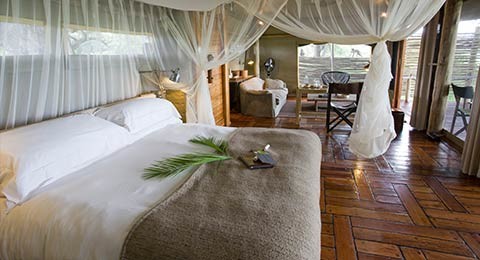
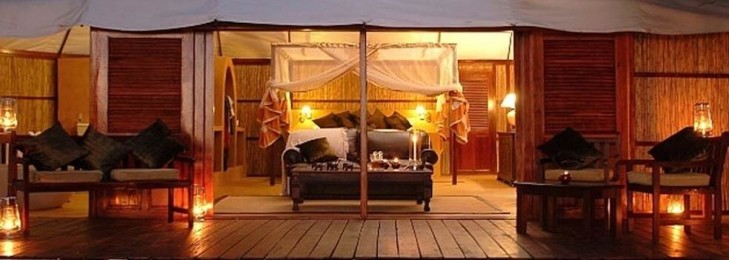
Ultimate Africa travel and wildlife news archive May 2001 New Value Lodge / Tented Camp Safari in Botswana!, May 6 2001 We are excited!!! For years we have been looking for several high quality yet mid priced lodges and permanent tented camps in Botswana that we could combine into one great safari itinerary. Finally we are able to do this! As Wilderness Safaris of southern Africa has grown so has the number of lodges and tented camps they have in Botswana. They now have four lodges / camps, namely Pom Pom, Jacana (used on premier series Jacana safaris), Kaparota and Linyanti (has been used on premier safaris) that they are calling their Vintage Botswana collection. This collection is comprised of quality accommodations (small permanent tented camps with each room having proper beds and en suite shower and toilet). The camps use the same great Wilderness guides, offer high quality Wilderness service and use the same open 4x4 vehicles. Ultimate Africa has created a new 12 day Voyager Series safari called "Botswana - Call of the Wild" combining 3 of these permanent tented camps (no camping) with Muchenje Lodge in the Chobe area and Ilala Lodge at Victoria Falls. The cost is US $3,095 per person January through June and during November 2001. During high season July through October the per person price is US $3,795 per person (does not include international airfares). This is roughly 25% less than the cost of our premier series safaris in Botswana! To view the itinerary click here What is even more exciting is that we will be able to tailor-make safaris for any number of days using any of the 4 camps!!! New Lower Low Season Rates!!!, May 6 2001 In an effort to stimulate travel during the green season in southern Africa Wilderness Safaris have decided to lower a good portion of their low season camp and lodge rates by roughly 30% from December 2001 through March 31, 2002. This makes a Botswana or Zimbabwe safari an INCREDIBLE value!!! Many people worry that their safari experience will compromised by wet weather. Although we generally advise travel during the dry season when wildlife viewing is at its peak there are many reasons why traveling during the "green season" can be a great experience. Although the bush is thicker and wildlife more spreadout (not concentrated around the waterholes) travelers can still see plenty of wildlife during the green season. Animals are far less stressed (content with food and water) than in the dry season and are therefore much more approachable. Instead of skittering away giraffe may now only stare as you approach on foot. In addition many species give birth at the start of the rains and traveler's can enjoy the sight of newborn wildlife bounding about. Rains are typically afternoon thundershowers, not constant downpours, and most lodges and camps have ponchos to keep you dry. Heavy dark clouds and flashes of lightning make for spectacular scenery. The animals almost seem to celebrate the life giving rains! Migrant birds make the green season spectacular for ornithologists. It is also prime time for butterflies. In contrast to the eerie, scorched silence of the dry season, there is little dust, beautiful lush greenery, and flowers are in bloom. The world's largest waterfall, the Victoria Falls, is most spectacular during March and April when it is in full spate (at full spate, or flow, the Falls are over a mile wide). Fewer guests at lodges and tented camps makes for a more personal experience. Being with only a handful of other guests provides an exclusive experience without the "through the roof" cost of a private professionally guided safari! Airfares are also much lower December through March (excepting over the Christmas and New Years holidays). Keep in mind that as these lodges and camps are very small (Little Mombo only accommodates 6 guests in three tented rooms) so space is limited. We would suggest reserving space this Spring to ensure that it is available when you want to travel). Please note that the lower low season rates do not apply to group safaris such as the Jacana, Mopane, and Rhino safaris. Botswana Elephant Update, May 6 2001 Botswana government officials estimate that there are now, at least, 120,000 elephants in Botswana. This is far more than the country's carrying capacity of 50,000 elephants. Botswana's Tuli elephants to go to Angola, May 6 2001 Botswana's Director of Wildlife and National Parks, Joseph Matlhare, said that about 300 elephants from the Tuli Block area are to be translocated to Angola this year as part of a plan to restock the Angola's elephant population. Matlhare said that the first group of elephants will be translocated this year, and the rest in 2002. April Camp Report - Savuti Camp, Botswana, May 6 2001 Many Ultimate Africa clients have stayed at Savuti Camp or will be visiting this year. We thought you would enjoy reading the camp's April report: Savuti Camp, Botswana, April 2001 On the wildlife front, we had an amazing month and April will go down as the month of kills. Guests saw ten kills, plus one right in camp. It is a lot dryer than this time last year and we are already seeing more game around the channel waterholes. We have been doing a few picnics up at the source and the guests have witnessed a lot of exciting hippo activity, from aggressive territorial behavior to mating hippos, etc. One of the highlights (lowlights, however you look at it) was when the guests saw a lioness stalk and kill a bat eared fox, right in front of the Land Rover. Lion and cheetah again dominated the sightings and all the cubs in the concession are alive and kicking. The waterhole in front of camp has been providing great photographic opportunities and the elephant bulls have had there fair share of fun in camp. A young bull for three days in a row, pushed over screens, the kgotla fence and most of our ballestrading in camp. A honeymoon couple followed him around camp for a whole day, watching the destruction. Official sunset is at 6:30 AM and sunset at 6:05 PM. Our new Mead astronomer's telescope is arriving anyday now and we will start on our planet and star talks at night. Best regards - Debbie and Christo / Savuti Camp April Camp Report - Makalolo Tented Camp, Zimbabwe, May 6 2001 Many Ultimate Africa clients have stayed at Makalolo Tented Camp or will be visiting this year. We thought you would enjoy reading the camp's April report: Makalolo Tented Camp, Zimbabwe, April 2001 April has seen the end of the hot wet season, and after a lot of rain over last couple of months it has been nice to see some sunny weather. The camp is looking good although the baboons have been keeping everyone busy especially the cleaning staff as repeated visits to their "playground" continue! Our new underground hide was completed this month and we now look forward to the dry season when we can have 360-degree views at elephant toenail height at the Main Pan. As a whole a fairly fine month with the temperatures starting to take a dip, winter is definitely on its way and the ponchos are beginning to see some use. The coldest temperature was 12 Celsius and the warmest only 30 Celsius. The last few days of the month brought some strange weather with rising temperatures some rain and some gusty winds, so much for the cool dry season. This month saw a lot of activity with the predator population again putting on a spectacular show - not bad for low season! Lions were seen on 18 days with the resident pride of 6 again being most often sighted and once again actively hunting without much success, I still don't know how they stay so fat! The 2 large males now have not been seen since February, we have consequently been seeing new young males in the area, on a couple of occasions as well as some new females. Leopard were seen on 7 occasions and all but one were very relaxed and provided awesome views, 4 occasions were before dark. Cheetah were seen 3 times, one on the last day of the month was very close and feeding on an impala kill. We suffered a huge loss when one of a resident pair was found dead near Linkwasha. We have seen a marked increase in elephant herd activity as the temporary pans begin to dry up especially at Ngamo where numbers in excess of 100 were seen. We have also seen a marked increase in buffalo with it not being uncommon to see 3 or 4 large herds in an afternoon. Our hyena den is now active and 2 pups about a month old have been seen on a couple of occasions with the adults hanging around the area and giving some guests a welcome as they come in from the airstrip! Honey badgers have been out in force compared to our usual sightings with pairs being seen on 2 occasions. We have seen a marked increase in mating among various species, warthogs, wildebeest, buffalo and impala. We should see a peak in their rutting at the full moon in May. With regards to birds we recorded 159 species this month - down a lot as many of the migrant species depart. We had a few late stayers in the white stork department. Of note were 2 cuckoo hawks seen at Little Ngweshla - so much for their riverine distribution. We have also seen dusky larks and a lot of the ducks had youngsters, some not for very long, we watched one Red billed teal go from 7 ducklings to 1 in under 2 weeks! The vegetation is still looking very green although a tinge of yellow is starting to show through in the Ordeal trees. Most of the flowering has stopped and there is a lot of seed around, especially the kind that sticks into shoes! Astronomy wise it has been a great month overall, with the full moon and the overcast weather being at the beginning of the month and as the moon waned the weather changed for the better. Mercury was visible at the beginning of the month near Venus in the morning sky to disappear very quickly out of view. Venus has remained clearly visible in the morning sky throughout the whole month. Jupiter and Saturn, are setting earlier every day and only remaining visible for an hour and a half after sunset in the western skies. Mars, rising in the evening, is close to the constellation of Scorpio and can be seen east of Antares, a beautiful red supergiant star that is Mars' rival. The clear dark skies towards the end of the month were ideal to watch the Puppids meteor shower which kept guests looking at the skies for some time to see who would see the most meteors! HIGHLIGHTS: Great predator sightings and an increase in the general game as the rains ended. LOW POINTS: Nothing to report. CAMPFIRE Communities Visit Namibia, May 6 2001 A group of 18 community representatives from Hurungwe Rural District Council in Zimbabwe recently visited Namibia for "a look and learn" program. The group, from one of the CAMPFIRE (Communal Areas Management Program for Indigenous Resources) producer communities, visited the Salambala Conservancy in the Caprivi Strip. "Although CAMPFIRE pioneered the concept of community-based natural resources management, the community representatives had a lot to learn about how to involve chiefs and headmen in the management of natural resources," said Johnson Siamachira, CAMPFIRE Association Information and Communications Officer. CAMPFIRE gives people an alternative to destructive uses of the land by making wildlife a valuable resource. Through CAMPFIRE, Zimbabwe seeks to involve rural communities in conservation and development by returning to them the stewardship of their natural resources, harmonizing the needs of rural people with those of ecosystems. "To Walk with Lions", May 6 2001 Lion expert and conservationist, Gareth Patterson, has written a new book entitled "To Walk with Lions - The Seven Principles of True Spiritual Fulfillment that comes from Living with the King of Animals". Patterson has worked in wildlife reserves in Botswana, Kenya and South Africa, where he has been especially concerned with the protection of lions. He worked closely with well-known lion expert, George Adamson. After Adamson was murdered in 1989, Patterson inherited the title of the "Lion Man of Africa" from Adamson. Drawing from the essence of what George Adamson once wrote about the seven principles of the lion, Patterson was inspired to conceptualize how we can begin to reconnect and enhance our lives. He uses the seven principles (self-reliance and courage; tenacious yet realistic defense of a realm; the willingness to care for the young of another; brotherhood; loyalty and affection) to teach us how we can apply it in our lives. The book is published by Random House. Zimbabwe's Matetsi Resort may be Settled by Squatters, May 6 2001 We are investigating to see if guests at any of the Matetsi safari camps / lodges in the north western part of Zimbabwe will be affected by the Zimbabwe governments desire to list the Matetsi Concession for resettlement as part of the government's controversial plan to put more white-owned land into the hands of blacks. What makes this confusing is that the land is already government owned and one of the major concession holders is a well-known black Zimbabwean entrepreneur. The land is considered Class 4 and Class 5 arid soils and is unsuitable for farming. A spokesman for the Zimbabwe Tourism Authority said it was not government policy to disrupt the tourism industry through land acquisitions but said that "peripheral" areas would be used to settle landless people and encourage them to set up tourist-related businesses. Ultimate Africa client's booked on safaris in Zimbabwe are not affected by the above events as their accommodations are situated within National Parks or in the town of Victoria Falls. Uganda's Rwenzori National Park to Re-open, May 13 2001 The Rwenzori National Park in western Uganda, which has been closed for three years, will be re-opened for tourists later this year. Lilly Ajarova, public relations officer for the Uganda Wildlife Authority, reportedly said the park had been closed due to the activities of rebel Allied Democratic Forces. He said security officials had given the assurance that it was safe to resume tourist operations in the park. Due to safety concerns Ultimate Africa still does not handle travel arrangements to Uganda. Virunga National Park might Re-open, May 13 2001 The Congo's Virunga National Park will hopefully open again soon, enabling tourists to catch a glimpse of the rare mountain gorillas who live there. The national park was closed in 1998 because its mountain forests had become sanctuaries for the perpetrators of the 1994 genocide in neighboring Rwanda and militia involved in Congo's latest conflict. Stanislas Bakinahe, regional director of the Congolese Institute for Nature Conservation (ICCN), said the area is now safe enough to permit the park to open. However, pessimistic tour operators reportedly say it could be years before there is an upturn from zero business. If and when the park opens, tourists will be charged about $200 for the privilege of visiting its four groups of about 80 gorillas that are used to human contact. ICCN wardens and rebel troops will provide security, Bakinahe reportedly said. Mbake Sivha, a program manager for the Nairobi-based International Gorilla Conservation Program, said the park was still not safe for tourists despite an improving situation. If Virguna does open, visitors will be able to make bookings through Rwanda's government tourist office, which only re-opened its own Volcanoes National Park in July 1999. Due to safety concerns Ultimate Africa still does not handle travel arrangements to this part of Africa. WWF Condemns Mining in Congo's Wildlife Areas, May 13 2001 The World Wide Fund for Nature (WWF) has protested against the environmental destruction brought about by miners in rebel-held eastern Congo, calling on industries that use the minerals to be more selective when making purchases. In a statement issued in Nairobi, Kenya, the WWF reportedly expressed particular concern about the Kahuzi-Beiga National Park and Okapi Wildlife Reserve, where thousands of miners have been digging for colombo-tantalite, or coltan, which is used in manufacturing mobile phones, jet engines and other high technology items. In field surveys conducted in August, WWF researchers found that elephant populations in the two areas have virtually disappeared since 1996. Lowland gorilla populations have dropped by half in some parts of Kahuzi-Beiga National Park. Claude Martin, WWF director general, is quoted as saying that companies should not buy coltan unless they are sure it does not come from nature reserves. Leaders of the rebel Congolese Liberation Front have promised to control mining in the parks, but they say it will take time to find alternative locations for the miners and their families. Coltan Mining Poses new Threat to Mountain Gorillas, May 13 2001 Annette Lanjouw, Director of the International Gorilla Conservation Program (IGCP), recently warned that mining for Coltan is presenting a new threat to mountain gorilla conservation in the Virunga mountain region at the borders of Rwanda, Uganda, and the Democratic Republic of Congo. Coltan is a rare earth metal used in numerous consumer electronics products, computer components, and advanced aviation and aerospace industries, especially in the United States. As in other extraction activities, Lanjouw noted that Coltan is attractive to local people with little or no source of subsistence income. She said Coltan mining is resulting in the construction of roads and building of camps for miners and their families near the borders of protected areas. This causes depletion of the forests, because trees are cut for fuel for fires and shelter. Bush meat is also overhunted. So far, says Lanjouw, these activities are not taking place in protected areas of the Virunga region, the United Nations World Heritage Sites where mountain gorillas live. However, she notes, Coltan mining is a new and added pressure on the mountain gorilla habitats and must be closely monitored. Largest-ever Seizure of Illegal Ivory on US West Coast, May 13 2001 Two men, reportedly from the African countries Gambia and Liberia, have been indicted by a federal grand jury in Los Angeles, California, for what officials are calling the largest-ever seizure of illegal African elephant ivory on the United States West Coast - at least 260 pounds of ivory, with an estimated value of $375,000. US customs officials at Los Angeles International Airport discovered 220 pounds of the illegal ivory on April 9 and April 11, hidden inside a shipment of furniture and carved wooded objects that had originated in Nigeria. A further 40 pounds of ivory was subsequently confiscated from a Hollywood residence following an investigation into the case. The haul consisted of more than 480 pieces of ivory, both carved and raw, including 38 tusks, some no longer than 6 to 8 inches, indicating that very young elephant calves were killed to obtain them. According to Karen Steuer, IFAW Director of Commercial Exploitation and Trade in Wild Animals, the organization actively works to protect elephants and will continue to call for tighter international anti-ivory trade laws. She also said that IFAW congratulates the Los Angeles-based US customs officials that discovered this illegal ivory shipment and calls for the maximum penalties allowed under law to be applied to anyone found guilty of smuggling products from an endangered species. CITES Urges Airlines to Reconsider Wildlife Shipment Boycotts, May 13 2001 Willem Wijnstekers, Secretary-General of the Convention on International Trade in Endangered Species (CITES), warned that boycotts by airline companies of shipments containing legally traded wild animals strike against the interests of the animals themselves and of poor people in developing countries. In addition, these boycotts do nothing to promote conservation and are thus counter-productive, he reportedly said. Reacting to a recent announcement by Lufthansa that it will no longer transport animals captured in the wild for commercial purposes, Wijnstekers said that the economies and rural communities of many developing countries are highly dependent on natural resources, including wildlife. "The 153 member governments of CITES have agreed to a strict set of rules for ensuring that this trade is conducted in a way that does not endanger the species involved and that gives poor communities an economic stake in protecting the wildlife that they live with on a daily basis," Wijnstekers said. According to Wijnstekers, a trend toward bans would undermine both animal welfare and conservation efforts by pushing shipments onto second-tier airlines and charters, where conditions may be worse and flight times longer. CITES prohibits commercial international trade (and regulates non-commercial trade) in plant and animal species that are threatened with extinction and that are or may be affected by trade. International Airport for Mpumalanga, May 13 2001 Mpumalanga, South Africa could have its first international airport by August next year. That's according to ABB Airport Technologies, the group that plans to invest R270 million (US $34 million) in the construction of the Kruger Mpumalanga Airport located between White River and Nelspruit. The company said direct flights from key tourism destinations such as Victoria Falls, Nairobi and Cape Town would be possible. ABB added that the airport would be able to accommodate all aircraft up to a Boeing 737 or Airbus 320. GKG Transfrontier Park Makes Headway, May 13 2001 The Gaza - Kruger - Gonarezhou (GKG) transfrontier park international treaty agreement between South Africa, Zimbabwe and Mozambique will be finalized by the end of the year and officially launched early next year. The process of translocating 1,000 elephants from Kruger National Park to Mozambique will begin this year as soon as the 400 kilometer boundary fence has been erected in Mozambique. Concern about Kruger Elephants Destined for Mozambique, May 13 2001 There are fears that the Kruger elephants that are to be relocated to Coutada 16 in Mozambique, might fall prey to hunters and poachers. The relocation forms part of the proposed Gaza - Kruger - Gonarezhou (GKG) Transfrontier Park which involves South Africa, Mozambique and Zimbabwe. Leo Braack, coordinator of the GKG project, said no elephants would be moved until fencing and anti-poaching units have been secured on the Mozambique side. He is also quoted as saying that the status of Coutada 16 would be changed from a hunting concession to a protected area, preferably a national park. The launch of the new transfrontier park, which was set to take place in November, has been postponed to April 2002 at the request of the Mozambican government. Part of Gonarezhou Park for Settlement, May 13 2001 A small section of one of Zimbabwe's remotest and underutilized national parks has been demarcated for settlement by cattle grazers and their families under the Zimbabwe government's land reform plan. Villagers have started to move into parts of the Gonarezhou National Park. Gonarezhou, perched on Zimbabwe's southeast border with Mozambique, is home to a growing elephant population. Lions, giraffes, zebras, buffaloes and the rare nyala antelopes also roam the park. "People have already started to build. Plots were being allocated to hold 750 villagers. We have made 11,000 hectares of land available which is adjacent to the park," regional governor Josiah Hungwe noted. National park and agricultural officials felt that land was in the park. The setting aside of a part of Gonarezhou for resettlement comes after Zimbabwe agreed with South Africa and Mozambique to set up a giant transborder game park which encompassed Gonarezhou as a regional conservation area last year. Sausage Tree's New Owners Enhance Camp, May 13 2001 Peter Gray and Jason D. Mott (managing partners) are the new owners of Sausage Tree Camp in Zambia. Several changes to the accommodation have been made without losing the charm and environmental harmony for which Sausage Tree is renowned. New larger tents supported on solid rose wood beams have helped to make the rooms brighter and more luxurious and, together with new soft furnishings and bathroom fittings, the camp's rustic qualities have been greatly enhanced. Sausage Tree and the magnificent Lower Zambezi continue to thrill the guests. During the eclipse period in June a group of scientists from the Exploritorium in San Francisco will arrange a live satellite feed to be broadcast world wide on television and also over the Internet, direct from Sausage Tree Camp. Kenya's Forests a Political Football, May 20 2001 Kenya's precious forests have become a political football in the hands of opposition parties. Wangari Maathai, the head of Kenya's Green Belt Movement, said they are dealing with "corrupt and greedy people". Maathai, who is one of Kenya's most prominent conservation activists, is standing her ground in the battle against the government's clearance scheme, threatening to destroy the country's dwindling forests. Allegations have been made that the deforestation is simply a ploy by the ruling political party to parcel out land to politicians to buy support ahead of next year's elections. Deforestation is depriving Kenya's major rivers of vital catchment areas, turning fertile land barren and threatening the country's future harvests. A member of the Kenya Forest Working Group is quoted as saying that "the long-term impact of deforestation will be on tourism, tea production, and electricity - the pillars of the country's economy". West Africa's Elephant Populations in Dire Straits, May 20 2001 Elephant populations in west Africa are declining in number. The small landlocked country of Burkina Faso in West Africa has the most elephants - between 3,000 and 4,000. They are protected by conservation laws stricter than those in the rest of the region. Despite these laws, however, poaching still occurs. Further southwards, in the neighboring country of the Ivory Coast, the elephant population has reportedly dwindled to an all-time low of fewer than 2,000. Many Ivorians have never even seen an elephant. And yet the Ivory Coast had the region's largest number of elephants only a few decades ago. In places of ongoing conflict such as Liberia, Sierra Leone, Guinea and southern Senegal, no reliable data exists on elephant populations. According to experts, part of the difficulty in protecting elephants in West Africa lies in the absence of wildlife tourism found in other regions of Africa with greater varieties of animals. Many rural people do not see the economic incentive in protecting elephants, especially if they are destroying crops. Many conservationists are skeptical about the commitment of governments in West Africa to saving elephants. Souleymane Zeba, West Africa's representative of the World Wide Fund for Nature, said the illegal trade in ivory had long been controlled by Senegalese groups with ties to government officials.
Workshop on Management of West Africa's Lions, May 20 2001 The African Lion Working Group (ALWG), affiliated with the Cat Specialist Group and the Conservation Breeding Specialist Group (CBSG) of IUCN/SSC, is in the final stages of organizing a workshop on the conservation status and sound management of wild lion populations of West Africa, from Senegal to the Central African Republic. The workshop, which will run from June 2 to June 4, 2001, will follow immediately after a 5-day conference on primates and bushmeat of the CBSG in Limbe, Cameroon. According to ALWG chairperson, Sarel van der Merwe, the Group's Organizing Committee is targeting researchers, government officials and individuals of West Africa to attend the workshop because of concern for the lion populations in that region. Van der Merwe said that not much is known about the lions of this region but that the predators are extinct in many if not most of the countries where they previously occurred. "It is cumbersome that thus far very few researchers could be found, let alone lion researchers, who have proper information about the lions," Van der Merwe explained. "The workshop will hopefully result in a partnership between researchers of the ALWG and our colleagues of the region, so that together they can work towards sound lion population management," he concluded. Congo Gorilla Numbers Halved, May 20 2001 Gorilla numbers have been drastically cut as a result of fighting and lawlessness in a wildlife park in the eastern Democratic Republic of Congo. The results of a recent survey published by a wildlife conservation group also shows that elephants - formerly numerous - have apparently been hunted to extinction. Kahuzi-Biega National Park became one of the great names in gorilla conservation, with the pioneering American naturalists Diane Fossey and George Schaller both having worked there. The portrait of one of its gorilla residents - Maheshe - also appeared on Zairean banknotes. But the park has since been devastated by the war. It is only in the last year that forest rangers have been allowed to resume work in parts of the reserve and start assessing the state of the animal population. An initial survey done last year with the American Wildlife Conservation Society makes for depressing reading. They found no elephants at all, in an area where 350 had been counted just before the war. Gorillas had fared slightly better, but their numbers had been reduced by half. And this was only in the mountainous part of the park, which has seen less violence. The much larger, lowland area, where there used to be thousands of gorillas, is still too dangerous to attempt a survey. It is infested with armed groups, and these have now been joined by tens of thousands of illegal miners digging for tantalum, a rare metal used in mobile phones and computer games, the price of which has soared over the past year. As the price rose towards $300 a pound, diggers flooded into the park, encouraged by the Rwandan army, which controlled the area and its Congolese allies. Guns are plentiful these days, and the miners have to eat. Conservationists fear that a large part of the gorilla population may already have been killed for the pot. Uganda to open Second Gorilla Viewing Area, May 20 2001 The Uganda Wildlife Authority (UWA) is to open a second site for viewing mountain gorillas in the Bwindi Impenetrable Park. Lilly Ajarova, the UWA acting spokesperson, said a group of the endangered mountain gorillas had been habituated at Nkuringo village in the Bwindi neighborhood. Ultimate Africa note: This family of gorillas spends much of its time on private land, which is not accessible to visitors. Uganda Wildlife Authority are hoping to purchase this section of privately owned forest but until this occurs or some other arrangement can be made, we remain with only two families (Mubare and Habinyanja). Ruwenzori Mountains National Park to Open for Trekking, May 20 2001 After over three years of being closed to tourism, the Rwenzori Mountains National Park should be available for trekking later this year. No date has been set for the opening of this park but the Uganda Wildlife Authority are optimistic that it will be this year, 2001. Botswana Elephants to go to Angola, May 20 2001 20 elephants will be moved from Botswana to the Kissama National Park in Angola later this year. This follows the successful translocation of two family groups of elephants from South Africa to Angola last year. Future plans also include the relocation of a very large group of 500 elephants to Kissama some time next year. Situated about 70km outside Luanda, the Kissama National Park can accommodate up to 6,000 elephants. The relocation of these elephants forms part of an effort to restock Angola's national parks with wildlife as the ongoing civil war in the country has virtually destroyed all wildlife. The relocation effort is being spearheaded by Professor Wouter van Hoven of the Kissama Foundation. He reportedly said the elephants that were relocated to Angola last year are doing very well. An elephant calf had since been born and another is on its way. He said that despite concerns about poaching, no such incidents have been reported. The Kissama Foundation also intends relocating several other game species, such as antelope, next year. The Foundation is hoping so supply Angola's remaining eight national parks with animals. The Kissama Foundation has reportedly also been approached by Senegal to assist with the relocation of elephants to that country's national parks, as poachers have wiped out elephant populations there. However, Prof van Hoven is quoted as saying that no elephants will be relocated unless the Senagalese government can give a guarantee of safety for the animals. Botswana's Camels may be used in Tourism, May 20 2001 Botswana tourism officials have requested Kenyan consultants recommend ways through which the country's camels could be utilized to promote tourism. Botswana's director of tourism, Tlhabologo Ndzenge, said the consultants were also expected to sort out the animals according to breed and come up with a management plan. At the end of the three-month consultancy, the best breeds are to be distributed among the community-based tourist organizations. Ndzenge said first priority would be given to residents of Kgalagadi district where the animals have been kept. The rest of the animals would be auctioned on condition that the buyers do not sell them until after five years. Botswana tourism officials have for some time now, been grappling with the question of how to commercially manage the camels in the semi-arid southern African country after the animals were rendered redundant by the police force which used them for transport. Mosquitoes Transmit Malaria during Night, May 20 2001 A recent study conducted by the World Health Organization (WHO) in Zambia has revealed that malaria-transmitting mosquitoes only transmit the malaria between 12:00 AM and 3:00 AM. According to the study the anopheles transmits malaria to a human being only during this particular period. Eddie Limbambala, medical expert with the WHO's Disease and Control Department said the mosquitoes that bite a person during any other time of the day do not transmit the disease. Air Zimbabwe Launches Direct Victoria Falls to London Flight, May 20 2001 Air Zimbabwe has started direct flights once a week between Victoria Falls and London on Thursdays. Previously traveler's from the United Kingdom and the rest of Europe had to land at either Harare or Johannesburg before transferring an onward flight to Victoria Falls. Response to Negative Article on Victoria Falls, May 20 2001 In response to a negative news article regarding the security situation in Victoria Falls that ran in Zimbabwe's Financial Gazette newspaper last week Maureen Vincent, manager of Wilderness Safaris' Victoria Falls office writes the following: "In response to a recent article circulating on the Internet , I thought I would give you my perspective, as a safari operator and as a mother with young children living permanently in the Falls. Zimbabwe will be having presidential elections next year. In an effort to win votes for the ruling party, their War Veterans Association has taken up labor issues on behalf of the people. Any person who feels he or she has a claim for unfair dismissal is now approaching the War Veterans Association to take up their cause. Victoria Falls has not been isolated in these debates. These meetings with the war veterans and the private sector have been amicable at Victoria Falls, and any unjust situation is being rectified. If the dismissal was fair, then the status quo is maintained. The Ilala Lodge was one of the hotels quoted in the article. It was visited, but was not "mobbed" as was reported. Representatives of the war veterans visited the hotel on a 'one on one' basis. These meetings were cordial. Any issues arising were resolved to their mutual satisfaction. No guests or staff were affected or inconvenienced by these meetings. The Ilala are talking directly to the Financial Gazette with regard to this article and will be setting the record straight in next week's publication. Shearwater Adventures was also mentioned in that article. Some months ago they had a labor dispute. They were investigated and the ruling was in their favor. Matetsi was mentioned and everyone thought that this might be CCAfrica's Matetsi Camp. They are situated on National Parks' property and there is no dispute over the rights to the land and there have been no disturbances. As a resident of Vic Falls, I was quite surprised to read the Internet version of what is supposed to be happening here in my town. Vic Falls is an area of peace. I feel safe here and I have never thought of taking my family out of the Falls. No tourist that I know of has ever been harassed during these times of political upheaval either in Vic Falls or anywhere around the country." Award-winning Film for World Wilderness Congress, May 20 2001 A screening of the multiple award-winning film, "The Great Dance," will be one of the highlights at the World Wilderness Congress (WWC), which will be held in Port Elizabeth, South Africa from November 2 to November 8 this year. "The Great Dance: A Hunter's Story," won the Best of Festival, Best of Category Human Dimensions, Best Narration, Best Use of Music, and Best Script awards at the 24th Annual International Wildlife Film Festival held in Missoula, Montana, earlier this year. The "Great Dance" deals with the unique relationship between the San people, or Bushmen, of the Kalahari and their environment, as seen through the experience of hunting and tracking. Specially adapted mini-cam technology and never-before-seen footage of the death-defying "chasing hunt" make the film a unique and remarkable experience. "We have chosen 'The Great Dance' because it captures the theme of the 7th World Wilderness Congress - Wilderness & Human Communities - the spirit of the 21st Century," says executive director Andrew Muir. "The film deals directly with the relationship between man and nature and also reflects the international tone of the 7th World Wilderness Congress," he says. "It celebrates the unique relationship Africans enjoy with the environment. Africa is still custodian to wildlands and cultures, which have a deep concern for nature. The 'Great Dance' will, we believe, help shape the discussions and declarations that come out of the congress," Muir said. According to Muir, the congress in Port Elizabeth sees the WWC returning to its "roots" - the 1st World Wilderness Congress was held in Johannesburg 25 years ago. The Congress is the only meeting place of its kind between business leaders, politicians and environmentalists. "We are truly international - as was the team behind 'The Great Dance'", Muir says. Space Available on Eclipse Safari, May 27 2001 There are still 3 spaces available (out of 8) on our June 10-22, 2001 group "Rhino" safari in Zimbabwe. You will visit Victoria Falls, Hwange, Chizarira, Matusadona, Kariba, and Mana Pools. Highlights include comfortable camping with top guides in remote and exclusive wilderness areas, transfers by road, boat and light aircraft, wildlife viewing from open sided 4x4 vehicles, professionally guided hikes and walks, canoeing through Mana Pools through the path of totality during the eclipse, excellent birding, and Victoria Falls. The cost is US $3,975 per person excluding international air tickets. To view the full itinerary click here. Botswana Tsetse Spraying Safe, May 27 2001 The Botswana government has issued a statement that its tsetse fly spraying program in the Okavango Delta (which will start next month) will have no effect on tourists to the region. It says that the very low dosages of deltamethrin will pose no direct risk to humans. Deltamethrin is similar to many insect spray products currently sold for domestic use throughout the world. Spraying at a height of around 100 meters will take place in the early morning and late afternoon. Botswana's Xigera Camp Update, May 27 2001 We have had the most amazing game viewing during April and May so far. We have 3 different prides of lion in the area, seen almost daily. We have also recorded over 20 leopard sightings on game drives as well as in camp. All of a sudden we seem to have leopard all over the place. We have also discovered a hyena den with 3 pups. The footbridge into camp has been extremely busy with hyena crossing several times a night. Guests have often seen lion and leopard crossing the bridge while they have been having their dinner - or sitting around the fire afterwards. We have been seeing cheetah on the drives as well. Now with the floods in full swing at Xigera the area is looking absolutely amazing. We have opened up an old boat route and have based a vehicle on a big Island within our concession. We can now offer all year round game drives as the island is huge and there is no way it can flood. EC to Help Kenya Boost Tourism, May 27 2001 Kenya and the European Commission (EC) have signed an agreement for a 12 million Euro grant to help develop Kenya develop tourism. The grant, to be financed by the eighth European Development Fund (EDF), will support a five-year tourism diversification and sustainable development program. Gary Quince, head of the EC delegation, said that the commission will give Kenya another 25 million Euros once the Kenyan government complies with conditions set by the International Monetary Fund and the World Bank for aid resumption. Kenyan Finance Minister Chris Okemo said that the grant would complement the Kenya Tourism Board's program of Institutional Strengthening and Market Promotion, whose agreement was signed in March this year. Kenya Launches Rhino Conservation Strategy, May 27 2001 The Kenya Wildlife Service (KWS) has launched a campaign to rebuild the country's black rhino population. KWS director, Nehemiah Rotich, said the black rhino had almost been driven to extinction with the population dropping from 20,000 to only 500 between 1970 and 1994 in Kenya. The new strategy involves the development of an integrated standardized monitoring system, biological management intended to maintain an overall population growth rate of 5 percent a year and a protection strategy to minimize poaching. Other measures include the implementation of an effective coordination framework for decision-making and action involving stakeholders. Kenya to Spend $2.6 Million Refurbishing Airport, May 27 2001 Kenya Airways intends spending US $2.6 million expanding Nairobi's Jomo Kenyatta International Airport (JKIA) in a bid to transform the aerodrome into a regional transport hub. Kenya Airways acting managing director Brian Presbury said the initiative was part of an ongoing strategy to consolidate Jomo Kenyatta as east Africa's major regional hub by 2005. Other facets of the strategy include Kenya Airways' 1996 partnership agreement with Royal Dutch Airlines (KLM) and the purchase of three new Boeing 767-300-ER aircraft earlier this month. The aircraft have not been delivered yet but will be operated on long-haul destinations. The KLM partnership agreement has also seen the airline enter a code-share arrangement to synchronize flight schedules of both airlines to feed each other's services. No Elephants, Few Gorillas left in DRC Park, May 27 2001 The entire elephant population has been wiped out in the Democratic Republic of Congo's Kahuzi-Biega National Park, while gorilla numbers have dropped to 130 from 8,000 just five years ago. In 1996 some 3,600 elephants were recorded in the park. A recent recount by the US-based Wildlife Conservation Society indicated that not a single elephant was left in the park. The Congolese Institute for the Conservation of Nature blamed the decimation of the park's wildlife on rebel groups as well as 12,000 local and foreign small-scale miners searching for deposits of the mineral coltan. Great Apes Survival Project, May 27 2001 A major international project to save the Great Apes from extinction will be launched by the United Nations Environment Program (UNEP). The initiative, called the Great Apes Survival Project (GRASP), will target key areas in Africa and South East Asia where primates are close to extinction as a result of war, mining, habitat destruction, capturing of live infants for sale and poaching for trophies, souvenirs and bush meat. Klaus Toepfer, the Executive Director of UNEP, reportedly warned that a global effort is now needed to combat this disaster. He said some experts estimate that in as little as five to ten years the Great Apes will be extinct across most of their range. He called on industry and business to back the initiative, which is being, started with $150,000 from UNEP. GRASP, which will be working with groups including the Ape Alliance, the International Fund for Animal Welfare, the Born Free Foundation, Fauna and Flora International, the Bushmeat Crisis Task Force and the World Wide Fund for Nature, has initially identified five potential programs in need of urgent support. It is planned to extend the initiative to all of the 23 countries that still have Great Apes. In some cases projects will include giving rangers and wardens state of the art communications equipment and vehicles. In some places wildlife corridors linking fragmented habitats and isolated populations are needed. Educating local people on the value of Great Apes for eco-tourism and for protecting forests will also play a key role. Namibia Donates Ten Cheetah to USA, May 27 2001 Namibia's 10 cheetah ambassadors to the United States arrived safely and are adapting very well to their new homes. Namibian President Sam Nujoma donated the cheetah to the United States in recognition of the support given by the US to cheetah conservation in Namibia. The 10 cheetah, who were all rescued in the wild by the Cheetah Conservation Fund (CCF), left Namibia in April this year and have found new homes at the Cincinnati Zoo in Ohio and the White Oak Conservation Center outside Jacksonville, Florida. The CCF provides a home for young orphaned cheetah whose mothers have been killed on farmlands. Laurie Marker, founder of the CCF, reportedly said the cats would be integrated into well-established captive breeding programs in the United States. Cheetah in captivity are not allowed to breed in Namibia to avoid inbreeding among the country's 2,500 cheetah which could lead to genetic mutations and other problems. Construction Begins On New Kruger International Airport, May 27 2001 International aviation consortium ABB Airport Technologies has finally began construction on South Africa's R270 million (roughly US$35 million) international airport near the world renowned Kruger National Park The new Kruger Mpumalanga International Airport, 22km from Nelspruit, will replace the city's small municipal aerodrome, which is currently the only Mpumalanga airport licensed for cross-border flights. The municipal airport has one of the shortest runways in South Africa and is often forced to close due a lack of advanced aviation beacons and frequent unfavorable cloud conditions. ABB representative Ruth Persson said on Wednesday the new airport would accommodate Boeing 737 and Airbus 320 airplanes and was expected to be operational in time for the Earth Summit, scheduled for Johannesburg in September 2002. She added that the airport would allow tourists going to the Kruger National Park to fly directly to Nelspruit from Cape Town, Durban, the Garden Route, Nairobi and the Victoria Falls. Tourists have previously been forced to land 350km away in Johannesburg before catching a connecting flight on small twin-propeller aircraft. "We believe the airport will be a model for public-private interaction in the provision of environmentally-friendly infrastructure," she said. An estimated 180,000 tourists and businesspeople are expected to travel through the airport annually. Return to Weekly Update Archive |