ULTIMATE AFRICA SAFARIS
Ultimate Africa travel and wildlife news archive September 2002 Nationwide Airlines to Offer New Flights, In late January 2003 New Kruger Airport to Open, September 1 2002 Scarce
Resources Hamper Kenyan Tourism, Cook
told journalists the introduction of entry visas, insecurity in national parks and the
poor road network, has contributed to the low number of visitors currently coming into the
country. Tourist
Dies, 9 Hurt in Masai Mara, A
Spanish tourist was killed a week ago Saturday in a road crash in The
accident occurred as ten Spanish tourists were being driven to the Mara Safari Club on the
northern side of the reserve from According
to Narok police chief, Joseph Munyao, the tour vehicle skidded in the dust and murram road
and rolled several times. US
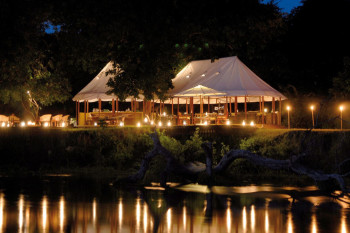
Pledges Money for Congo Forests The Duba Plains Tented Duba Plains Tented Camp, located
in August had an average minimum
temperature of 15°C and an average maximum of 30°C. A very surprising 2mm of rain was
recorded towards the end of the month, along with exceptionally strong winds. As expected,
the floodwaters have dried up considerably and we are now able to access the spectacular One usually expects the lions to
be the stars at Duba, and they are - but the hyaenas are putting in a terrific
performance. Many wonderful hours have been spent watching the young pups at the den, with
as many as seven pups being seen at any one time. Unfortunately it appears the mother of
two of the pups has died, as they are fast loosing condition. Time will tell if she
returns, if not it is only the natural control of a key predators numbers. As it is,
the hyenas are competing very well with the lions and have even been seen catching their
own prey. The month began with an exceptional sighting of three hyenas pursuing a troop of
baboons across an open floodplain. Without any trees for the baboons to escape into, the
hyenas successfully isolated an adult female baboon. She was soon dispatched, even with
the valiant rescue efforts of the troop males. On two separate occasions an adult hyena
was seen killing a buffalo calf lagging behind the herd. More impressive however was a
pack of seven hyenas pulling down an adult female buffalo from a herd of many hundred
buffalo. Even the returning buffalo bulls could not deter the persistent hyenas. It is
presently not an unusual sight to witness a pride of lions, alongside a pack of hyenas,
hunting the buffalo. Future months should reveal some fascinating interactions between
both predators and their prey. Our lion research is continuing
extremely successfully, with several major developments taking place. Lions were seen on
all bar two days of the month, averaging 18 lions per day, with 68 pride sightings during
the month. In total, 18 buffalo kills were witnessed, with no evidence found of lions
preying on any other species. Duba's lion dynamics are certainly in the process of change,
with a major shift of all the pride territories and some very interesting interactions.
Most of the changes can be attributed to the coming of age of the two Skimmer pride Males.
These two brothers are now about five and a half years old and reaching their prime. They
regularly set out on territorial patrols, well into their father's (Duba Boys) domain. The
Duba Boys still manage to chase their offspring away, but one feels their reign is coming
to an end. A sure sign of this was the sighting of both Skimmer Males fighting over the
mating rights of a Tsaro pride female. In the end both males "successfully"
mated with the Tsaro female, before the Duba Boys saw them off. There appeared to be no
mating by the Duba Boys. The Skimmer pride has had the luxury of following their two young
males into previously unexplored territories, where plenty of buffalo are present. All ten
members of the pride are looking in superb condition and rarely seen in a state of hunger.
The Skimmer prides best performance came towards the end of the month, where they isolated
an adult male buffalo from the herd and coxed it into the open. This gave the impressive
Skimmer Males the opportunity to launch themselves onto the buffalos back and over power
it. The Tsaro pride are experiencing
mixed fortunes at present. Most of their time is spent evading the Skimmer Males, while
the rest is spent chasing the buffalo into the wetter territories belonging to the Pantry
pride. They seem to be in good enough condition, even though the five subadult males are
being sort out by the Duba Boys. The young males occasionally stand up to their much
bigger fathers and subsequently pay the price. One of the young males received a bad bite
to one of his hind legs and now struggles to keep up with the continually roaming pride.
Fortunately the pride has killed many buffalo, giving the injured youngster the
opportunity to reach the kills in time to gorge himself, before they set off again. A
rather humorous sighting was that of the Tsaro pride coming across a foraging pangolin.
Much to the frustration of the inexperienced subadults, the pangolin rolled into a tight
ball, leaving the youngsters taking turns in attempting to pry it open. Eventually the
lions moved on and set off after an unexpecting troop of baboons. The baboons wisely
retreated to the safety of the trees, adding to the lion's frustrations. With the Tsaro
pride shifting into parts of the Pantry pride's territory, they have found themselves
coming through the camp on regular basis. It was comical to see the lions playing with the
fireplace chairs and trying to pull the pathway lights from the trees. They were really
curious, once even attempting to climb the steps into the lounge. This we had to prevent
by firing a bear banger towards them, which saw them scatter from the camp. The Tsaro
prides crowning performance for the month saw them catch five buffalo at one time. First
they caught and consumed a buffalo calf, before chasing the herd into a flooded channel.
Here they pulled down two subadults and a calf. All these were killed, but not before the
mother of the calf returned to rescue her young one. This proved to be a fatal mistake.
The lions, ever opportunists, proceeded to pounce on the female and kill their fifth
buffalo of the morning. Quite a feat considering lions are only meant to have a 15-30%
hunting success rate. The majority of the Pantry pride
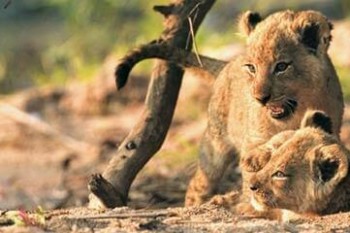
viewing consisted of watching the eight surviving cubs at play. All eight seem to be
fairing extremely well. A surprising development in the pride, was the brief return of the
sixth adult female of the pride, last seen 18 months ago. We incorrectly presumed she had
died, but now realize she may be part of another pride bordering the Pantry pride's
territory. This suggests a larger Pantry pride may have split up into two prides some
years ago. Interestingly, the nine-month-old cubs readily accepted the sixth female, who
may never have seen her before. The Pantry pride are currently confined to a relatively
small area between the Tsaro pride to the west and an as yet unknown pride to the east.
Fortunately many buffalo have moved into the area, which was burnt several months ago.
There is never a shortage of food now that the Duba Boys are concentrating their efforts
on the Skimmer Males and the other lions their east. As far as the lions to the east go,
it can be confirmed that there are at least two adult males and two adult females in the
pride. Tracks show there are more members to this pride. As we spend more time exploring
the ever more accessible, drier east, we should be able to put together a bigger picture
of what lions exist outside our usual game drive routes. This will result in a better
understanding of what makes our regular prides behave as they do and will hopefully answer
the question of, "Where the Pantry pride's sixth female has been all these
months?" Robin
Popes Weekly Zambia Update, Robin
and Jo Pope runs several very successful safari camps in Here
in the Valley things are HOTTING UP! I can hardly believe we are already at the beginning
of September - where does the year go, I ask you?! Yes, the days are getting warmer, the
nights are no longer cold and there is much haze and dust in the air. Soon we will be able
to watch the Carmine Bee-eaters nesting in great colonies in the walls of the riverbanks -
always something to look forward to! There
has been excellent all-round wildlife sightings many of which are quite rare. Quite
unexpectedly, on a recent moonlit night, Issy spotted a Pel's Fishing Owl perched on a
branch in the Nkwali lagoon! Simon was very excited....we don't very often see them around
Nkwali. It sat on the branch and stared at us for quite a long time. Another Nkwali
sighting - a 'baby' bush baby was seen suckling with its mother up a tree at
night...it looked very cute according to Shanie. Robin
saw Palmnut Vultures on his most recent mobile walking safari - another rarity. Following
Robin, Jason Alfonsi and Simon Cousins took separate groups on mobile walking safaris
within days of each other along the Simon's
guests on this four night Lundu walking safari were three American brothers. A great
rapport quickly developed and one night there was much laughter around the campfire as
certain characteristics of the honeybadger were discussed. Founded or unfounded,
honeybadgers can be quite aggressive creatures and have a reputation for attacking the
private parts of many male animal species. It sounds like a very clever method of defense
- OOUCH!!! And
so, during the following morning's walking activity, Simon and the brothers came across a
honeybadger popping out of a hole at the base of a tree. In fright and in unison, the
three brothers grasped their nether regions - prompting what must have been howls of
laughter and later, relief that they had all survived the morning completely intact! And finally...Shanie's just rushed in to tell me that there are moths everywhere outside. I concluded that she had finally lost the plot and ignored her, but on looking outside I see that she is correct! They are EVERYWHERE!! Very interesting - apparently they are attracted to the sausage tree flowers which are now blooming in large numbers. They will quickly disappear again when the flowers are finished. Star of Star of The
President of Zambia, Levi Mwanawaza, booked out the whole of Chichele Presidential Lodge
in At Sussi
and Chuma Lodge at Preparations
are in store at Sussi and Chuma for an American wedding which is scheduled for early
January. This venue will no doubt be one of the most romantic settings to be found. Just
picture a beautiful white tent with champagne in crystal glasses, crisp white table
clothes and then the trumpeter hornbills chorusing in the ebony trees above and the
hippos in the At
Lechwe Plains Tented Camp in the At Moshi
Tented Camp in the There
are now three prides of lions around Moshi Camp and cheetah sightings on the Busanga
plains have been plentiful. Spot, the resident hyena, is making his way through the
camps skull collection with his latest victim being a huge crocodile skull! With the
addition of Robin
Popes Weekly Zambia Update, Robin
and Jo Pope run several very successful safari camps in I have a
very interesting tale from our mobile camps up along the Divining
rods are two little bent pieces of wire (for example two metal clothing hangers
unfolded). Zambians have traditionally used them to find water by holding one rod
outstretched from each hand. They are held lightly by each hand so not strong enough
to grip and not loose enough to drop. The holder of the rods would then ask out loud
if there was any water nearby. If water was close the rods would move in the direction it
is likely to be located and if they were literally standing on top of water, the rods
would cross over each other without any effort at all! And apparently it works! So the
other day Issy suggested that they use this method on a morning walk to see if they could
locate certain animal species. The guest was keen so Jason led them out from Camp 3
to The Garden with Peyela the armed scout. The
Garden is a big open floodplain with the river crossing through and a ridge on the
other side of the river. The divining rods were asked if there were lion about and
they promptly pointed to a thicket of reeds by the river. On the other side of the
river there were some buffalo feeding on more reeds - about 10 old bulls. Jason led
the walking party over to the thicket of reeds and, when asked where the lion were now,
the rods bent right across each other...which means they were right there! A swift look
around and there was no sign of any pride but it was difficult to tell through the
thickness of the reeds. Jason thought he would lead the group away for a while,
keeping the buffalo on the other side of the river within sight. Half an hour later the
group had come around the floodplain and were standing at their original spot away from
the reeds. Suddenly they heard the mournful bellowing sound of a buffalo under
attack. The buffalo ran out across the ridge with a pride of lion chasing behind
them! In the short time Jason had led the walking group away the lion would have left
the thicket, crossed the river and did their best to capture a buffalo...without success! A new
day followed and out at the Chifungwe Plain Jason's walking group came across a lone male
oribi, an uncommonly seen antelope in the Peyela then bemoaned that they might as well do away with an armed scout in the bush and rely on those rods! Somehow I doubt that this will become company policy but certainly an interesting findings nevertheless! On the
last day of the walking safari Jason brought the rods out one last time and asked it where
the cheetah were...and the rods pointed in the direction of Camp 2! Cheetah haven't been
seen in the Valley for many, many years - just imagine....? On
another topic - The carmine bee-eater colony on the riverbank in front of the ebony grove
is in full swing at Nsefu! It is such a large nesting colony and an incredibly
colorful spectacle. Nsefu guests are also enjoying the immense quelea flocks taking
off from the salt pan at sunrise. These flocks resemble a moving wall - WHAT a
sight!! Until next week.....cheers to the power of the divining rod! Mombo The
Mombo rhino story is heating up and. The program is going smoothly and all the rhinos have
settled in well and have evaded being eaten by lions. There are another 11 white rhinos in
bomas in South Africa that are being readied for their trip to Botswana...So Mombo will
shortly have 16 white rhino running free and wild in Botswana! During August the new white rhinos at Mombo Camp were sighted as follows: 56 reported sightings - an average of 1.81 rhino sighting per day. This compares well with July when they had 43 recorded sightings. Notes on each rhino... Kgosi Kgosi wasnt seen in the second half of August until Gregg & Corle saw him on the road to Moremi Hippo Pools. We went up there the next day and found him very close to the channel. Presumably he has been pushed into this area by Serondela's expansionism. He was in good condition and quite relaxed. Water features seem to be functioning as natural territorial boundaries in this area. Serondela - He is actively patrolling a huge area - an elipse from the old bomas down to Treeline to Simbira and possibly beyond. He's not paying much attention to Kabelo anymore, so perhaps he knows that she is pregnant? Sergeant & Mmamatimpani - they are both still in the area they have occupied for some time now, just to the west of the old (riverine) Maun Road, and just south of the old tsetse camp. Sometimes together; sometimes not. Both are in excellent condition, but no evidence of (attempted) mating as yet. Sergeant is marking very actively along the road. Excellent grass and water in this area for them. Kabelo - she is still very much centered on the area of dry acacia southeast of Suzi's Duck Pond, between there and Treeline to Simbira. She rarely moves far, unless she is with another rhino. Orient
Express Safaris Botswana August Update, It would appear that winter is now a thing of the past in Botswana, and that spring has sprung slightly earlier than expected. Hot day time temperatures combined with some moisture have resulted in some very unexpected rainfall which has started to change the landscapes. These are the temperature and rainfall breakdowns for the camps. Maxim temperature recorded during August was 37C and the minimum was 8C. The
water levels at both Eagle Island Camp and Khwai River Lodge have remained constant,
possibly only dropping a centimeter in the latter half of the month. At Eagle Island Camp
the water level now stands at 123cm. We expect that towards the end of September we will
start to see a more rapid drop in level. At Khwai the 12mm of rainfall has definitely
influenced the rivers level. Sable Alley has progressed even further on its journey
to rejoin the Khwai, whilst I believe the With a splash of rain and the early arrival of warm summer days the bush is a picture of varying colors. This dramatic change of face from the drab winter grays and browns is currently most spectacular at Savute. Here the Kalahari Apple Leaf and Knobbly Combretum are bursting into pinks and whites respectively. Most of the Acacia species are also in bloom, ranging from cream to bright yellow. Throughout the region there are also touches of green to the dry landscape as new grass shoots start to make their appearance. This is especially evident at Khwai River Lodge and hence has created quite a stir amongst the plains game species. All of
the camps have enjoyed fantastic wildlife viewing. As can be expected, Khwai has been
especially good, although this should not discredit the quality of viewing at both At Savute Elephant Camp has once again made a point on the origin of it's name. Elephants are everywhere especially during the heat of the day and late afternoon, when they congregate around the pumped water points. Lion and leopard sightings have also been good. The resident lion pride of 23 members has been spending a lot of time in the vicinity of pump pan near the camp and have, on several occasions, ventured past the front of the camp whilst guests are having dinner. It would be almost impossible to attempt mentioning all the fantastic sightings that our guests at Khwai River Lodge have experienced during the month, with great sightings being recorded day after day. Just when you think you have seen it all, you haven't, as the bush sets up one jackpot after the other. Some of the truly great sightings recorded have included; lion, leopard, cheetah and wild dog all in a morning, an eland sighting, a buffalo kill (the stalk, the take down, the retaliation by the remaining 300 strong herd and finally dinner) and the roan antelope in front of camp. This fantastic viewing should continue well into October, and may get better as the heat of summer increases. The
birdlife throughout all of the areas has been absolutely superb with a fantastic variety.
From the dry Savute through Khwai to the wetlands of Eagle Island Camp, sightings have
included; Crimson breasted bubu, helmet shrikes, pels fishing owl, slaty egret and purple
gallinule. Of particular interest however is that certain of the migrants have started
their return journeys. I was lucky enough to see the first Carmine bee eaters since April
at Khwai on the 26th of the month. Reports have also indicated the presence of paradise
fly catchers at Savute. With the
exception of some very large And a
short story "When Good Buffalo, Go Bad" Recently
I was fortunate enough to watch a buffalo kill along the With the
lion going in for the kill, they soon were to discover what it is like "when good
buffalo, go bad". The cow in the last moments of her life let out a bellow, that soon
saw 300 members of her herd charging down on the lions and in the confusion that followed
it was difficult to tell what was going on. I managed to get a glimpse of the so called
"king of beasts" cowering behind the buffalo cows carcass, trying desperately to
evade the horns and hooves of 300 two thousand pound buffalo. Later when calm was restored and we could see what was happening, the lions reappeared at the scene to claim their dinner. It seems that when the action got too hot to handle the lions opted to take refuge in some small bushes, where they literally weathered the storm. For September we would expect the start of the catfish runs at Eagle Island Camp. This run sees hundreds of catfish cram the channels as they hunt a variety of small fish. The catfish themselves fall prey to birds and reptiles as they to come under attack from both above and bellow the water. At Khwai wildlife viewing is bound to get even better as we prepare for the hottest time of the year, with little rain expected. That makes the waters of the Khwai river the only permanent water source in this area for miles to both the north and south, and hence attracts large amounts of animals. More migrant bird species will start their return leg to the region, one such species to look out for will be the yellow billed kite. Beks
Ndlovu Safari Update, Professional guide Beks Ndlovu sent through the following report from a recent safari he guided in Zambia: I met my
visitors in We were
flying about 9,000 feet in altitude, and we could hardly notice any form of existence of
man or any development. We were flying over the By the
middle of the afternoon we were driving in the deep northern parts of The next
morning we set off in the direction of where we heard the lions calling from, hoping to
come across them and discover what it was they were sounding so content about. We came
across Zebra, Waterbuck, Red Lechwe, Warthogs and different troops of baboons. In some
places we walked beneath large Ebony forests, and sausage trees, which were in full
flower. The ground was carpeted in velvet red flowers, which we used to walk on to stoke
the impala resting under the trees. We noticed vultures flying, taking off from the
distant trees as they were taking advantage of the thermals starting to rise as it started
to warm up. As we arrived at the site where they had been roosting, we noticed that the
grass had been trampled and the smell of their choking urine still lurked in the air, but
we did not see a sign of them. We walked for another five hundred yards and came to a dry
riverbed with steep gullies. Suddenly we heard small grunts and sounds of big paws hitting
the ground as the lions took off, away from us. They had heard us coming and ran off
without knowing where we were exactly. We were thankful that they ran off the opposite
direction. We found a safe position on top of a termite mound under a tall shady Jackal
Berry tree where we sat and watched the pride walk staring at us from a thicket about
fifty yards away. From no where a small cub of about six months old got totally
disoriented and started to walk in our direction yelping and calling looking for its
mother. It walked within thirty feet of us before it realized what we were and turned a
complete ninety degrees after giving us a snarl and a growl. In the mean time we were
keeping an eye at the mother who by now had her eyes firmly fixed at her cub. After
watching them for about half an hour we left the site and you could see the pride looking
at us and making sure that we were definitely leaving. It was a pride of three lionesses,
two cubs and one sub-adult male. That evening we went for a small walk along the On our next two days we saw plenty more antelope, walked into hippos inland, more giraffe that we walked very close to, and walked into another pride of lionesses. On our last night we could hear a leopard calling and the sound of a stressed troop of baboons gave him away. Our last night in South Luangwa we spent at Chichele lodge, which is set on a hill overlooking the Luangwa river and its flood plains rich with herds of Puku antelope, zebra and elephant. We went out for an afternoon walk and ended up driving and using the spotlight on our way back in the dark. We saw a number of white tailed mongoose, genets, bush babies, jackals and elephant shrews. That night the roars of lions just below the hill sounded through the night. As we sat at our table on the veranda the next morning, we had the perfect sighting of a mating pair of lions that sat under a mopane tree in full view of us. Every time they finished mating, they would move to a different spot. Not many people have this sort of view during their breakfast, my guests commented. We
arrived in Livingstone at Sussi and Chuma, the romantic teak lodge built up on stilts
overlooking the fast flowing waters of the upper Overall
a great safari! Kikoti Kikoti
Camp is located in We are all very excited about the wild dogs hanging around Kikoti Camp. We have had four good sightings already. We have not seen these dogs in two years! One female looks pregnant - so if she dens in the area - then we'll have guaranteed sightings. We hope for the best. The
other good news is that we have a female leopard in the area that has given birth to two
female cubs. We have seen her on two occasions although she is extremely shy. Other
wildlife viewing has been good with lot's of eland, oryx, impala's, baboons, grant's
gazelle although it's very dry at the moment.
This is
one of the reasons Ultimate Africa does not recommend travelers fly aboard Air Tickets - "You get what you pay for", September 22 2002 This year we have noticed many more Ultimate Africa clients purchasing air tickets through websites offering special reduced airfares...this is absolutely fine however many travelers do not understand the real cost of NOT purchasing their air tickets through our office. Firstly, in many cases we are able to secure the same specials that the other websites are offering. Secondly - by purchasing tickets through our office we are able to be of assistance in the event that changes need to be made to your flights. As an example recent Ultimate Africa clients were on safari in Botswana when South African Airways cancelled their mid day flight from Victoria Falls to Johannesburg. As we had ticketed the clients we noticed the change on our system and were able to rebook the guests onto the afternoon flight and notify the guests of this change. When the guests arrived at the Victoria Falls Airport several days later they noticed a large crowd of stranded travelers who had arrived for the mid day flight (which was cancelled) and were desperately trying to get onto the afternoon flight which of course was now fully booked! Our clients checked in and departed on the afternoon flight without incident. In addition to being able to alter clients flights in the event of a schedule change or cancellation there are several tasks which we complete on behalf of our clients to help ensure an uneventful travel experience. Without giving away the details it is not uncommon for one airline in southern Africa to overbook their flights. Of course this leads to guests being bumped when space is not available for them. We complete a certain task on behalf of our clients to reduce the odds of them being bumped (and it is not simply reconfirming the flight). So far we have not had a single client bumped! So, to cut a long story short, remember that a cheap ticket isn't always the best deal. Interesting
Animal Facts, Did you
know that the leopard plucks the fur or feathers from its kill before Apologies
to Photographer Calvin Jones, On Ultimate Africa Safaris' recent newsletter captions were left off several photos including the beautiful cheetah photo on the front. This photo was taken by Ultimate Africa client Calvin Jones on safari in July 2001. Travelers who would like to see Calvins work should visit his website at: http://www.ccjonesphotos.com Zimbabwe
Airport Departure Tax to be Included in Ticket, The new
rule would apply with effect from the beginning of November this year. Children under two and travelers in direct transit who do not leave the transit area are exempted from paying the departure fees. Other exemptions are airline crew on duty and visiting heads of state and government and their spouses. Makalolo
Plains August Report, Makalolo
Plains Tented Camp is located on a private concession deep within We had a lot of very windy and hazy days with some overcast mornings, but generally we are happy with summer definitely here and nice warm days again. The bush is exceedingly dry this year and the eles are trashing the area. Fantastic sightings and huge herds about. The end of August saw all our acacia eriolobas coming into flower and new leaf, along with the combretums and purple pan weed, so fantastic scent sensations on those warm summer days. Just the most fantastic time of the year here. The teak and many other trees are now bare, with, as one of our old trackers used to say, the wind having come to undress the trees. We had another bush fire come in from outside the park, but luckily, with early warning and a nice cool, still night we managed to put this out before it had got too far. The lions continue to amaze us. Mr. Pamwe (a lion) has returned to the fold, and is happily back in power for the time being. We suspect that one of our lionesses has had his cubs and eagerly await their coming out of hiding. We have also seen him mating with another of the lionesses recently. The 3 prides here have given us some great kill sightings including buffalo, eland, zebra, wildebeest and baboon kills. One pride had 3 witnessed attempts on buffalo one evening in front of camp. They eventually, after a 15 minute struggle, killed an old dagga boy buffalo, and fed on him for 2 days here in front of camp. We have had 25 lion sightings this month. Leopard been a bit elusive this month only being seen 4 times. But one of the leopards killed 2 baboons and ate them by tent #5. We have had several sightings of 2 different packs of wild dogs and had them drinking right in front of camp twice in the mornings. Great sightings of some of the smaller chaps like aardwolf, wild cat, caracal, civit, genet, 5 species of mongoose, and 2 species of jackal. An interesting honey badger sighting, whilst on a morning walk, where 2 badgers had killed a spring hare and were making off with it, 2 jackals and 4 vultures in hot pursuit. They made the safety of a burrow just in the nick of time. Regular sightings of sable and roan, and gemsbok were seen 3 times this month. An albino steenbok was also seen. White rhino sighted 5 times and enjoyed on the morning walks. Another male hippo walked in and joined our resident 2 after a bit of a dispute. They are all carrying scars to prove it. We have had 2 elephant die of natural causes, as the dry season gets tougher, affording us superb hyena and vulture viewing. Have seen as many as 14 of our hyenas there at any one time and over 238 vultures in a sitting. Also had 12 hyenas, including 4 of the cubs, hunt and kill a young baboon, who had roosted too low in a tree in front of camp. The hyena research team in Hwange are very interested, as we have now witnessed the killing of baboon by hyena 3 times here, and this is a first for them, having never recorded baboon as a prey species before. Hyena were seen on 19 days this month. There
have been a lot of musth ele bulls and some huge tuskers in the area as well as many tiny
ele calves. Often see more than 400 elephant an evening, needless to say our swimming pool
is half emptied by the eles daily! We have several huge herds of buffalo in residence at
present, one over 1,000 animals strong. On one particular evening this month we were
treated to the most awesome sunset where we had 12 species of mammals in a 360 degree scan
from our sundowner position. These included 1,400 buffalo and 234 elephant. Fabulous photographs with the sunbeams diffused
through all the dust, all went down well over a glass of wine. Bush
breakfasts have been a pleasure, with one at Broken Rifle Pan platform, having 3 herds of
ele, zebra, warthog, sable, buffalo, vervet monkeys and baboon come in to join us. The
bunker, hides, and the wood pile at Little Mak continue to give grand close encounters of
the elephant kind. We also had another successful marriage proposal from the sleep out in
the Little Mak tree hide. This is becoming a popular place to pop the question. Very
romantic spot. This couple had wild dog
amongst many other animals come down to drink in the moonlight whilst they celebrated
their commitment with a bottle of champagne. Can't beat that! Also at Little Mak we had 2
lions stampede 500 buffalo through the front of camp not 5 minutes after returning from
the evening drive. The dust, noise and excitement it was electric. Some of the
Californians in the group thought that it was the start of an earthquake! 127 bird
species seen this month. Interesting ones were 2 yellow billed ducks on August 11 in front
of camp, black egret, crowned plover with chick and early yellowbilled kites arriving on
August 15. The lappet faced vultures nest is still doing well and the chick is big now.
Super to see all the sunbirds back and the huge numbers of turtle doves flighting to water
in the early morning pastel shades. With all
the doves, great raptor hunting sightings too. Beks
Ndlovu Mana Pools Safari Report, Professional
guide Beks Ndlovu sent through the following report from a recent canoe safari he guided
on the We set
off by light aircraft to the We arrived at Ruckomechi Camp and were welcomed by friendly faces, old and new. After a quick introduction and a light snack we did not waste anytime and set off for a short afternoon drive to see the sunset on the banks of this amazing river, as mighty as it is, the river we would get familiar with for the next six nights. We could hear the laughter of hippos all the way down stream and see clouds of mist from the sudden breaths of hippos as they snorted out aloud. That familiar smell of the running water mixed with the scent of many animals having come and gone to drink, to bath and to cool off escaping the usual oppressive temperatures of the valley. That afternoon we saw a big herd of about two hundred buffalo, a number of small groups of elephant, water buck and impala. At night we weaved through the acacia trees to get to our rooms to stay clear off the grazing hippos within the camp area. Around dinnertime, we could hear lions calling in three different places. The camp had briefed us that there had been a total take over of the area by some new dominant male lions that had kicked out the resident boys. We
enjoyed the walking in the mornings and took time to appreciate the site of some of the
impressive tall termite mounds, which are so fascinating, and being one of the most
sophisticated forms of life, there was a lot to discuss about them. We could have talked
about them for hours. We found a lone elephant bull who was half asleep under a grove of
Tamarind trees, so we snuck up close enough to him that we could hear him taking deep
breaths, we could hear him sound low stomach rumblings as his eyes dipped shut and
partially opened. He was clearly at rest. The big elephants such as this bull spend a good
part of their mornings or in the heat of the day half sleeping half dozing standing up
under the shade of the trees away from any disturbances. Occasionally they will find a
gently sloping hill or termite mound and use it as a pillow, so as to be able to stand up
with great haste should the need arise. Whilst crossing the deep sands the After
our late breakfast we went off to our rooms and waited for the highlight of Ruckomechi
Camp, having the herds of elephant wander into camp and take over the grounds.It was about
We soon
bid farewell to Ruckomechi and started our three-day canoe safari on the For the next two days we canoed and walked along the entire shore line of Mana pools seeing several herds of buffalo, eland, impala, zebra and kudu. Other animals we saw were bushbuck and grysbok. We saw countless numbers of hippo with their young. The experience of being in a steady moving vessel without the sound of a motor, but only the splashes and sounds of water from beneath, supported by the calls of screaming fish eagles and egrets, was overwhelming but most enjoyable. Walking up to a number of elephant bulls and spending time amongst the herds made us feel a part of them. Our crew
that went ahead with all the equipment and set up our next campsite were amazing at
setting up our tents as though they were in the same place so they became familiar to us
irrespective of the fact that they were several miles down stream of each other. On our
last afternoon, we walked the top end of Our
final stop over was Chikwenya Camp were we spent two nights. For our first afternoon, we
had sundowners at Grasshopper Creek where we watched a whole colony of carmine bee-eaters
form silhouettes against the magical, orange-lit sky. Every night in camp we had hyenas,
elephant and a number of honey badgers. The camp staff told us some amazing stories of the
forceful take over of the staff kitchen by the honey badgers. They are extremely brave and
confident animals that especially for their size and always seem ready to take on the rest
f the world. We drove the entire flood plains of Chikwenya, which were rich with game.
There was not one time that you looked up and were not watching anything, whether it was a
warthog, elephant, zebra or eland. We were fortunate to see a family group of nyala in the
back of camp near the platform. We were lucky again and had a brief sighting of a leopard
on our night drive on our last evening. The beauty and romance of Chikwenya and its
staff have never failed to leave an impression in our hearts, so much that we were
saddened to bid farewell, but I am sure it will not be too long until we return to what I
have always known as a special place, natures very own wild and remote corner, full
of great charm and mystery that is irresistible. Zambian Visa Fees, September 22 2002 A reminder that it is no guarantee that the Zambian tourist visa fee will be waived if you hand over our visa fee waiver "immigration letter" along with a complete copy of your itinerary to immigration officials at the Zambian border post. There have been instances at the Mfuwe Airport recently where guests have been charged the full visa fee even though they have had the correct documents to hand over. There is not much we can do about this - it all depends what mood the immigration officials are in at the time! Robin
Popes Weekly Zambia Update, Robin
and Jo Pope run several very successful safari camps in As many
of you know Jo Pope has produced a book called "Safari Dreaming". Last year,
Paul Joynson-Hicks, a British photographer living in To order a copy of Safari
Dreaming please visit Robin Popes website at Now onto news from the bush - On Tuesday last week Jo told somebody that "it never rains in September". Now I have to say that this is not necessarily the case! The mercury was rising rapidly (typical of this time of year) and then suddenly there was humidity in the air rapidly followed by thick black clouds!! The wind picked up and cooled everything down beautifully and I thought that that was going to be the extent of it. But no...suddenly a great gust of wind blew all the cushions off the Nkwali chairs at the bar and then it started to RAIN!! It rained steadily for a couple of hours. This freak of nature wasn't over yet - it remained overcast, cool and windy until yesterday! We had three nights of light rain with many more featuring lovely thunder and lightening displays far off in the distance. We therefore enjoyed temperatures normally reserved for June/July - cool at about 30 degrees maximum with lovely breezes and no piercing sun! Great for walking activities...and cooling off... and sleeping soundly through the night! And looking out towards the Muchinja Escarpment from Nkwali there have been some large bushfires, despite the rain. The air is as clear as a spring day now that the dust and haze has settled...except for where the fires are burning with the air resembling thick storm clouds! At night we are treated to a lovely red glow over the horizon! Overall it has been a very interesting week that mother nature has brought us!! I joined
some Australian friends at Nsefu during the week. It was brilliant to be able to witness
the carmine bee-eater nesting colony and the queleas as mentioned in the last newsletter.
The carmines provided a spectacular performance of color, movement and sound. We parked
our vehicle above the colony (which is opposite the second ebony grove) and watched for a
while. These beautiful birds sat in large groups on the tops of every tree and bush surrounding the vehicle. The color was striking! Much noise came from their nesting site - embedded into the walls of the riverbank below us. Every few minutes a great flock of carmines would fly out of the wall to the center of the river then pirouette back to their nests again - my friend Amanda said it was like watching a ballet! The following morning, before dawn, we drove with Jason Alfonsi out to Chris' Tree where the enormous flocks of quelea were nesting. The drive from Nsefu to the viewing spot took about 15 minutes and I took the opportunity to do some night spotting along the way! In those fifteen minutes darkness turned into bright light with the moment of sunrise not far off! We parked on a small rise, with coffee and cake, to watch what promised to be another natural performance-spectacular! All we could hear was the dull hum of these little birds waking up! They nest in the combretum & capparis bush, of which there were hundreds dotted along the otherwise sparse plain. Suddenly the first glow of the sun peeked over the horizon and the hum notched up a couple of octaves. Far off in the distance a huge sheet of black suddenly rose from the bushes and flew low along the horizon towards the river, passing in front of an extremely large and bright red sun. A picture perfect sight! On some moments you could actually see individual birds flying across the sun! These black sheets appeared to get closer until the quelea nearest to our vehicle finally took flight in massive waves. The sound is incredible and there must have been several hundred thousand quelea flying past. We also managed to spot several eland not far from Tena Tena - very exciting and the only time I have seen them this year! At
Nkwali it has been all about the elephant. They have provided some marvelous family
displays for guests this week! During a casual bar lunch on Tuesday, before the cold snap
arrived, a group of 22 eles appeared, walking along the middle of the sandbank in the
river. There were lots of young of various ages, including a very small one of about two
years. They drank and swam and washed and rolled about before heading off into the bush,
disappearing altogether from view. The little one was obviously having a ball in the water
- when it followed its mother out of the water it stopped & turned around looking at
another youngster still rolling around in the river. It suddenly started running back to
the water to have some more fun then reluctantly stopped and turned back to its mother -
it really DID look like the baby was saying 'I want to play some more' before grudgingly
walking back to her! The youngster then had difficulty getting out of the riverbank -
providing much entertainment! The following lunch proved even more entertaining. This time
guests were lunching next to the lagoon when the same herd of 22 eles appeared from the
bushes and came down to drink and cool off! We all moved inside the dining room to watch
from safety as the eles came down in family groups to drink, bath and roll about before
having a mud bath and a sand wash. Watching them from close proximity was so exciting -
and hilarious! - watching the little ones playfully falling onto the muddy rise and
sliding back down to the water again! They really do possess so many human-like
characteristics! Other
interesting sightings this week include the first baby warthogs for the season. Jason
Gifford spotted five of them south of Tena Tena the other day - all of them very tiny! And
whilst Simon was doing a South African Airways Upgrades Cabins and Service, September 29 2002 South African Airways (SAA) has completed its fleetwide cabin and service upgrades.SAA's new "Millennium" First, Business and Economy Class seats now available on all SAA Boeing 747-400 aircraft operating from JFK and Atlanta gateways. Important features include: Eleven new First Class 180 degree "flatbed" sleeper suites with 83 inch recline pitch. New Business Class seats have an extra 13 inches recline, 29 inch width and a 55 inch recline pitch. First and business class seats have individual DVD digital monitors, laptop powerports and personal telephones. In economy seats have individual personal digital video monitors; and passengers now have a choice of three hot entrees and expanded wine menus. The cabins have a fresh new look throughout with new decor, carpeting, china, uniforms and state-of-the-art Sony Passport Digital Entertainment system delivering over 12 first run movies and a host of audio and game channels. SAA Air Tickets to Go Up, September 29 2002 We have just learned that South African Airways' new fare contract will take effect January 1, 2003 with increases in both low and high season fares (they are also removing shoulder season). If your air tickets are purchased prior to January 1, 2003 Ultimate Africa can ticket you based on our current contract. We suggest that this be done anytime before December 15 and no later than December 27, 2002. Please don't hesitate to email or phone our Seattle office toll free 1800 461 0682 anytime between 10 AM and 6 PM weekdays if you have any questions. Zambian Side of Victoria Falls Dry, September 29 2002 Please note that Zambian side of the falls is very dry, with hardly any water coming over (clarification - when you view the Falls from the Zambian side there is little water to be seen). This will remain unchanged through September, October, and November. We would therefore suggest that travelers view the Falls from the Zimbabwean side. Robin Pope's Weekly Zambia Update, September 29 2002 Robin and Jo Pope runs several very successful safari camps in Zambia. Here is their weekly update: You guessed it - last week's cold snap didn't last for long! Weather patterns are now firmly back to normal with long hazy hot days - great for animal viewing! All the action is taking place along the Luangwa River as all the smaller rivers and lagoons have now dried up. The animals have been coming down to the river to drink which has been great for those watching from Nkwali. The other afternoon about three hundred buffalo wandered down to the water's edge, right in front of camp. They hung around for quite some time before going back to dry land. They then walked along the edge of the bank eating grasses along the way - they were well spread across the length of the camp on the other side and it looked very interesting with their funny helmets peeping out of the bushes! On Friday at sunset we were lucky enough to see 9 elephant cross the river to Robin and Jo's house and they tried to climb out of the river at this point but the slope was too much for them. So they walked along the river edge and continued trying to get up the bank in front of chalet 6, then chalet 4...and then in front of the bar! We were all standing above them (at a great - and safe height!) watching. Suddenly they noticed us and turned quickly, walking back across the river. By this time it was dark with a glorious full moon so the silhouette and accompanying sound was spectacular! Enjoying the water near the pontoon were a pride of 7 adult lion (six lioness and one male) and 8 cubs - frolicking on the sandbank. The pride provided lots of entertainment for viewers. On the other side of the river a young male giraffe had died from natural causes - quite an unexpected surprise for gameviewers to suddenly come across this untouched carcass! We all went for a look at the end of the day and by then only the vultures had made a start on it by eating the eyes (no, not a pretty picture!). It was fascinating for us animal enthusiasts to get a very close-up look at a giraffe. It's coat was quite smooth and felt like that of a dog. Up in the Nsefu sector the cat viewing has been exceptional this week. Jacob came across a pair of mating leopard, other guests saw a dead male lion which was possibly killed by the horn of a buffalo and on one night all three night drives came back with interesting feline tales. Firstly Mr. Gifford and guests sat for forty minutes at sunset and watched as a female leopard went about her business. She was climbing up trees, down trees, sniffing inside bushes & generally wandering about. A classic leopard sighting. Meanwhile Jacob and his troops came across two male lion hunting a hippo on the edge of a riverbank. One lion went for the hippo, missed, and sailed over the riverbank, landing on the sand below - ouch!! The other lion leapt onto the back of the hippo and went for a rodeo ride! The hippo shook the lion off then it chased him to try to take a bite out of it - very entertaining stuff! It was only after another 10 minutes that the lion who flew over the edge staggered back up! The hippo lived. And finally Mr. Alfonsi's group were up near the stork colony when a lioness crossed their vehicle ahead of them. Jason decided to follow the lion and this trail lead to a leopard eating its kill. A hyena moved in and took the kill, leaving a very unimpressed leopard with no option but to sit and watch its meal disappear. The lioness then decided it was her turn so she chased the hyena off the kill and settled in. The leopard decided to try and stalk the lioness! After a few nail-biting moments the leopard abandoned this attempt and started to walk away. The result saw a role reversal with the lioness stalking the leopard! What bizarre table manners these wild animals have! Tena Tena also reported great wildlife viewing with huge herds of buffalo in the area and lots of cats - at one point guests saw a few lion swimming across the river! Zimbabwe Tourism Increases, September 29 2002 Zimbabwe's Minister of Environment and Tourism Francis Nhema said "We have noticed an increase in tourist arrivals since April after the Presidential elections. We have hosted large groups from Britain, United States, France and Russia. We also did a blitz in South Africa and the results are coming.In fact, since the reintroduction of Flame Lily holiday in South Africa, South African Airways has been flying twice a day to Victoria Falls and we believe Air Zimbabwe will soon increase its frequency in these areas as well," said Mr. Nhema. Orphan Elephants Spark Threat of Tourism Boycott, September 29 2002 The possible sale of 11 "orphan" elephants from Swaziland's Hlane Royal Game Reserve to US zoos has led to a threat of a tourism boycott by a leading US animal rights group. Ted Reilly, the executive director of Big Game Parks of Swaziland, and the country's foremost animal welfare activist, is an unlikely opponent of the US-based People for Ethical Treatment of Animals (PETA). Reilly carved the country's first game park out of his family's farm in the 1960s. This was followed by two other animal reserves, including Hlane, where King Mswati III hosts a traditional hunt for visiting African monarchs and his warrior regiments. Big Game Parks of Swaziland, which receives no government financial support, reintroduced elephants to the country in the 1980s, 40 years after they had been hunted to extinction. The elephant population has grown, and now threatens the habitats of other park animals. Indigenous flora are also in peril. Especially endangered are the nests of rare breeding raptors like eagles and owls, of which Hlane has the highest concentration in Southern Africa. The park requires US $300,000 to extend electrical fencing to permit the elephant population to roam more extensively. Until the funds are raised, culling is the only answer to the survival of other species. A sale to an appropriate animal facility would allow the elephants to live, and bring in needed revenue to ensure future culling might be unnecessary. PETA has not offered to pay for fencing, but has proposed a potentially more costly relocation exercise to another facility. In an interview, Jane Garrison, an elephant specialist with PETA, suggested that the Royal Zulu Biosphere in South Africa would accept Swaziland's elephant excess. But South African law prohibits the importation of "orphan" elephants, and allows only whole elephant families. The Hlane elephants selected for culling are all "orphans". "PETA is adamant against stealing animals from their natural homes and cramming them in zoo cages, but especially when it comes to the San Diego Zoo and the Lowry Park Zoo, which are the zoos that want to cage Swaziland's young elephants," said Garrison. PETA, with a worldwide membership not much less than Swaziland's population, has backed that position with the threat of a tourism boycott against scenic, but poor Swaziland. Reilly's son, parks operations director Mickey Reilly, has traveled to the United States to investigate PETA's charges against the Lowry Park and San Diego zoos. Several American, Swazi and international agencies must approve the elephant sales before a decision can be made to go forward. Swaziland's animal conservationists complain about PETA's aggressive tactics, particularly its threat of a tourism boycott that would devastate the country's economy. The government has targeted tourism as a means for sustainable development that would provide jobs by allowing Swazis to showcase the kingdom's culture and animal menagerie. "They rushed to the press with threats of a tourist boycott without even speaking to us, and their tone is that we are ignorant incompetents who are insensitive to animal welfare and incapable of handling our own affairs," said Themba Khumalo, a game ranger. Traditionalists in the country worry that once PETA learns of Swaziland's customs, they would mount a tourism boycott anyway over objections to cultural practices. "What of the king's royal hunt?" asked Samson Xaba, a member of Mswati's warrior regiments. "We wear the pelts of impala, and leopard skin at the Incwala (the sacred pageant where the national ancestral spirits are petitioned). What if these activists throw animal blood on King Mswati for wearing a sigeja (ox-tail shawl)?" PETA's Garrison replied that such fears were unfounded. "We appreciate different cultural perspectives. We distinguish between people who wear furs on the subsistence level or for cultural rites and animal abusers in the leather and fur industry. We also do not throw blood or paint on people. We are the group that hands people in fur little cards saying 'Excuse me, I used to be your coat', with pictures of the animals when they were still alive." Reilly said he welcomed working with PETA toward a common goal of protecting African fauna. But, over the fate of the orphan elephants, "King Mswati will have the final word, and he's been briefed on the need to cull the kingdom's elephant population." In Ultimate Africa's view it is like the Zimbabwean who went to Norway to assist with a meeting on endangered salmon. When he began to speak someone from the audience stood up and asked "How can you tell us how best to save our salmon? You are from Zimbabwe - you don't have salmon there!" The Zimbabwean replied "And you don't have elephants, so why do you tell us each year how to control our elephant populations." Europe and the United States has been telling Zimbabwe what to do with its elephant population for many years - in fact Zimbabwe's environment is only capable of handling 30,000 elephant however due to the ban on the trade in ivory the country now has over 80,000 elephant. This is leading to widespread desertification and other species such as lion and buffalo are now suffering and dying. In the end all of Zimbabwe's wildlife ends up in a more precarious situation like most things in nature if you change one dynamic it affects another Botswana's Interesting Animal Facts, September 29 2002 Did you know sable antelope have a tendency to be aggressive towards other antelope at water points and have been known to chase away zebra, impala and even buffalo?A 500-kilogram buffalo cow would typically eat about 17 kilograms (dry mass) of grass a day; herds in northern Botswana can exceed several thousand animals. Kudu stand about 1.4 meters at the shoulder, weigh up to 250 kilograms and amazingly can clear a 2 meter high fence with ease. The Sitatunga's hooves are unique and splay up to 18 centimeters apart in order to support their weight in their marsh habitat. Bushbucks often associate with baboons and monkeys in order to feed on fallen fruits. The Eland is the largest antelope in Africa, standing about 1.7 meters at the shoulder and weighing around 700 kilograms.Reedbuck prefer long grassy areas and reed beds often associated with the Okavango Delta, they need to drink several times a day and so also need a close unrestricted passage to water. The white ring around the hind end of the waterbuck is said to resemble the marking of a freshly painted toilet seat. The male Red Lechwe courts the female by tapping between her hind legs with his fore leg.The aardwolf eats almost exclusively harvester termites and can eat almost 300,000 termites a night. Within a spotted hyena clan females dominate all males.Males need to be accepted into a clan, but only after months of persistent submissiveness.Cheetahs are the fastest land mammals and can reach a maximum speed of up to 100 kilometers per hour; the most recognized speed however is around 90 kilometers per hour. This speed can only be maintained for short distances of up to 300 meters. A leopards call is best described as a rasping cough. In Savute lions loose an estimated 20% of their kills to spotted hyena.Caracal can have huge home ranges of up to 300 square kilometers, with young males traveling as far as 180 kilometers from their original birth place. Amazingly 40% - 60% of cerval pounces are successful. This small spotted cat will also snatch birds in flight by leaping up into the air. The bat eared fox uses its huge ears to locate termites underground.Botswana has one of the largest wild dog populations in Africa. There are only about 5,000 of these animals left in the world. Tanzania Gears Up for Tourism, September 29 2002 Tanzania is hoping the trend towards ecotourism, adventure and cultural experience holidays will help it become a leading tourist destination. The home of Kilimanjaro, the Serengeti plans and the beaches of Zanzibar believes its natural resources can help it build up its share of the massive tourism market. Next month, the Tanzanian Government will invite hundreds of prospective foreign investors to a Tourism Investment Forum in Arusha, in the north of the country. Tanzania is already hopeful of attracting much more investment into the industry, by selling the state owned hotels. Zakia Hamdani Meghji, Tanzania's tourism minister, noted that the country is not aiming to attract huge numbers of visitors. "We care v |