ULTIMATE AFRICA SAFARIS
Phone toll free 1 800 461 0682

Ultimate Africa travel and wildlife news archive

September 1998

Good Rains Predicted for Southern Africa, September 6 1998

An American based weather expert has predicted above average rains for the southern African region during the 1998/99 rainy season.

Vernon Kousky, an American meteorologist, said "the developing, colder than average, waters in the tropical Pacific were a good indication of a developing La Niņa episode and all of the prediction techniques available to us indicate that La Niņa will continue to develop through the end of 1998 and remain at least through May 1999. During past La Niņa episodes southern Africa has experienced above average rainfall during the rainy season between October and March."

Victoria Falls - Hwange Flights to be Scrapped, September 6 1998

Air Zimbabwe's direct flights between the resort towns of Victoria Falls and Hwange are likely to be discontinued with effect from October, 1998. The public relations manager of Air Zimbabwe, David Mwenga, said that in view of the commercialization process, it had become necessary to review the flight schedule in order to leave flights that were viable for the parastatal to operate. Further changes are planned on other Air Zimbabwe flights to local holiday resorts.

Although the direct flight between Hwange and Victoria Falls is to be canceled, Air Zambezi will offer daily Hwange - Victoria Falls flights along with Zimbabwe Express' bus service between these points.

Mala Mala Recognized as Africa's Best Again!, September 6 1998

South Africa's Mala Mala Game Reserve has for the third consecutive year been awarded the distinguished title of "Best Hotel in African and the Middle East" and for the second consecutive year been recognized as the "Best Small Hotel in the World".

The awards, which have continued to recognize Mala Mala as the finest game reserve in the World, are as a result of a reader's poll in Travel and Leisure Magazine, the internationally renowned consumer publication which is owned by American Express. Travel and Leisure Magazine is published in New York and has a monthly circulation of 4,3 million readers.

In the "Top Hotels of the World" category, Mala Mala was placed third.

Other awards for Mala Mala this year include "Top Hotel in Africa and the Middle East" - Conde Nast Traveller, Jan 1998 / "Best Value for Money in the World for Properties over US$ 350 per night" - Travel and Leisure Magazine, Feb 1998 / "Top Game Lodge in South Africa" - Travel Trade Gazette Southern Africa, 1998 / and "Best Game Reserve" - Out and About Magazine, August 1998.

A recent visit by the editor of Inside Travel, Mr. Dermot Swaine led to the following statement: "I have been going to Mala Mala for over 20 years now. It just gets better and better - and it was always the best! At Mala Mala there are no short cuts. No short-term solutions. No cut corners. And it shows. It shows in the quality of the product and in the quality of the people and their service. It is a fantastic testimony to the single-minded pursuit of excellence."

Wildebeest Migration Finally Reaches Masai Mara, September 6 1998

The wildebeest have finally arrived in the Masai Mara! From the top of a hillock in southwest Kenya, the nearly two million wildebeest on the plains look like a vast army of ants on the march. From behind a bush on the banks of the Talek river they seem like a gray, never-ending express train as they stampede through the muddy, crocodile-infested waters.

The migration is one of the greatest wildlife spectacles on earth and this year's is the best in decades. The same El Nino rains that have caused havoc with East Africa's roads, crops and economies in the last year have proved a boon for the region's wildlife. "This is the best year for wildlife I have ever seen," said Richard Ochieng, assistant manager at the Mara Intrepids Club, a tented safari camp on the outskirts of the Masai Mara National Park.

"I imagine this is what the bison in America must have been like once,'' said Arnie Wodorf, an American visitor. "I liked the lions, I loved the giraffe - but for me the whole trip was worth it just for the migration.''

Robben Island To Re-open, September 13 1998

South Africa's Robben Island, where Nelson Mandela spent much of his life imprisoned, will re open to the public on Monday, September 14, 1998.

Robben Island has been closed to allow authorities to prepare new tours and to orientate staff for the peak season starting in November.

Plans for New Johannesburg Airport Hotel, September 13 1998

Southern Sun and the Airports Company of South Africa have announced plans for an 85 million Rand joint investment to develop a five-star 136 room hotel at the Johannesburg International Airport. The Airport Sun Inter-Continental Hotel Johannesburg is due to open in early 2000.

Dinosaur Fossil Found in Namibia, September 13 1998

Dinosaur fossils have been uncovered by geologists at Namibia's Waterberg National Park. The skeleton, from the early Jurassic period, was discovered by geologists and paleontologists from the Universities of Liverpool, Witwatersrand and Wuerzburg in Germany.

The skeleton, preserved in 208 million-year-old sandstone, is from one of the oldest known dinosaurs, Massospondylus, a plant-eating animal about six meters long.

It has been accepted that dinosaurs roamed this Palaeo-desert region of Namibia millions of years ago as footprints have been previously discovered in the sand dunes.

Nakuru's Giraffe Population Increases, September 13 1998

The rare Rothschild giraffe, introduced at Kenya's Lake Nakuru National Park from insecure habitats a decade ago, has thrived in its new environment. Due to significant growth in the park's overall Rothschild giraffe population Kenya's Wildlife Service has had to transfer several of the rare animals to private ranches to ease pressure on the park.

Lufthansa To Withdraw Nairobi Passenger Flights, September 13 1998

After 36 years of service, Lufthansa - the German national airline, is to withdraw its passenger flights from Nairobi, Kenya in 1999.

A press release from the carrier quoted an official as confirming that the airline would withdraw the services from March 25, 1999.

The airline was withdrawing the service because the Airbus A310-300 presently serving Nairobi is being phased out of the Lufthansa fleet.

Air France to stop Zimbabwe Flights, September 13 1998

Financially troubled Air France will stop its twice-weekly Paris to Harare, Zimbabwe flight next month. Flight AF994 from Paris to Harare via Johannesburg will make its last stop in Harare on October 22, 1998.

Air France will continue to service Johannesburg, South Africa.

Live Cameras Catch African Wildlife on Internet, September 20 1998

At South Africa’s Djuma Lodge, set on a private game reserve bordering the Kruger National Park, two cameras have been mounted on trees which overlook watering holes. The lodge, whose name means "the roar of the lion" in the native Shangaan language, is teaming with wildlife including elephant, buffalo, rhino, leopard and lion whose pictures are fed onto the Internet every 30 seconds. The pictures may be viewed at Africam.com

Victoria Falls Rafting Fees Increase, September 20 1998

Due to the declining value of the Zimbabwe dollar the Zimbabwe Department of National Parks River usage fee for rafting at Victoria Falls will now be quoted as a US dollar amount. US $2.50 per person will need to be paid direct at rafting check-in. You may pay in either US dollars or the Zimbabwean equivalent that day.

Interesting Africa - Zimbabwe Boasts Natural Viagra, September 20 1998

If you live in Zimbabwe, you have probably heard the stories of dusk-to-dawn erections that exhaust women and that land men in hospital, even kill them. The stories are true. Scientific research backs them up. Zimbabwe boasts a natural alternative to Viagra.

Vusankunzi, "wake up the bull" in Ndebele language, otherwise known as "vuka vuka" (move it, move it) on the street is an indigenous aphrodisiac. At the local market, less than US $3 will buy you a week's supply. Traditional healers agree that vuka-vuka is the most popular muti (medicine) sought by male patients, young and old.

Many healers feel cheated by the Viagra craze. One local healer quipped "They discovered this now? We have had it for centuries, it is just that we don't talk about it." His father had nine wives and 120 children. He has several wives and 18 children. "Thanks to my natural vuka-vuka," he says.

Elephants Damage Maramba Cultural Village, September 20 1998

This past Tuesday elephants in search of food extensively damaged the Maramba Cultural Village in Livingstone, Zambia. The village is used for traditional dance shows for tourists every weekend.

Zambian Government Alters Visa Fees for Tourists, September 20 1998

The Zambian government has removed visa fees for tourists entering the country to spend one or more nights. The move was aimed at boosting the declining flow of tourists into the country because of the high visa fees.

Tourism has been in the decline in Livingstone after tourists shunned the city because of the high visa fees. Tourists have often opted to stay in Zimbabwe where they are getting a better deal.

Cape Town Airport Voted South Africa’s Best, September 20 1998

Cape Town International Airport was recently voted South Africa's best international airport for the second year running, according to results of a South Africa market research survey. The survey, consisting of interviews with both domestic and international passengers, appraised check-in procedures, passenger security checks, customs and passport controls, baggage reclamation, trolley and parking availability and curbside drop-off zones.

Cape Town International Airport currently accommodates 21 international airlines operating 160 flights a week.

Air France Suspends Cape Town Flights, September 20 1998

Air France is to suspend its add on flight to Cape Town from Johannesburg as of April, 1999. However, the airline will launch a direct service between Paris and Cape Town at a later date.

New Fees For Cape Town Tourist Sites?, September 20 1998

The cost of visiting several of Cape Town's favorite scenic spots are set to rise with a possible tiered rate system with different fees for locals and foreigners.

At Cape Point the tariff has just doubled to R10 a person (US $1.60). Ms Ozinsky, the Cape Town tourism manager, said that although she understood the need to finance the upkeep of Cape Point, a fee differential might be appropriate for tourist-related amenities in the Western Cape including hotels. The declining value of the rand against other currencies means these amenities are becoming cheaper for foreigners and more costly for local tourists. "Cape Point belongs to us all," she said.

Entry to Kirstenbosch will increase in November, although the new price has not yet been decided. The daily entrance fee is R7 a person (US $1.15). At Table mountain adults pay R55 (US $9) and children R28 US $4.60) for a return cable car ticket up the mountain. These tariffs are set to increase by 10% in November.

Elephant Capture Poses Dilemma, September 20 1998

Until last month, the 30 young elephants roamed free along the Limpopo River in Botswana. African Game Services then bought the 30 elephants for $2,000 each from Botswana's Northern Tuli Game Reserve, a private organization of 19 landowners and tourist lodges. The Botswana Department of Wildlife and National Parks approved the sale.

After investing millions of dollars to reclaim former cattle ranches for a private wildlife reserve, investors learned through an aerial game survey that there were seven times more elephants than the land could support. The animals had decimated some tree species, said Ted Steyn, chairman of the landowners' group. They would wander across the Limpopo into South Africa, where hunting permits were issued to limit crop damage. Efforts to find new destinations for elephant families have failed, Steyn said.

So, in a three-day roundup in early August, African Game Services used helicopters to capture the 5 to 10 year old elephants. Riccardo Ghiazza, who owns the export business, insists he saved the elephants from being killed.

Elephant behavioral experts Cynthia Moss and Joyce Poole in Kenya were among those to condemn the handling of the problem. After pictures of the chained elephants appeared in the local press, South African animal experts got worried, too. They, however, decided to help African Game Services negotiate the controversy and, through a new committee, develop standards for elephant training as an alternative to dealing with the bursting population. Panel members include the Rhino and Elephant Foundation, the local UN Convention on Trade in Endangered Species and the Department of Agriculture.

The tale of the 30 Botswanan elephants has divided animal lovers and highlights Africa's quandary about a species still listed as endangered yet growing by 7 %a year and destroying the crops which sustain local people.

Kenyan Wildlife Chief Fired Again, September 20 1998

David Western, head of the Kenya Wildlife Service and guardian of some of the most spectacular game parks in the world, has been dismissed for the second time in three months.

Western, one of the few white Kenyans to hold a senior government position in the East African country, was sacked in May but re-appointed without explanation a week later. This past Friday he said "I received notice from (the) government yesterday that it intends to terminate my services ... it is my intention to assist an orderly transition in every way possible."

Western took over the KWS in 1994 after former chief Richard Leakey (another white Kenyan and an internationally renowned paleontologist) fell out with his former friend President Daniel arap Moi.

Western told a news conference in May he had been dismissed because of his criticism of "land grabbing" on park borders and illegal mining in game reserves.

Kenya has millions of acres of pristine game parks stocked with an abundance of wildlife which draw hundreds of thousands of tourists each year.

Leakey Returns To Kenya Wildlife Service, September 27 1998

Renowned international wildlife conservationist Richard Leakey has been re-appointed director of the Kenya Wildlife Service.

An official communication from the presidential press service this past Thursday night said that Richard Leakey would taking over from David Western, whose contract was terminated last week.

Leakey, a nominated member of parliament for the opposition Safina party, has his association with wildlife conservation rooted in family lore. His parents and some members of his immediate family are respected archaeologists. His elder brother, Philip, was minister of conservation and natural resources.

Leakey was fired by President Daniel arap Moi from the same post in 1994, following various accusations against him, including financial and employment irregularities.

Crimes against Tourists in Zimbabwe Minimal, September 27 1998

From January 1998 to date, 48 muggings of tourists have been recorded throughout Zimbabwe.

The capital Harare recorded 28 cases, while Matabeleland North which has two tourist resorts, Victoria Falls and Hwange National Park, recorded 11 cases. Matabeleland South, with Matopos as its resort area, recorded only one case while Masvingo, which has the Great Zimbabwe monument, recorded two muggings. Manicaland recorded only six cases at its tourist resorts in the Eastern Highlands which include the Vumba and Nyanga mountains.

Preventive foot and motorized patrols, including plain and uniformed police officers, have helped to keep Zimbabwe’s tourist resorts safe. The department of National Parks is also fully involved in the fight against crime on tourists.

In most of these theft cases, tourists leave their property unattended. Thieves have generally been targeting watches, cameras, binoculars and bags.

Kariba Dam Flood Gates Opened, September 27 1998

Last week local and foreign visitors were treated to an awe-inspiring spectacle. For the first time in 17 years, Kariba Dam’s flood gates were opened. The Customs boom on the Kariba side was lifted to let people go straight to the wall.

Zimbabwe Sun Hotels To Open New Hwange Lodge, September 27 1998

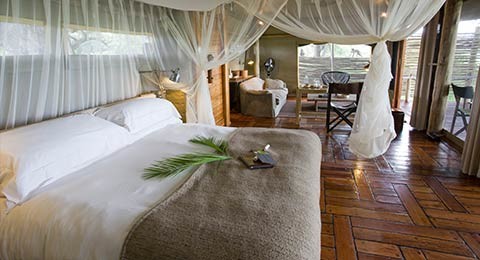
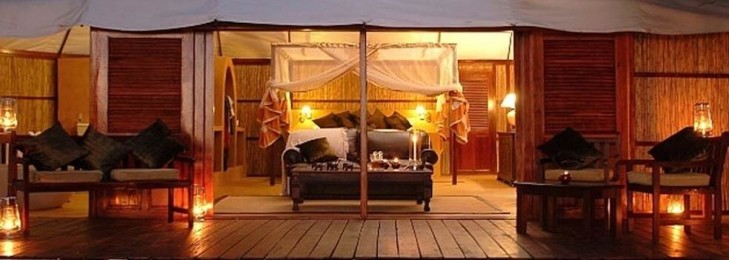
Zimbabwe Sun Hotels has built a new safari lodge in the Hwange area. Red Water Safari Lodge, situated in Manzibomvu in Hwange, was developed by Zimbabwe Sun in conjunction with Icon Private Limited, a company consisting of black entrepreneurs.

The safari concept at Red Water lays strong emphasis on the rich bird life of the area, as well as a large variety of wildlife. The physical structure of the lodge includes eight luxury tents consisting of two beds each built in an eco-sensitive fashion with no use of glass, cement, or asbestos. The main structures will be of wood and reed, with thatch providing the shading.

A second lodge, Mupfurudzi Heritage Safari Lodge, is currently being built.

Return to Weekly Update Archive